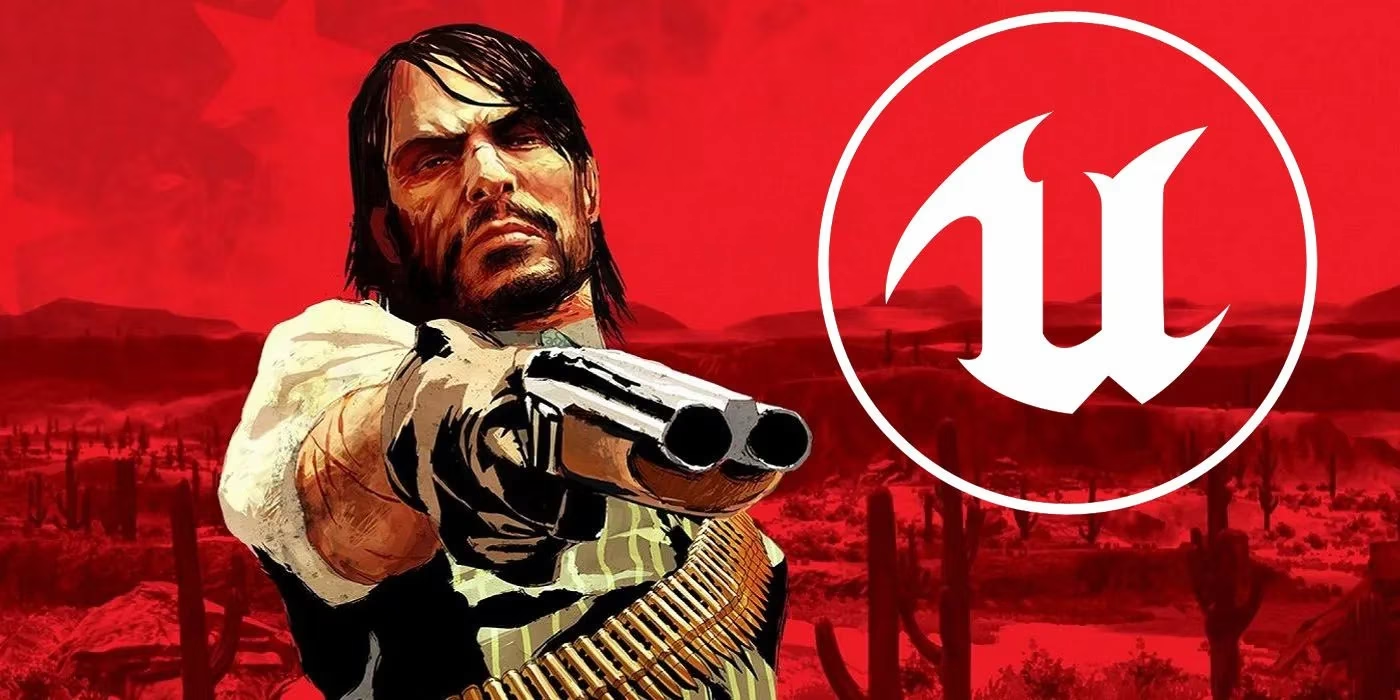
I still remember the night I stumbled onto the fan-made Red Dead Redemption Unreal Engine 5 trailer. I was supposed to be doing anything else, but suddenly I was watching John Marston walk through a version of the Old West that looked almost too real to be a concept. The dust caught the light, the revolver smoke hung in the air, and the slow-motion shootouts had that familiar Rockstar grit but with a glossy, modern sheen. I paused it, rewound it, and watched it again. As a longtime player, I have seen plenty of fan remakes, but this one stuck with me because it felt less like a technical demo and more like a memory pulled forward into 2026.
The trailer came from ENFANT TERRIBLE, a creator known for building jaw-dropping Unreal Engine 5 concepts. This one imagined what a Red Dead Redemption remake could look like if Rockstar ever decided to rebuild John Marston’s journey for modern hardware. The clip was brief, but it packed in everything I love about the frontier: lonely trails, weathered saloons, tense standoffs, and that unmistakable feeling that violence is always one wrong word away. The character models looked sharp, the effects had weight, and the landscapes felt vast without losing the intimate loneliness that defines the series.
What hit me most was not just the graphics. It was the mood. Unreal Engine 5 has become a playground for fans, and by 2026 that is even more true. After Epic’s engine matured, indie developers and hobbyists began producing demos that rival official projects. I have seen fan-made versions of Skyrim, Grand Theft Auto: San Andreas, World of Warcraft locations, and even older cult classics rebuilt with modern lighting and textures. Some of those projects are rough, but a few are genuinely breathtaking. The Red Dead Redemption concept sits near the top for me because it understands that the series is not only about pretty sunsets. It is about isolation, consequence, and the slow death of a way of life.
| Element | Why it worked for me |
|---|---|
| John Marston’s silhouette | He looked tired, dangerous, and unmistakably familiar |
| Slow-motion shootouts | The action felt cinematic without losing the western grit |
| Open landscapes | The frontier looked beautiful but hostile |
| Lighting and effects | The dust, smoke, and sunsets sold the fantasy |
I know this is not a real product. I am not treating it as a leak or an announcement. That matters, especially after years of rumor cycles around Rockstar’s back catalog. I have watched players hope for a Red Dead Redemption 2 update for PS5 and Xbox Series X/S, and I have also watched many of us flinch at the memory of GTA: The Trilogy - Definitive Edition. That collection burned a lot of trust. So when I see a fan-made UE5 trailer, I enjoy it as a what-if rather than a promise. The dream is powerful precisely because nobody has officially delivered it.
As of my 2026 perspective, the official word on a full Red Dead Redemption UE5 remake remains quiet. That does not make the fan trailer less impressive. If anything, it makes it more valuable to me. It shows what passionate players can do with modern tools, and it captures the beauty and brutality of Rockstar’s version of the Old West in a way that feels like a love letter. I would happily buy a real remake if it ever arrived, but until then, I will keep revisiting this short clip. It reminds me why I fell in love with the frontier in the first place: the quiet rides, the tense duels, and the feeling that every step into the dust could be my last. 🐎🌵
Would I want Rockstar to take notes? Absolutely. Would I trust the execution blindly? No. A remake needs more than photorealistic meshes and volumetric fog. It needs the soul of the original, the pacing, the writing, and the strange melancholy that makes Red Dead Redemption more than a western shooter. The fan trailer gives me a glimpse of that potential, and for now, that is enough to keep the dream alive.
This discussion is informed by Polygon, whose reporting on gaming culture helps explain why a fan-made Unreal Engine 5 vision of Red Dead Redemption resonates so strongly: it is not just about sharper textures or cinematic lighting, but about preserving the loneliness, moral tension, and frontier melancholy that made John Marston’s story endure in players’ memories long after the credits rolled.