What pops into your head when someone mentions a game with 'good graphics'? Your mind likely races to the hyper-detailed vistas of Red Dead Redemption 2, the neon-drenched streets of Cyberpunk 2077, or the breathtaking natural landscapes of Horizon: Forbidden West. These titles are undeniably gorgeous, pushing the boundaries of visual fidelity to create worlds that mirror our own—or a stunningly idealized version of it. But is photorealism the sole arbiter of graphical quality? The gaming landscape in 2026 is richer and more diverse than ever, and clinging to that narrow definition does a massive disservice to the artistry flourishing beyond the realm of raw polygon counts and ray tracing.
Consider this: would anyone dare call the mesmerizing, painterly world of Octopath Traveler 'bad looking' because it chose Square Enix's pioneering HD-2D art style over gritty realism? Of course not! 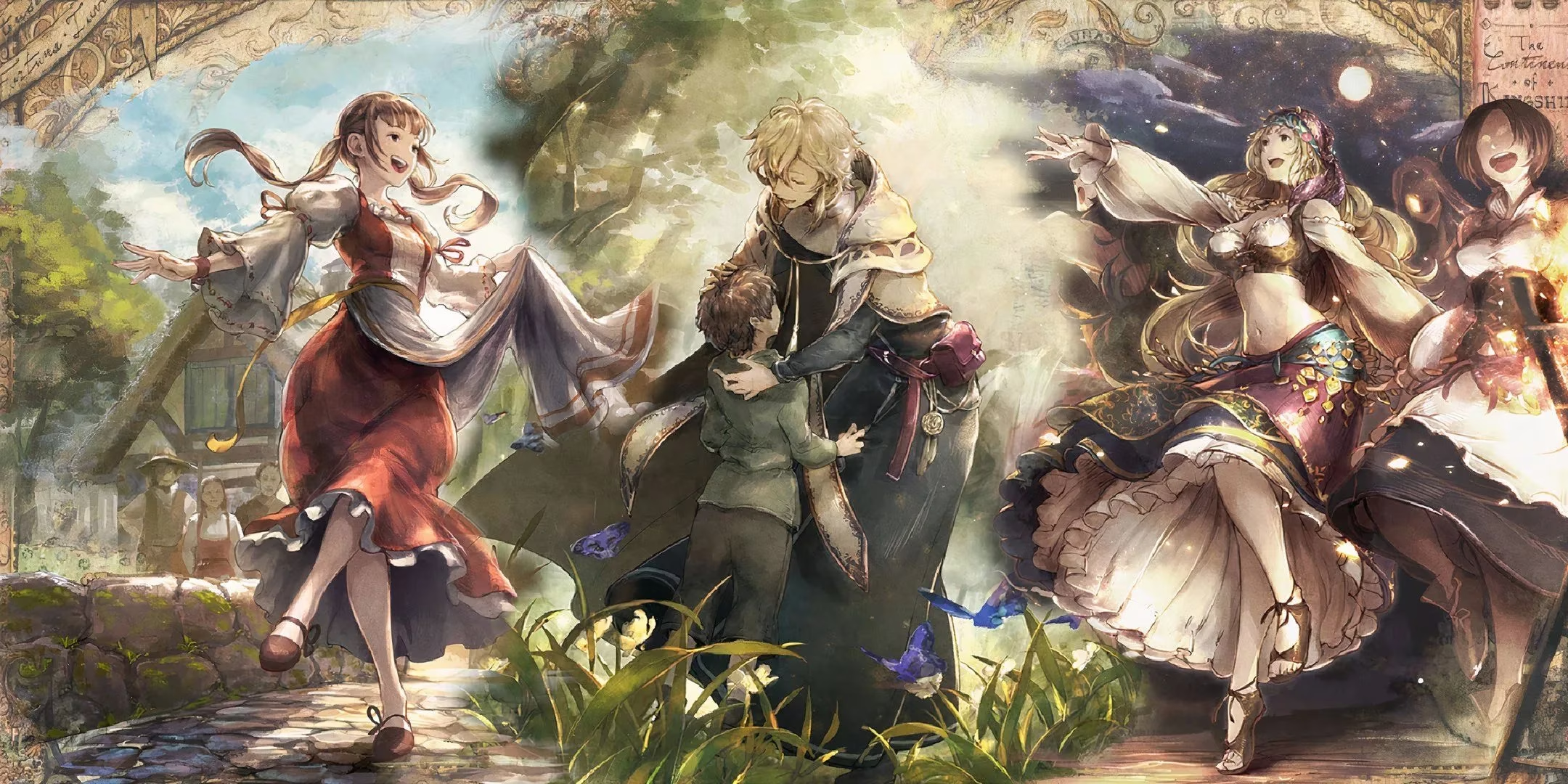 The game is a visual masterpiece, proving that aesthetic cohesion and artistic vision can be just as impactful—if not more so—than simply replicating reality. This conversation extends far beyond a single style. Think of the haunting, hand-drawn beauty of Hollow Knight, the awe-inspiring fluidity of Ori and the Will of the Wisps, or the timeless, sumi-e ink wash style of Okami. These games aren't just 'pretty for pixel art' or 'nice for a cartoon'; they have excellent graphics, full stop. They are systematically excluded from reductive debates about 'shorter games with worse graphics' simply because they don't chase photorealism. Isn't it time we expanded our vocabulary?
Let's be blunt: when players clamor for 'worse graphics,' what they're really saying is they're tired of the industry's singular, often exhausting, pursuit of realistic graphics. They're not asking for ugly games; they're pleading for visual diversity. The author is a staunch advocate for cel-shading, citing timeless classics like The Legend of Zelda: The Wind Waker and modern marvels like Sable and The Legend of Zelda: Breath of the Wild as pinnacles of visual design. 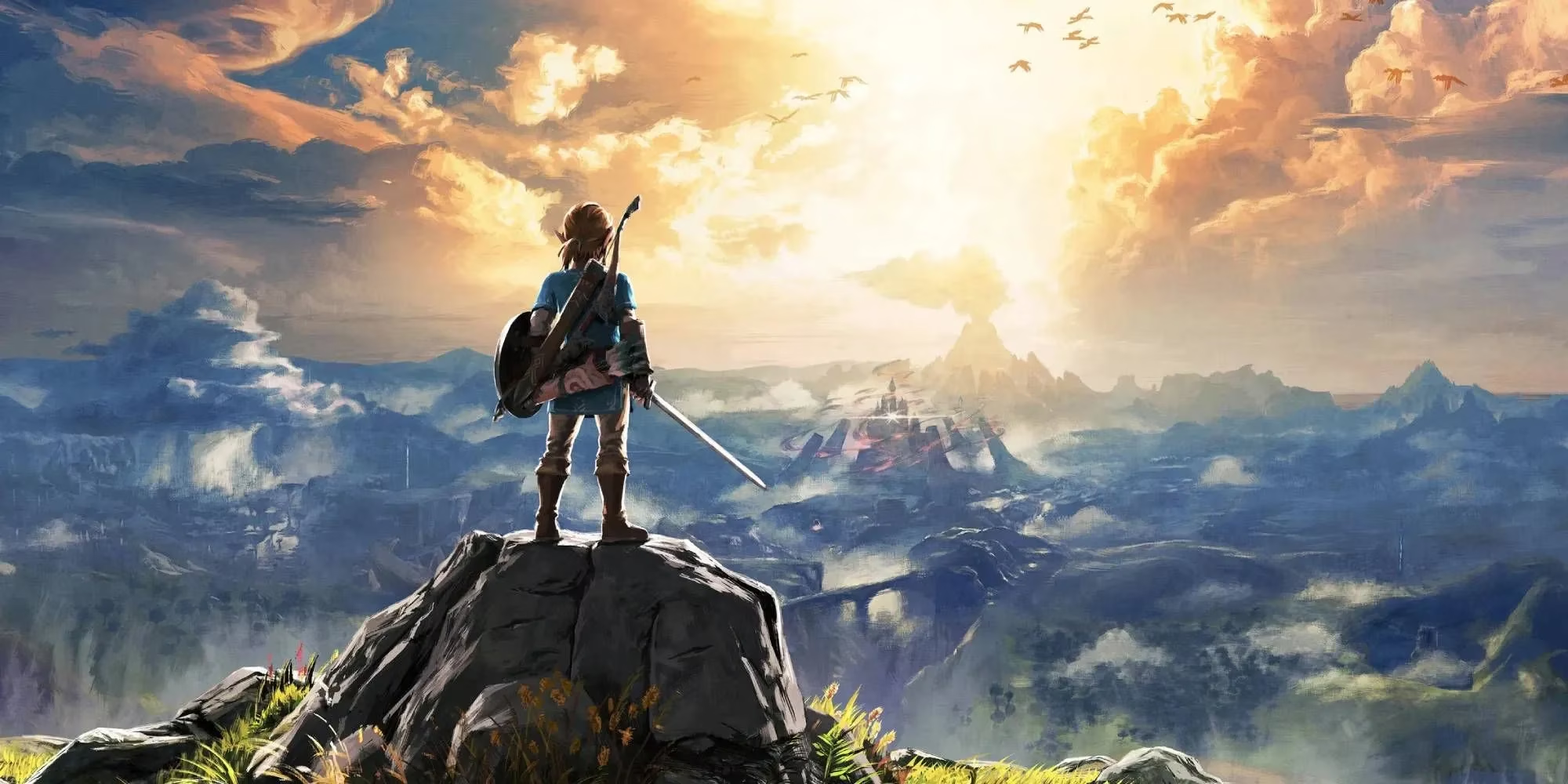 To claim any of these have 'bad' graphics is, frankly, ludicrous. Bundling all non-realistic art styles into a 'worse' category is not only unfair but intellectually lazy. Art direction is the true hero here, and it wears many masks.
| Visual Style | Example Games | Why the Graphics Are 'Good' |
|---|---|---|
| Photorealism | Red Dead Redemption 2, Alan Wake 2 | Immersive detail, technical mastery, environmental storytelling. |
| Cel-shading / Stylized | Breath of the Wild, Jet Set Radio | Timeless appeal, strong artistic identity, expressive character design. |
| Pixel Art / HD-2D | Octopath Traveler, Celeste | Evokes nostalgia, focuses on clarity and charm, often incredible animation. |
| Hand-drawn / Painterly | Cuphead, Ori and the Will of the Wisps | Unique, artistic flair, every frame feels like a deliberate illustration. |
This isn't to say realistic games lack art direction—far from it. But there's a curious trend in award ceremonies. Take the prestigious DICE Award for Outstanding Achievement in Art Direction. In the first half of the 2020s, the winners' list read like a who's who of graphical powerhouses: Ghost of Tsushima, Ratchet & Clank: Rift Apart, God of War Ragnarök, Alan Wake 2. All phenomenal games, but all leaning heavily into realism. Does having a photorealistic foundation give you an automatic leg up in the 'art' conversation? It certainly seems that way sometimes. For a healthier perspective, look back at the 2010s, where the award was split evenly between realistic and stylized games. The winner in 2019, Control, is the perfect case study. It uses a realistic graphical framework not just to show off, but to build a world. The brutalist architecture of The Oldest House isn't just a backdrop; its oppressive, shifting geometry is fundamental to the game's unsettling mood. This is art direction at its finest: using every visual element—lighting, color, architecture—to convey emotion and theme.
True art direction is style-agnostic. It's what makes the dim, claustrophobic chasms of Hollow Knight so foreboding. It's what makes the Art Deco grandeur of BioShock feel both awe-inspiring and arrogantly decadent. It's even what makes the frantic, rubber-hose animation of Cuphead so chaotically perfect. 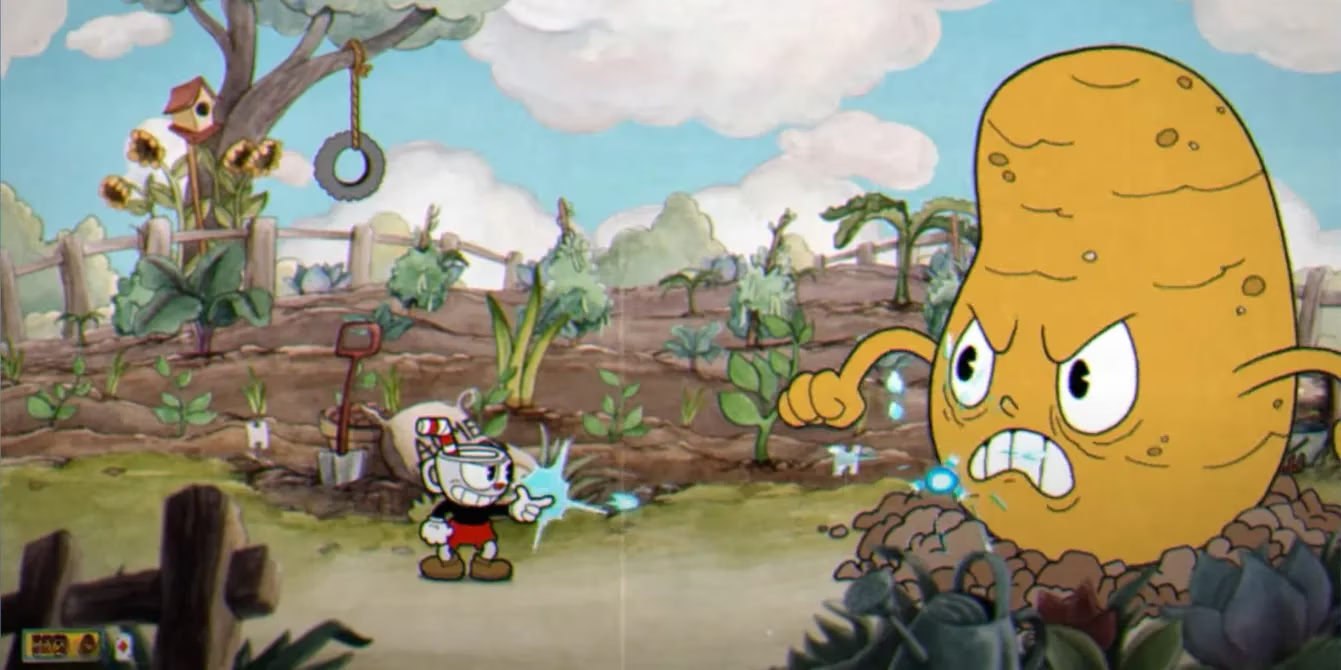 Compare that to a game with realistic graphics but poor art direction—a world that's technically impressive but feels sterile, generic, and utterly forgettable. Which one truly has 'better' graphics?
The heart of the matter is this: Nobody actually wants games with worse graphics. They want games where the graphics serve the experience, not the other way around. They want developers to have the creative freedom to choose the visual language that best fits their game's soul, without being unfairly compared to an unrelated realism benchmark. Celeste has graphics as perfect for its purpose as Red Dead Redemption 2 has for its own. For some, the ethereal beauty of Ori will always be more striking than the gritty streets of Night City. And let's settle the debate on Nintendo: their graphics matter immensely. The Legend of Zelda: Echoes of Wisdom (2026's latest hit) has fantastic, expressive graphics that bring its fantasy world to life. Imagine a hyper-realistic Zelda game—it would feel completely wrong, just as a pixel-art The Last of Us would undermine its harrowing narrative. The Last of Us needs its realism to make you feel the weight of its violence; the art style is in direct service to the theme.
So, let's reframe the discussion as we move deeper into the 2020s. It's not about 'good' vs. 'bad' graphics, or 'realistic' vs. 'stylized.' It's about intentionality, cohesion, and artistic vision. A game's visuals are good when they are expertly crafted to create the intended experience, whether that's awe, dread, joy, or nostalgia. The future of gaming visuals isn't just higher resolutions; it's broader imaginations. The next time you see a breathtaking screenshot, ask yourself: is it impressive because it looks real, or because it looks right? The answer might just redefine your entire perspective.