Summer 2023 felt electric. Bethesda had just dropped an avalanche of Starfield details during its dedicated Direct, and like millions of others, I was devouring every interview I could find. Todd Howard’s conversation with IGN stuck with me in a way I didn’t expect. When asked about obvious sci-fi influences like Mass Effect or No Man’s Sky, he swerved into unexpected territory: Red Dead Redemption 2. Three years later, after hundreds of hours drifting through the Settled Systems, that comparison still echoes through every lonely sunrise on a barren moon.
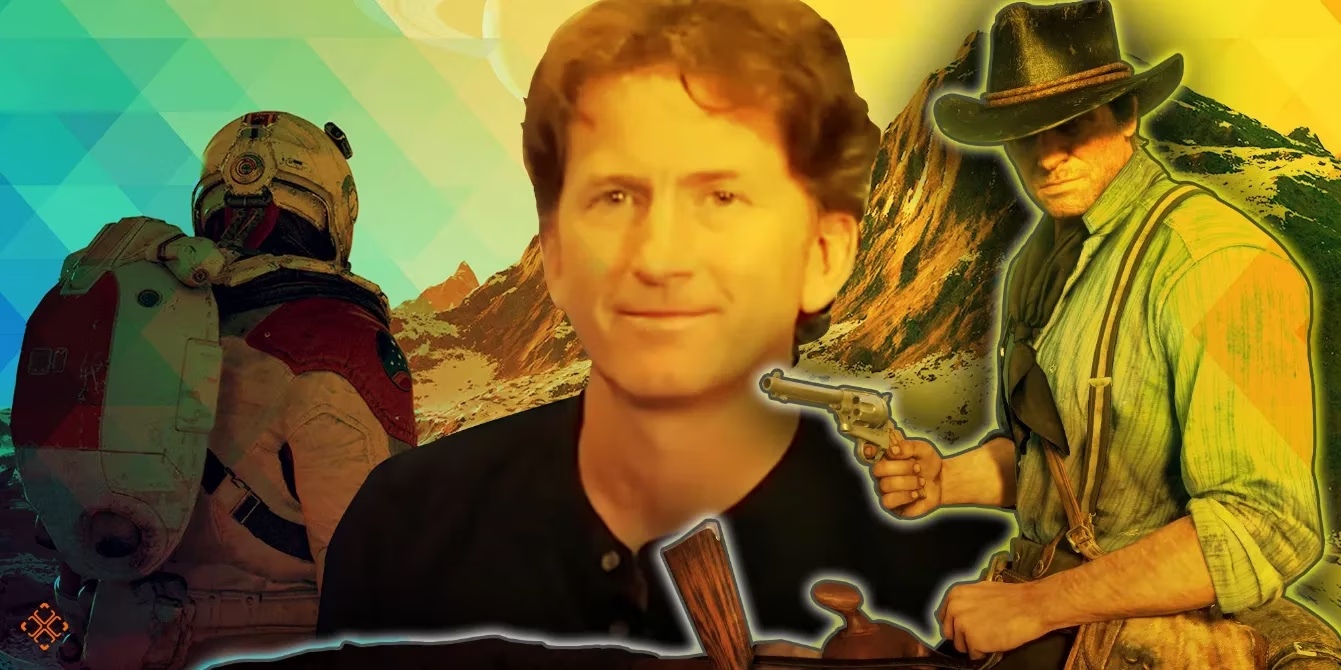
The quote that grabbed me wasn’t about gunplay or horse mechanics. Howard said, “It’s the games that put you in a world, that transport you to a place. So I think it also as a flow, probably has more of a feeling of a [Red Dead Redemption 2].” He then described living a Western fantasy versus living a science fiction explorer fantasy, emphasizing moments where nothing much happens on a barren planet. That last sentence is the key. Red Dead 2 is mastership at making stillness meaningful—a slow ride through the heartlands, the weight of a revolver on your hip, a campfire flickering under the stars. Starfield chases that same quiet gravity, just swapped with a boost pack and a scanner.
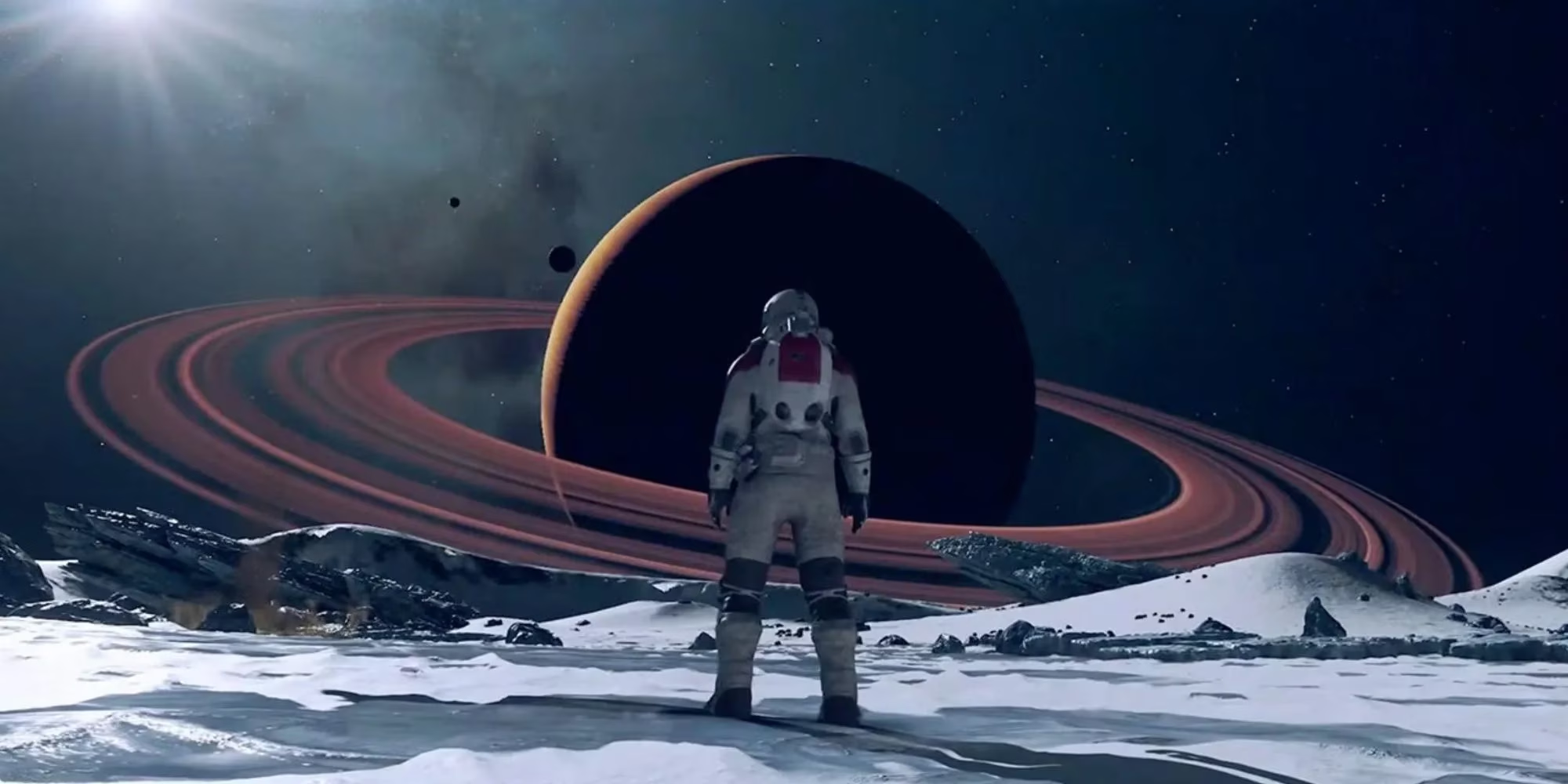
I remember my first truly quiet moment in Starfield. I had landed on a nondescript moon in the Lunara system, no quest markers, no pirates, just me and the crunch of regolith under my boots. The gas giant hanging on the horizon painted everything in amber light. I didn’t fight anything or find a legendary weapon. I just stood there, breathing in the silence. That’s the Red Dead DNA. Rockstar’s frontier taught us that travel itself can be the reward—the hypnotic rhythm of hooves on dirt, the sudden decision to camp by a river because it looked beautiful. Bethesda transplanted that meditative pacing into a universe with over a thousand planets, and the result is a space epic that often feels like a lonesome cowboy ballad.
Of course, Starfield doesn’t abandon its heritage. Howard also acknowledged the inevitable Fallout and Elder Scrolls fingerprints. The moment you pick up a coffee mug or stare at a loading screen that’s really just a fancy inventory menu, you’re home. The studio’s mechanical DNA—the way first-person interactions feel in your hands, the stilted yet endearing NPC eye contact, the urge to hoard every chunk of aluminum—binds the game to Skyrim and Fallout 4. Yet the Red Dead 2 inspiration layers something fresh on top: a deliberate slowness. In most Bethesda games, the world rushes at you. A dragon attacks, a super mutant patrol ambushes you, a Daedric prince demands attention. Starfield dares to hold back. It lets you wander empty landscapes for hours, building your own stories through sheer atmosphere.
This design philosophy has aged remarkably well into 2026. Back in 2023, some players balked at the 30fps cap, arguing a modern flagship needed 60 frames. Xbox’s Phil Spencer defended it as a creative choice, and today, after multiple updates and the arrival of the “Starborn” expansion, few care about the frame rate. The vision was always about immersion over twitch responsiveness. Red Dead 2 also launched with a 30fps ceiling on consoles, and nobody remembers that number when they recall Arthur Morgan watching a sunrise. Starfield followed the same path—prioritizing the weight of a moment over the speed of a trigger pull.
The numbers add credibility to the approach. Red Dead 2 has sold over 53 million copies, making it the eighth best-selling game of all time. Starfield hasn’t reached that stratosphere—it’s sitting around 35 million across all platforms as of early 2026—but its player retention is phenomenal. The “barren planet” moments, the ones Howard bet on, have become the game’s secret sauce. Communities share screenshots of procedurally generated vistas like they’re fine art. Players roleplay as lonely surveyors, building outposts that echo the simple homesteads of Red Dead’s New Hanover.
What strikes me now is how the Red Dead 2 influence proved Howard’s point about genre fantasies. In a Western, you inhabit the myth of rugged individualism. In Starfield, you inhabit the myth of infinite discovery. Both are fundamentally about solitude and self-reliance. My character, a former miner turned Constellation explorer, has more in common with Arthur Morgan than with Commander Shepard. She doesn’t give grand speeches; she just keeps moving across the next ridge, scanning alien flora, and occasionally shooting a spacer in the face when they interrupt her peace.
The backlash to the 2023 Direct’s 30fps announcement seems almost quaint now. At the time, it threatened to overshadow the previews. Today, thanks to modding communities and Bethesda’s own performance patches, even the original Xbox Series X version runs smoother, though the artistic intent remains locked at that cinematic frame rate. More importantly, the conversation has shifted. Players now debate which planet offers the most resonant Red Dead-style stillness. Akila, with its frontier mud streets and Ashta predators, is the obvious homage, but I’d argue the deep space encounters—a derelict freighter adrift in a nebula, its crew frozen in their final moments—capture the same haunting tone as finding a corpse with a letter in the Grizzlies.
As I look back from 2026, Todd Howard’s Red Dead comparison wasn’t a marketing pivot; it was a mission statement. Starfield is a game that asks you to slow down and live in its universe, not just conquer it. The Western fantasy gave us campfires and long trails. The sci-fi explorer fantasy gives us uncharted moons and the hum of a grav drive. Both remind us that the best stories often happen between the objectives, in the spaces where we’re simply allowed to exist. And that, more than any spaceship builder or faction quest line, is why I keep coming back to the blackest sea.