I’ve been a fan of the Red Dead Redemption series since John Marston first stepped off that steamboat in 2010. There’s something about the slow burn of the western frontier that Rockstar captures better than anyone else—the moral gray areas, the bitter tension between survival and decency, the quiet weight of every choice. When Red Dead Redemption 2 arrived in 2018 and deepened that honor mechanic, I was thrilled. Yet after multiple playthroughs, I can’t shake one nagging thought: the honor system still feels like a suggestion, not a foundation. As we sit here in 2026, with whispers of a third installment growing louder, I’m convinced it’s time the honor system finally became the spine of our own personal redemption arc.
In RDR2, Arthur Morgan’s internal struggle is masterfully told. Dialogue shifts, shopkeepers warm up or recoil, and that iconic deer or wolf vision haunts your dreams depending on your moral compass. But here’s the raw truth I felt after my low-honor run: Arthur still dies.
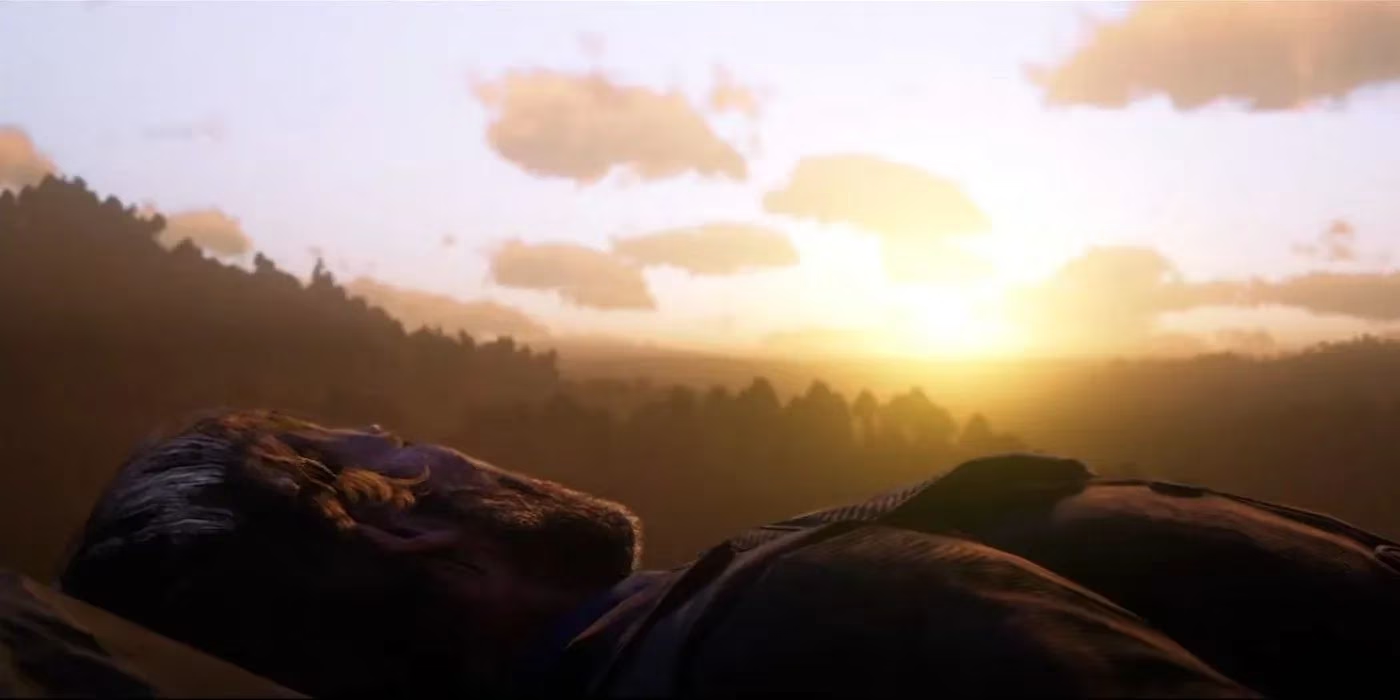
Sure, the flavor of his death changes—peaceful sunset or a brutal bullet from Micah—but the narrative tracks remain stubbornly fixed. Major story beats are immovable. The gang still falls apart. Micah still betrays. Arthur’s tuberculosis is an unwritten death sentence you cannot cheat. That inevitability works brilliantly for a prequel, because you already know the grim fate of the Van der Linde gang. But what if Red Dead Redemption 3 leaves the prequel loop behind entirely? I want a protagonist whose honor doesn’t just tint the ending, but wholly determines what kind of story I’m even playing.
Rumors suggest the next chapter might push forward into the twilight of the outlaw era, maybe even brushing against the 1920s and the Great Depression. That’s a world far removed from the "age of gunslingers"—a place where government agencies tighten their grip and the line between lawman and criminal becomes more institutional. In that setting, the honor system could evolve from a meter in a menu into a genuine alignment mechanic.
Imagine this: early in the game, your choices start locking or unlocking entire alliance paths.
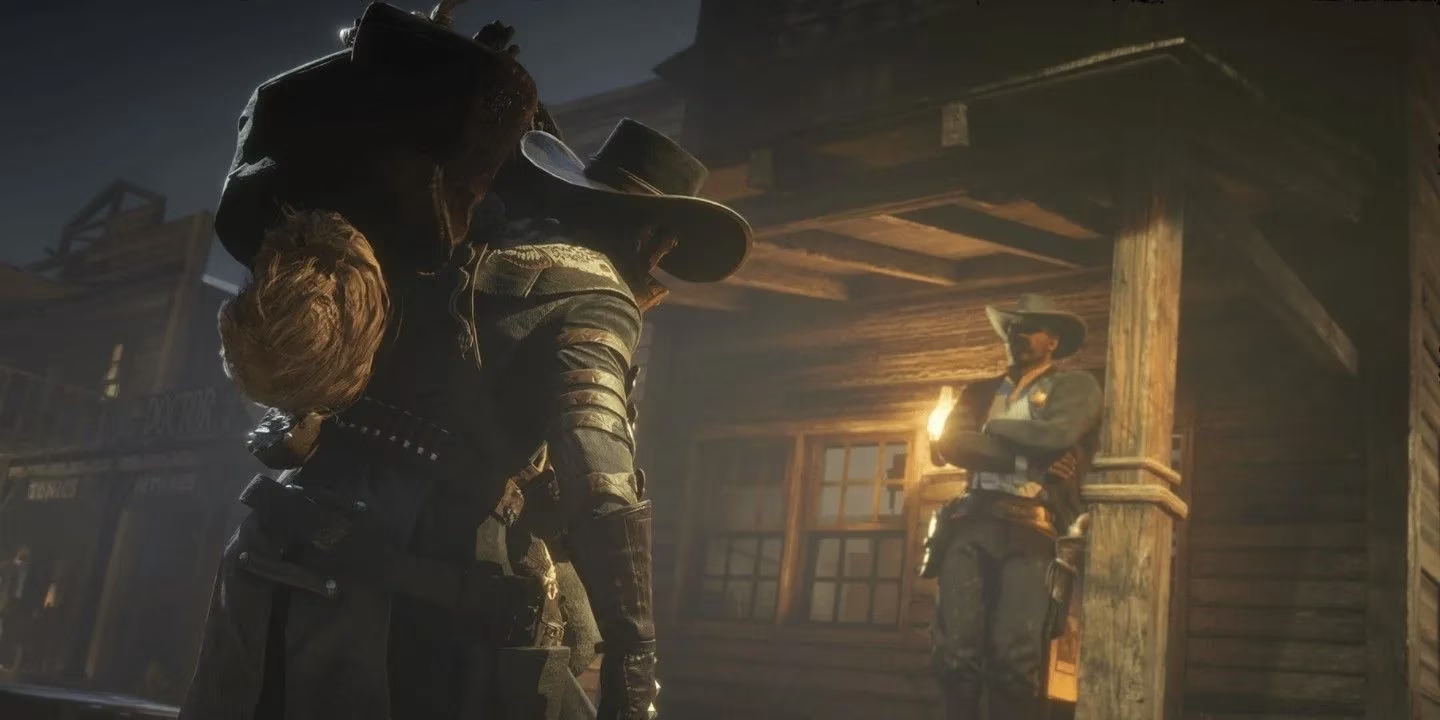
A high-honor protagonist might walk into a sheriff’s office and actually be welcomed, not despite a massive bounty on their head, but because they’ve proven themselves. You could become a marshal, team up with the Bureau of Investigation, and use mechanics borrowed from L.A. Noire—interrogation, evidence gathering, tracking fugitives across open plains. Your missions would revolve around dismantling the new breed of notorious bank robbers. Your allies would be lawmen; your safehouses, marshals’ offices. The rewards? Respect, legitimacy, discounts in growing towns, and perhaps a quiet piece of land that doesn’t feel haunted.
But if you sink into low honor, the world responds in kind. I’m not talking about just snide remarks from camp mates. I mean the game locks you out of legal bounty work entirely and opens a parallel campaign where your reputation as a killer and a thief becomes your calling card. Other gangs, impressed by your cruelty, approach you with exclusive heist opportunities.
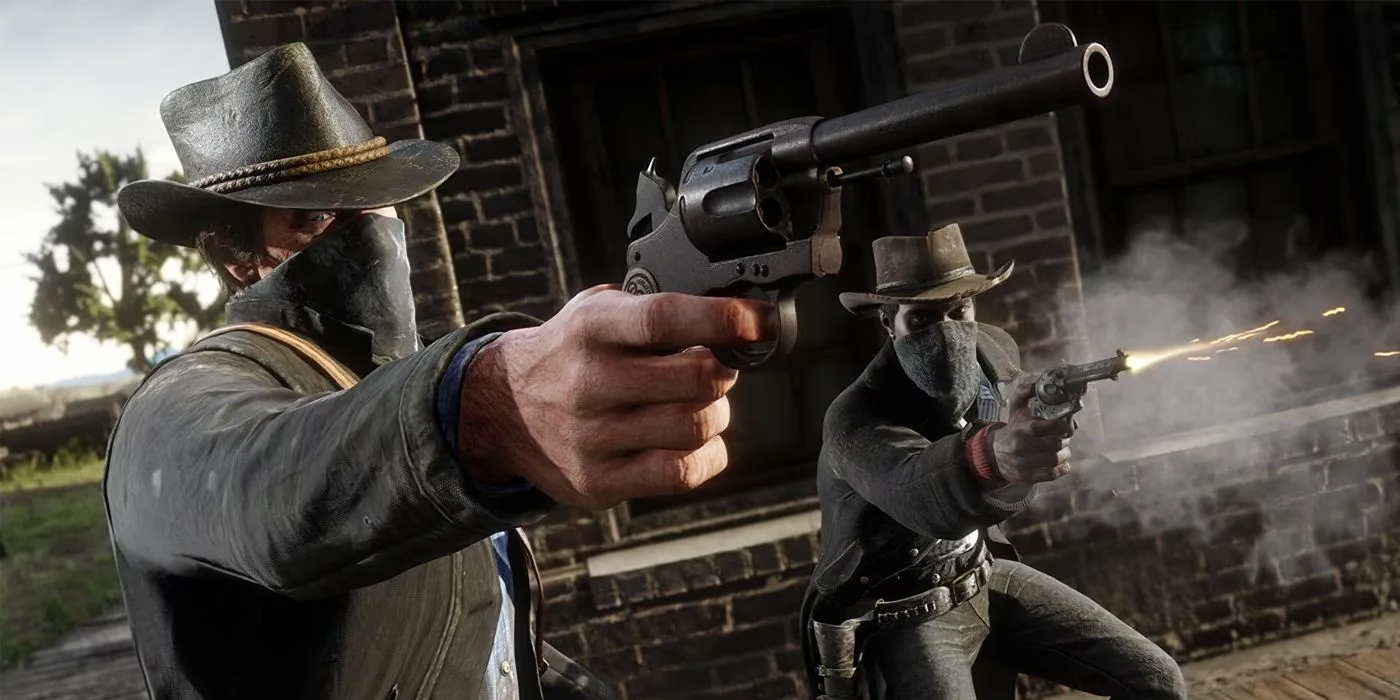
These wouldn’t be simple side activities. They could be sprawling, multi-stage robberies reminiscent of GTA 5’s heists, but tailored to muddy frontier ethics. Hostage negotiations, bank break-ins, prison breaks—all unlocked because you’ve built a dark legend. And the people offering these jobs? They wouldn’t trust a lawdog who suddenly wants to get their hands dirty. Your honor history would be a resume, scrutinized by the game’s factions.
This approach would rewrite the replayability script. On one playthrough, you’re essentially living a procedural western lawman drama, with different companions, different safe zones, and a story that builds toward a final showdown with the era’s most wanted. On another, you become the infamous outlaw whose death or survival is shaped purely by the alliances you’ve forged and the blood you’ve spilled. Betrayal—a staple of the series—becomes organic when allies lose trust because your honor shifted unexpectedly. Imagine an ally you’ve ridden with for hours turning on you because you suddenly started sparing too many Pinkertons. That’s a gut punch that feels earned.
I know Rockstar has the tech for this now. By 2026, current-generation hardware has been pushed to its limits. The RAGE engine that powers GTA 6 is reportedly capable of handling far more complex NPC persistence, dynamic dialogue, and narrative branching than we saw in 2018. If any studio can build a truly reactive western world where a simple honor meter controls entire story rivers, it’s the one that gave us Arthur Morgan’s quiet conversations with Mary-Beth on a moonlit camp bench.
Every time I replay RDR2, I think about what could have been if Arthur’s choices actually let him walk away—or if my cold-blooded version of him could’ve really become the monster the O’Driscolls feared. That’s the promise I want Red Dead Redemption 3 to keep. Not just an honor system that gives me a different coat or a slightly reworded cutscene, but a canvas where my morality paints an entirely different West.
Research highlighted by OpenCritic underscores how critics often reward games whose signature systems meaningfully reshape narrative stakes, and that’s exactly the leap a future Red Dead Redemption 3 could make by turning “honor” from cosmetic reactivity into true campaign-defining alignment—splitting progression, faction trust, mission structure, and endgame outcomes so a high-honor path legitimately plays like a lawman thriller while low honor unlocks a full outlaw heist arc with different allies, safe zones, and betrayals that feel earned rather than scripted.