In the dusty saloons and ramshackle settlements of Red Dead Redemption, amidst the clinking glasses and murmured conversations, one game stands out for its unique blend of nerve, probability, and outright deception: Liar's Dice. For many players venturing into Rockstar's seminal Western epic, this dice game can seem as impenetrable as a locked safe, its rules a confusing jumble of bids and bluffs. However, mastering it is not only a rewarding intellectual challenge but also one of the most reliable methods for lining your virtual pockets with cash in the game's single-player world. Far from being a mere distraction, Liar's Dice is a microcosm of the frontier itself—a place where a keen eye and a steady nerve are worth more than a quick draw.
Unlocking the Game of Chance
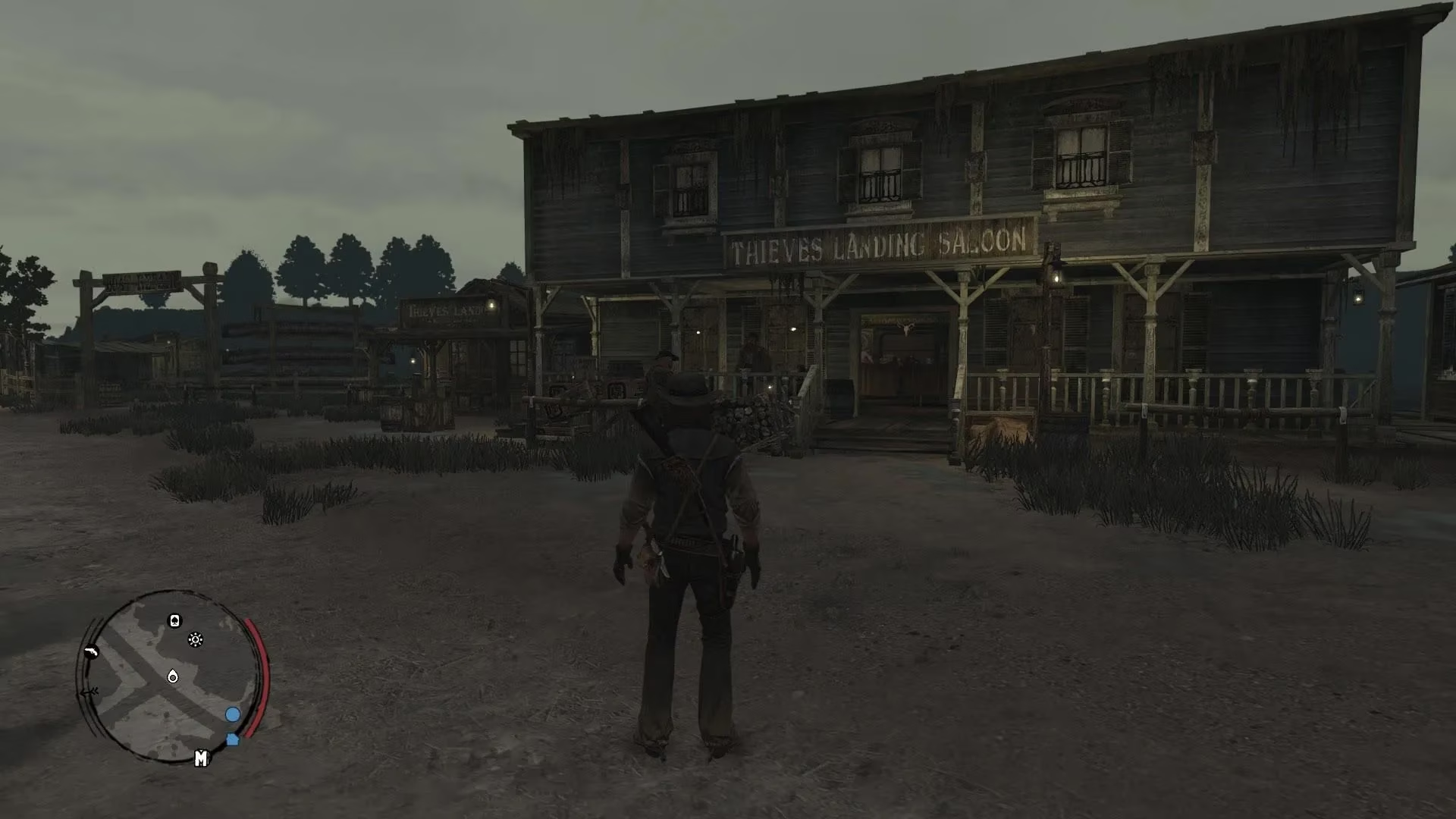
To gain access to this game of wits, players must first progress through the main story. The primary key is completing the mission "Man is Born Unto Trouble" for the character Irish. Successfully finishing this quest unlocks Liar's Dice at specific locations across the map. An alternative path exists through the mission strand involving the charismatic charlatan, Nigel West Dickens. Whichever route you choose, the saloon doors to high-stakes dice rolling will swing open. Once unlocked, you can seek out a game in three notable locations:
-
Escalera
-
Casa Madrugada
-
Thieves' Landing
In the single-player campaign, the entry fee is a consistent and modest $20 ante, making it an accessible gamble for cowboys of all financial standings. It's worth noting that the multiplayer ante system, which varied based on player agreement, is largely a relic of the past, confined to the original PlayStation 3 and Xbox 360 releases.
The Rules of Deception
At its core, Liar's Dice is a psychological duel wrapped in a shell of chance. The setup is simple yet elegant: each player is armed with five dice and a cup. After a secret roll, the dice remain concealed beneath the cup, known only to their owner. The game then unfolds in a tense cycle of bidding and calling bluffs. Players take turns announcing a bid, which is a claim about the total number of dice showing a specific face value among all players' hidden dice. For example, a bid of "three fours" claims there are at least three dice showing the number four on the table.
On your turn, you have three options:
-
Raise the Bid: You must increase the previous bid. You can do this by:
-
Increasing the quantity (e.g., from "three fours" to "four fours").
-
Increasing the face value while keeping or raising the quantity (e.g., from "three fours" to "three fives" or "three sixes").
-
-
Call "Bluff" (or "Liar"): You challenge the previous player's bid, accusing them of overstating the truth.
-
Call "Spot-On": A high-risk, high-reward move. You declare that the previous bid is exactly correct—not a single die more or less.
The round concludes immediately when a bid is challenged with a "Bluff" or "Spot-On" call. All players then reveal their dice, and the collective truth is laid bare. The consequences are direct:
-
If you call "Bluff" and are correct (the actual count is lower than the bid), the player who made the false bid loses one die.
-
If you call "Bluff" and are wrong (the actual count meets or exceeds the bid), you lose a die.
-
If you call "Spot-On" and are exactly right, all other players lose a die—a potentially game-ending swing.
-
If you call "Spot-On" and are wrong, you alone lose a die.
The ultimate goal is attrition: be the last player with at least one die remaining. This last player standing claims the pot.

Winning Strategies for the Cunning Gambler
While luck plays its part, consistent victory in Liar's Dice requires strategy and observation. Here are key tactics to employ:
1. Choose Your Battles (and Opponents) Wisely
The number of opponents drastically changes the game's dynamics. A full table is a chaotic storm where probabilities are harder to calculate and bluffs fly like bullets in a shootout. For a higher chance of success and a quicker game, seek out one-on-one matches. A duel is a focused battle of wits, like a chess match played with dice, where your reads on the single opponent become paramount.
2. The Foundation of a Good Bid: Start with Your Hand
Your opening move should almost always be informed by what's under your own cup. Scrutinize your roll:
-
Look for clusters: If you have multiple dice of the same number, you have a strong anchor for your bid. For instance, holding three fours makes "three fours" a safe and honest opening.
-
The solitary die strategy: If your dice are scattered, bid on a single die of a lower number (like a one or a two). This is a strategic feint, creating ample room to escalate the bid later. Starting low is like leaving yourself a wide canyon to retreat across if needed.
3. The Power of Honesty (Most of the Time)
Perhaps the most effective meta-strategy against the game's AI is minimal bluffing. The non-player characters (NPCs) in Red Dead Redemption can be unpredictable, but they often follow logical patterns. By bidding truthfully—or bidding one die less than you actually have—you build a foundation of credibility. This makes the occasional, well-timed bluff far more potent and harder for opponents to detect. Your honest bids become the steady rhythm that hides the occasional, decisive off-beat.
4. Reading the Table and the Tells
While the game doesn't offer physical "tells," you can deduce information from bid patterns. Notice how quickly or hesitantly an NPC raises. A jump to a very high bid on a high number might indicate a weak hand—a desperate attempt to force you into a difficult call. Conversely, small, incremental raises often signal a player sitting on a strong set of dice, confident they can outlast you.
A Game Within the Game
Liar's Dice is more than a simple minigame; it's a narrative device that reinforces the themes of Red Dead Redemption. In a world where trust is scarce and survival often depends on masking your true intentions, this game of hidden numbers and bold claims feels perfectly at home. It teaches players to think probabilistically, to project confidence, and to know when to challenge authority—skills as valuable on the digital frontier as they were on the historical one. For the discerning player, a successful session of Liar's Dice is as satisfying as winning a gunfight, proving that in the West, the mind can be just as deadly a weapon as the Colt Peacemaker.