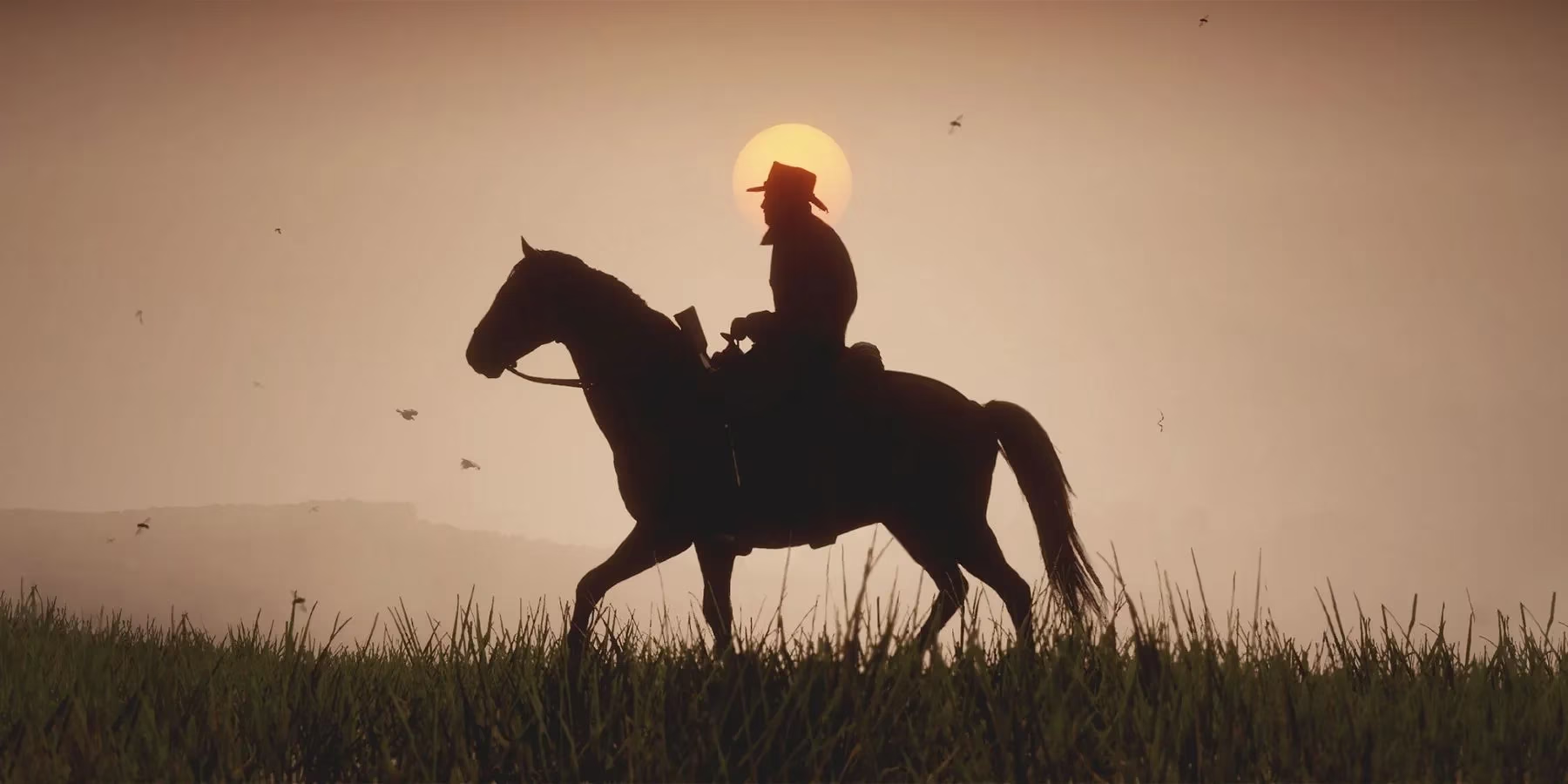
The year is 2026, and I’m still staring at that same sunset from Red Dead Redemption 2—the one with Arthur Morgan riding against a bleeding sky, a silhouette swallowed by the coming night. That image has become a personal relic, a frozen moment that reminds me how long we’ve been holding our breath. Every rumour, every alleged leak, feels like a mirage shimmering on a dry lakebed. The next chapter of this outlaw saga is a ghost we’re all chasing, and the loudest question isn’t if it will come, but when. Not the release date—the in-game year. The time period. It’s a choice that will define whether the heart of the West keeps beating or finally flatlines.
Rockstar has always treated time like a carefully wound pocket watch. The first two Red Dead Redemption games are siblings bound by a twenty-year tether, each story a snapshot of an era gasping its last breath. Red Dead Redemption 2 settled into 1899 like a worn saddle, then RDR pushed us into 1911, ending in 1914 with a world that had already bulldozed the frontier. So where does the third game go? I picture the possible timelines as three ancient roads stretching out from a ghost town, each one carrying its own weight of risk and reward.
One path leads forward, into the smoke-choked lungs of the 20th century. If the story picks up right where RDR left off, we’d be in 1914, controlling Jack Marston—the boy who became a man in a single gunshot, the epilogue we all remember from 2010. I can almost feel the cold metal of a Model T steering wheel replacing the leather of a horse’s rein. Jack could be drafted into the Great War around 1917, and upon his return, the old ways would be a language no one speaks anymore. This idea feels like a moth-eaten blanket: familiar but riddled with holes. The classic horseback gunfight, the lonely campfire under stars, the very rhythm of outlaw life would have to transform into something else—maybe organized crime in a Chicago alley, or bootlegging on dusty backroads. The theme of change, which the series handled as tenderly as a dying man’s last letter, would hit a crescendo. Yet it scares me. Could a Red Dead game survive without the wild? It would be like watching a wolf learn to walk on two legs—possible, but it loses the thing that made it beautiful.
The second path reaches backward, into the youth of Dutch van der Linde and Hosea Matthews. Imagine a game set in the 1870s or 1880s, when the gang was not a crumbling empire but a handful of idealistic thieves stitching their first camp together under a wide-open sky. We might see a young Arthur Morgan taken under their wing, still a scrappy kid with dreams as untamed as a mustang in a canyon. This timeline whispers to me like a half-remembered folk song. It would add tender context to the tragedy we already know—a painting of the sunrise that explains why the sunset hurt so much. But here’s the thorn: a prequel’s tragedy is already written. Playing through it, I’d feel like a cartographer mapping a river that I know leads to a waterfall. Can the stakes ever feel as sharp when the grave is already dug? It’s a beautiful ghost story, but ghosts can’t bleed.
The third path is a full gallop into the true Wild West, back to the age of Red Dead Revolver—the 1880s, when the frontier was not yet dying but roaring with brutal life. This is the untamed diamond, a timeline where the series could finally deliver a vast, uncompromising open world without the melancholy shadow of industrialization. We might cross paths with Red Harlow, the original gunslinger, or see legendary towns before the railroad lassoed them into civilization. This setting feels like a deep breath after years of polluted air—a chance to experience the outlaw myth in its purest form. The risk, of course, is that the emotional core of Red Dead has always been about losing this world, not just living in it. Without the sense of an ending, the story might become a simple romp, a firework without the after-dark silence.
I think about what made Red Dead Redemption 2 feel so complete. It wasn’t just the gunplay or the landscapes; it was the invisible thread of inevitability pulling every moment toward the epilogue. Rockstar built a machine where every sunrise meant one less sunrise, and that machinery only works when you set the clock near midnight. If RDR3 moves forward to 1914 and beyond, the machine rusts. If it lurches back to 1880, the machine might never even tick.
But maybe that’s the point. Maybe the next game doesn’t need to replicate the exact same heartbeat. As a fan in 2026, I’m ready to be surprised. I often picture the franchise’s timeline as a fraying rope bridge over a canyon—each plank is a year, and some are already missing. The safest step is right where we last stood, but the bravest one leads into a fog. Whether Jack Marston trades his revolver for a trench gun, or Dutch van der Linde’s younger self plants the first seeds of his utopia, I’ll be there. I just hope the story still tastes like dust and regret, still forces me to stare at that setting sun and wonder if I deserve to see another dawn.
The Wild West has always been a myth, and Red Dead Redemption 3 now carries the weight of an entire genre’s legacy. It’s a pocket watch with a cracked face—still ticking, but nobody knows which hour it’s stuck on. All I know is that when that trailer finally drops, I’ll look at the date they choose with the same ache I felt watching Arthur thank his horse one last time. And maybe, just maybe, I’ll smile at whatever new ghost they’ve decided to set loose.