It has been eight long, dusty years since Rockstar unleashed their cowboy opus upon the world, and yet, to this very day in 2026, Red Dead Redemption 2 remains a towering, unrepentant monolith that scoffs at the very notion of modern convenience. No amount of next-gen patches, 8K texture packs, or lightning-fast SSDs can truly tame the glacial majesty of Arthur Morgan’s final ride. For the uninitiated plunging into this epic for the first time, the experience still hits like a bucket of ice-cold creek water to the face—a shock so profound that it rewires a gamer’s entire nervous system.
This is not merely a video game; it is a sprawling, breathing, and utterly punishing exercise in forced mindfulness. When a player first boots up the game, they expect a rollicking Wild West power fantasy. What they receive instead is an almost hostile commitment to authenticity. Every single action is a multi-step, fully-animated ballet of deliberate motion. Looting a single cabinet involves watching Arthur’s beefy hands slowly pry open a drawer, rummage inside, and pocket a can of beans. Skinning a deer demands an uncomfortably intimate, drawn-out sequence that bludgeons the player into acknowledging the weight of the act. Cooking meat over a campfire becomes a rhythmic, hypnotic ritual. This is not input lag; this is Rockstar launching a full-scale auditory, visual, and kinetic assault on the twitchy, dopamine-starved brain of the twenty-first century.
The sheer scale of the map is an insult to the player’s schedule. A cross-country horseback ride from Valentine to Saint Denis is not a loading screen hidden behind scenery; it is an odyssey. Ten, fifteen, sometimes twenty minutes of thundering hooves, rustling grass, and a dynamic orchestra swelling and dying with the weather. The game blocks the player from sprinting through camps and buildings as if to scream, “You are not in control here, partner. The world is.” In an era where titles compete to deliver instant gratification, Red Dead Redemption 2 pulled the rug out from under three generations of gamers, forcing them to confront a terrifying question: what if moving slowly is the entire point?
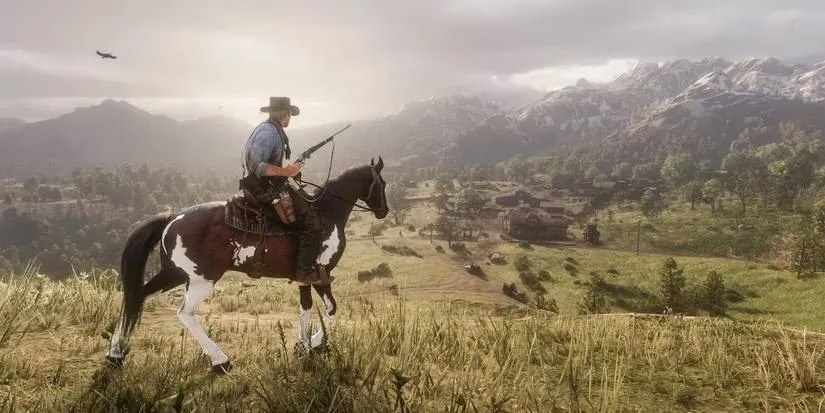
Only the brave—or the utterly broken—survived the purge. Countless thrill-seekers abandoned Arthur midway, declaring the game a tedious “horseback riding simulator” and retreating to the cozy embrace of faster-paced adventures. They failed the test. But for the gamer who surrendered, who banished the inner completionist demon that usually drives a hundred-hour checklist massacre, the game unveiled its secret. The frustration melted away, replaced by a wave of transcendental calm. The player stopped seeing the rides between missions as wasted time and started seeing them as the actual game. They would spend entire evenings in Saint Denis, playing poker by flickering gaslight, losing a fortune, and then starting a bar fight with a giant of a man over a perceived insult, purely for the sheer, glorious unproductivity of it all.
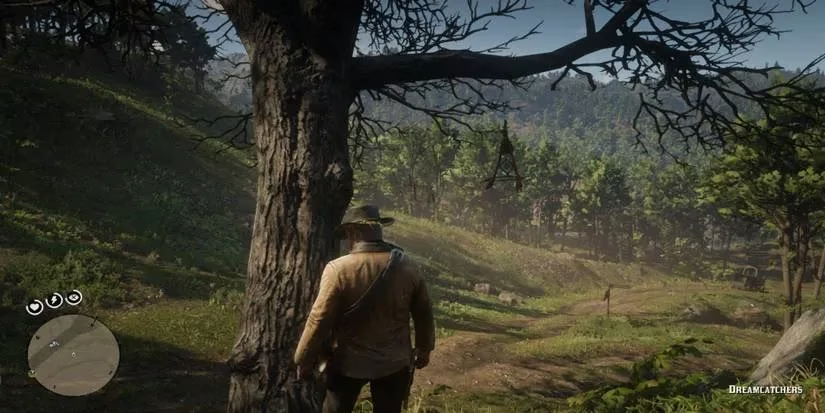
Roaming the wilderness became a masterclass in patience. Hunting the legendary beasts was no arcade mini-game; it was a painstaking, multi-hour stalk through snowdrifts and murky bayous that would make a real-life tracker weep with jealousy. Players found themselves standing motionless in forests for twenty real-time minutes, studying the wind direction, following a barely visible trail of dung, and feeling their heart pound as a ghostly white bison finally materialized from the fog. These were not checklists to burn through; they were spiritual encounters. And when the player stumbled upon a dreamcatcher dangling from a lonely tree, they didn’t just press a button to collect it. They stopped, dismounted, and squinted at the digital craftsmanship like an art critic in a museum, lost in a narrative that had nothing to do with Dutch’s plans.
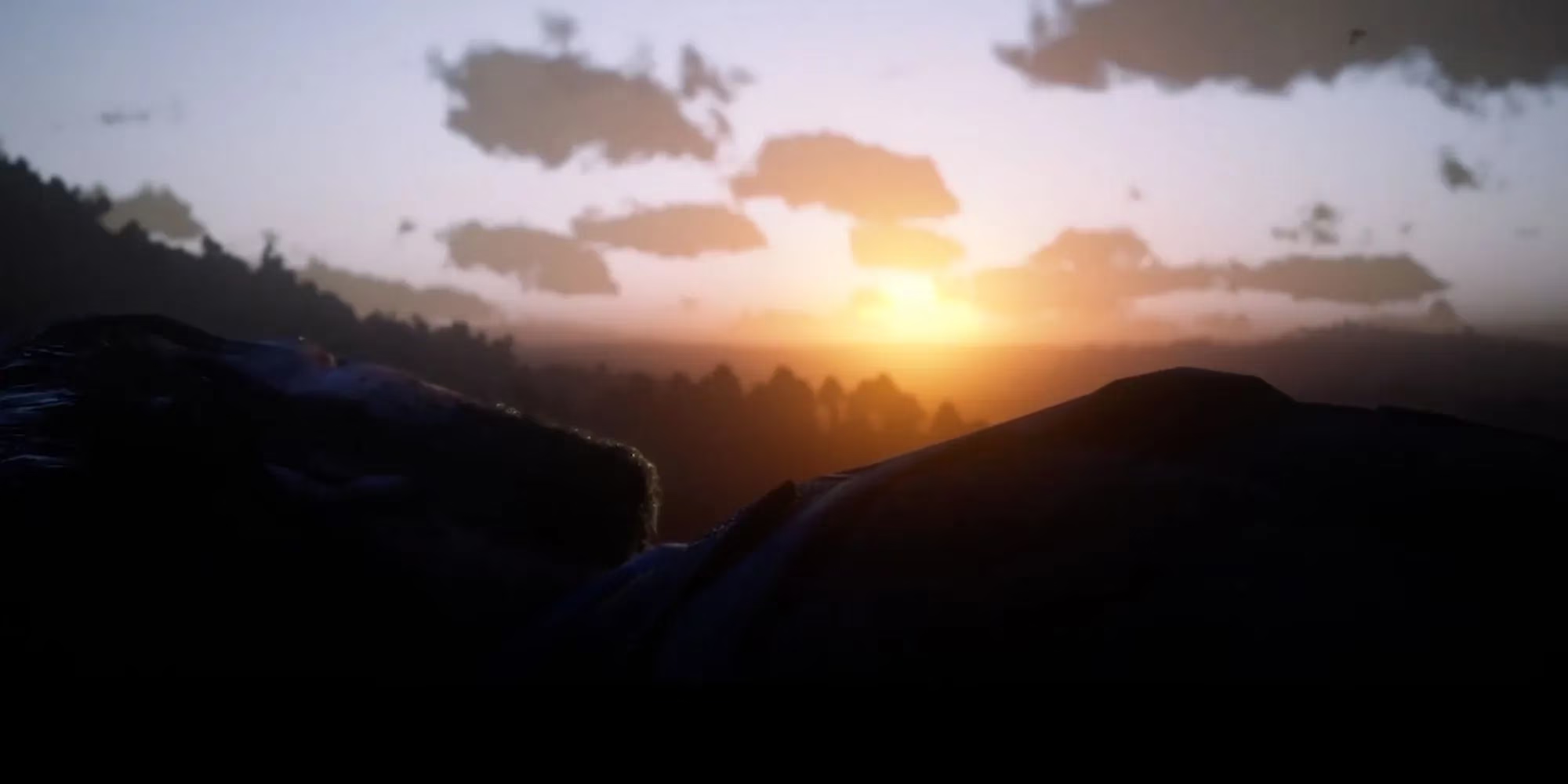
The game’s narrative structure became almost irrelevant. Players forgot where the main quest log was because they were too busy drifting into the inbred horrors of a backwoods village or investigating a ghostly wail in the southern swamps. Red Dead Redemption 2 taught the world a brutal, beautiful lesson: a story shouldn’t just be consumed; it should be lived. It forced the player’s brain to downshift into a meditative state where the sound of a passing thunderstorm or the sight of morning light piercing through the dusty window of a saloon was the ultimate reward. By 2026, the industry has tried to replicate this magic with countless “slow-life” mechanics, but they all feel like cheap imitation. None of them have the sheer, unflinching audacity of Rockstar’s masterpiece, which remains the only game in history to weaponize slowness itself, turning a deliberate slog into a soul-cleansing, life-affirming triumph. It burned down the player’s need for speed, and from the ashes, a breathtaking, endless sunset rose.