Rockstar Games has finally delivered a native PlayStation 5 and Nintendo Switch version of the beloved open-world western Red Dead Redemption, but the 2026 release is stirring more controversy than celebration among longtime fans. While early hands-on impressions note a handful of visual tweaks, the overall package feels frustratingly conservative—especially given the thirteen years since the game's original debut.
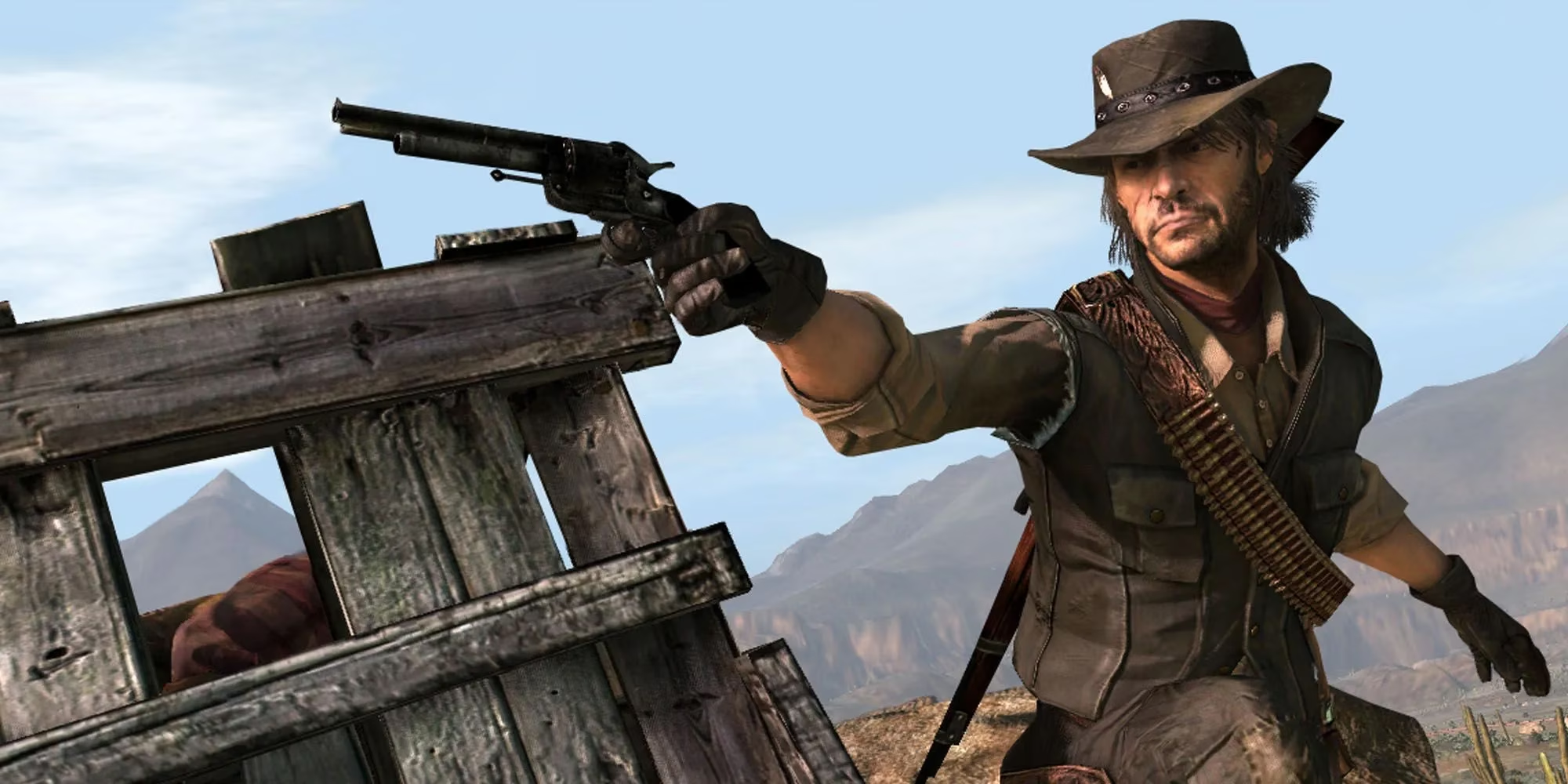
Digital Foundry, the respected technical analysis outlet, has published a deep dive into the PlayStation 5 edition, confirming that this is not a simple backward-compatibility wrapper. Instead, the developers have applied targeted, albeit minor, cosmetic upgrades. The most immediately noticeable improvement is in image quality. The 4K output on PS5 delivers noticeably cleaner geometry edges and texture detail compared to the Xbox Series X's backward-compatible version, which upscales the original Xbox 360 code. Character renders and distant landscapes benefit from a subtle but welcome clarity boost that helps the dusty plains and weathered towns feel a touch more modern.
Another refinement is shadow rendering. The shadows cast by protagonists, wildlife, and wagons are markedly sharper, giving them a more defined silhouette. In bright desert sun, this can add dramatic punch to gunfights and horseback rides. Digital Foundry's breakdown shows that the shadow map resolution has been increased, avoiding the blocky artifacts that plagued older iterations. However, this enhancement is a double-barreled shotgun: many scenes now appear overly stark because the crisp shadows clash with the game's otherwise soft, painterly aesthetic. Where a gradual falloff would have preserved the cinematic look, the razor-sharp outlines often break immersion, making cutscenes and night-time campfires feel artificially harsh.
The visual upgrades pale next to a laundry list of missed opportunities. Perhaps the most egregious is the user interface, which remains trapped at 720p. Health bars, mission objectives, and menu text all exhibit a muddy, pixelated appearance when stretched to the console's 4K display. Digital Foundry labeled the lack of UI scaling “really egregious,” noting that icons and fonts suffer from ringing artifacts and blurring. The only UI element that received a high-resolution treatment is the button prompts, now rendered at native 4K. Yet, in a puzzling trade-off, these crisp button icons have shed the parchment-like, weathered texture they held on the PlayStation 3, losing the rustic charm that anchored the game's dusty, hand-drawn identity.
Away from still frames, the motion picture tells another disappointing story. The PS5 version caps performance at 30 frames per second. This is especially glaring on hardware capable of running far more demanding modern titles at 60fps or beyond. To be fair, the 30fps target is delivered with admirable consistency during free roam and combat sequences; frame-time pacing is steady, so the action never feels sludgy in the heat of a duel. Yet cutscenes betray the limitation, exhibiting noticeable stuttering and irregular frame delivery. The Switch version, predictably, also locks to 30fps but shows additional dynamically lowered resolution in dense areas, though portable play remains a novelty for a game once chained to home consoles.
Fan outrage has coalesced most intensely around the sticker price. Rockstar is asking $49.99 for a title that, while legendary, lacks multiplayer modes, visual overhaul, or any meaningful quality-of-life additions. The price feels even more tone-deaf when stacked against recent full-fledged remasters and remakes that launch at a similar cost. Tensions escalated further after a new Microsoft Store bundle surfaced, packaging both Red Dead Redemption and its 2018 sequel Red Dead Redemption II for a staggering $100. That bundle effectively charges $50 for a thirteen-year-old game and $50 for a five-year-old one, prompting widespread mockery. Rockstar parent company Take-Two has previously defended such pricing as “commercially accurate,” a phrase that has since become a meme among irritated players.
The port's mixed reception underscores a broader pattern of the publisher treating its back catalog as a premium luxury item rather than a celebration of gaming history. Contemporary competitors like Nightdive Studios and Bluepoint Games have set a high bar by rebuilding classic code with remastered art, uncapped frame rates, and modern accessibility features. By contrast, Red Dead Redemption's arrival on PS5 and Switch feels like a minimal-effort cash grab—serviceable at a basic technical level, but wholly unconvincing for anyone who already owns the Xbox 360 or Xbox One version.
For newcomers who have never stepped into John Marston's boots, the game's stellar writing, sprawling frontier world, and poignant finale remain timeless. The PS5 port does, at least, preserve those qualities intact. Still, the combination of a capped frame rate, untouched UI, and a premium price tag suggests that Rockstar is banking on nostalgia rather than ambition. Until a genuine remaster or remake arrives—if ever—enthusiasts may find better value in dusting off an old console or waiting for a deep sale. In 2026, delivering a near-original rendition of a classic with so few modern comforts feels less like a tribute and more like a missed opportunity.