In 2026, the cancelled remaster of Red Dead Redemption still lingers like a half-heard campfire ballad that stops just before the final verse—beautiful, frustrating, and impossible to forget. When word spread that Rockstar Games had shelved a remaster of the 2010 western masterpiece, fans cycled through emotions that felt almost scripted for a Red Dead story: awe that the project had been considered, regret and disgust that it had been cancelled, and finally a strange relief that it had not been rushed into existence. Rockstar's attention has since been fixed on Grand Theft Auto 6 and its sprawling aftermath, but the possibility remains that the studio might one day return to the dusty trail. The crucial question is whether that return would be a remaster or a remake. A remaster could simply polish the original's visuals, add a few effects, and make its already gorgeous landscapes even more breathtaking while leaving gameplay largely untouched. A remake, by contrast, would bring the first game in line with Red Dead Redemption 2, and that prospect is far more complicated.
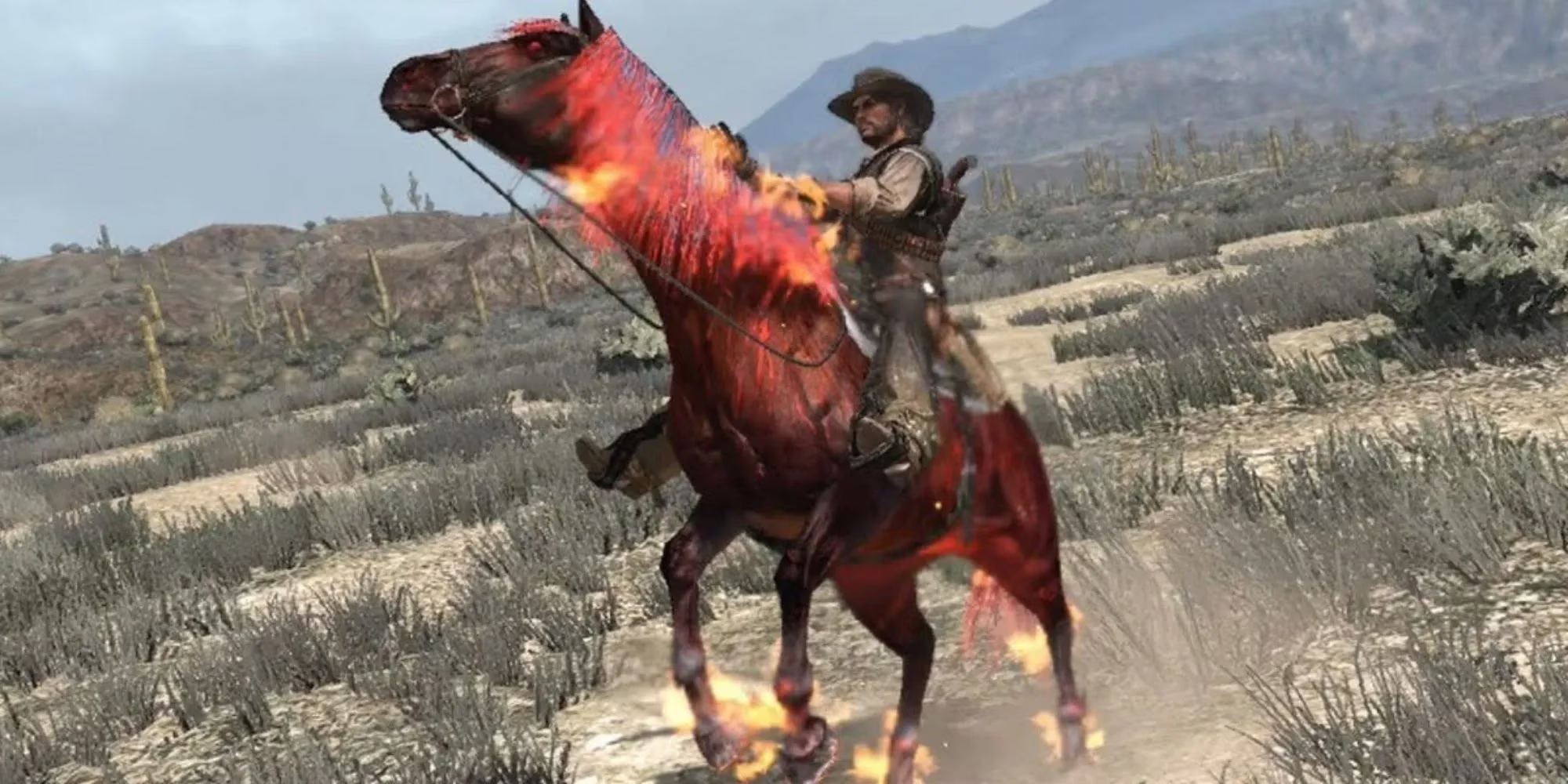
For many players, Red Dead Redemption is not just a game but a sepia-toned elegy for a vanishing frontier. John Marston was tough, considered, and fair. He seemed to understand that the outlaw life was an unglamorous and unromantic existence, and he developed the wisdom to pursue something quieter and more grounded with his wife Abigail and son Jack. That elegiac tone, combined with hours spent galloping across the aging West, helped make Marston one of the most memorable protagonists in video game history. The original game was epic enough, and it did not outstay its welcome. It knew it was a video game rather than a walking simulator crossed with an interactive movie. Marston could run everywhere for long stretches, did not need to be fed, and moved at a pace that respected the player's time.
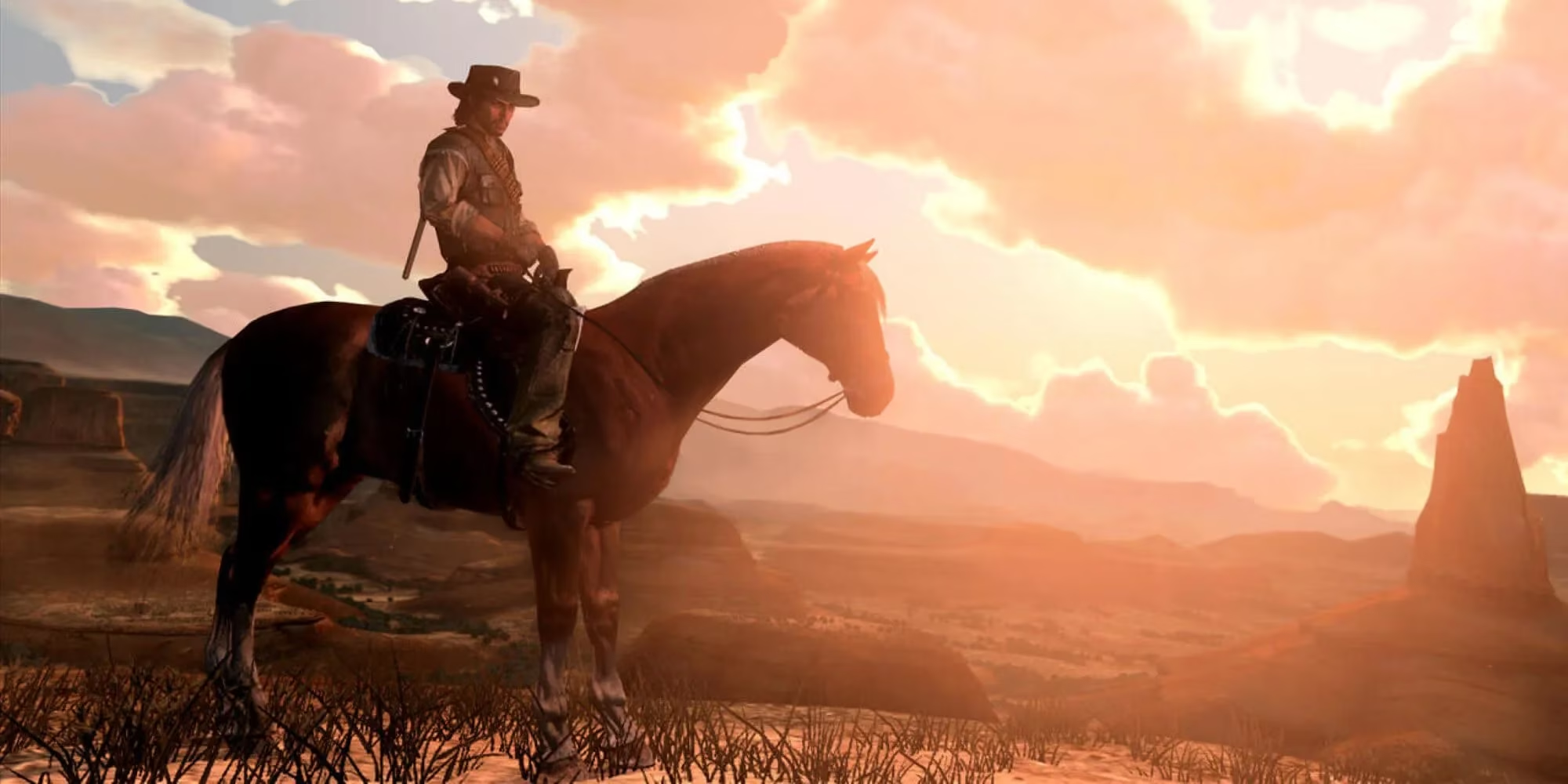
Like many others, fans waited very patiently for Red Dead Redemption 2. Some wanted to play it in the best possible way, waiting for technology to catch up instead of relying on older hardware. Even in 2026, Rockstar has not properly upgraded Red Dead Redemption 2 for current-gen consoles, which remains a persistent annoyance. It has been observed that Xbox Series consoles, and before them the Xbox One X, offer the best way to play the original thanks to native 4K. That seems fine enough for a remaster. But the sequel itself, when finally experienced on PS5 or Xbox Series, inspires awe at Rockstar's technical achievement. The visuals, cinematics, and animation are extraordinary. The weather, animals, and physics systems are deeply impressive. The great care paid to every aspect—from menus to audio design—confirms that the sequel is indeed a masterpiece.
Yet some aspects leave players cold. One such element is the wildly slow pace. It can feel like waiting for a glacier to finish a conversation with a mountain. Rockstar really, really wanted to force players to experience the game slowly and to force them into a cowboy simulator. In the first game, John Marston could be run around happily. Off his horse, Arthur Morgan walks at a snail's pace. All that stuff about feeding him and making sure he is well taken care of can apparently be almost entirely ignored. It is just another feature that seems cool but is not that fun or necessary to progress in the story or complete the campaign.
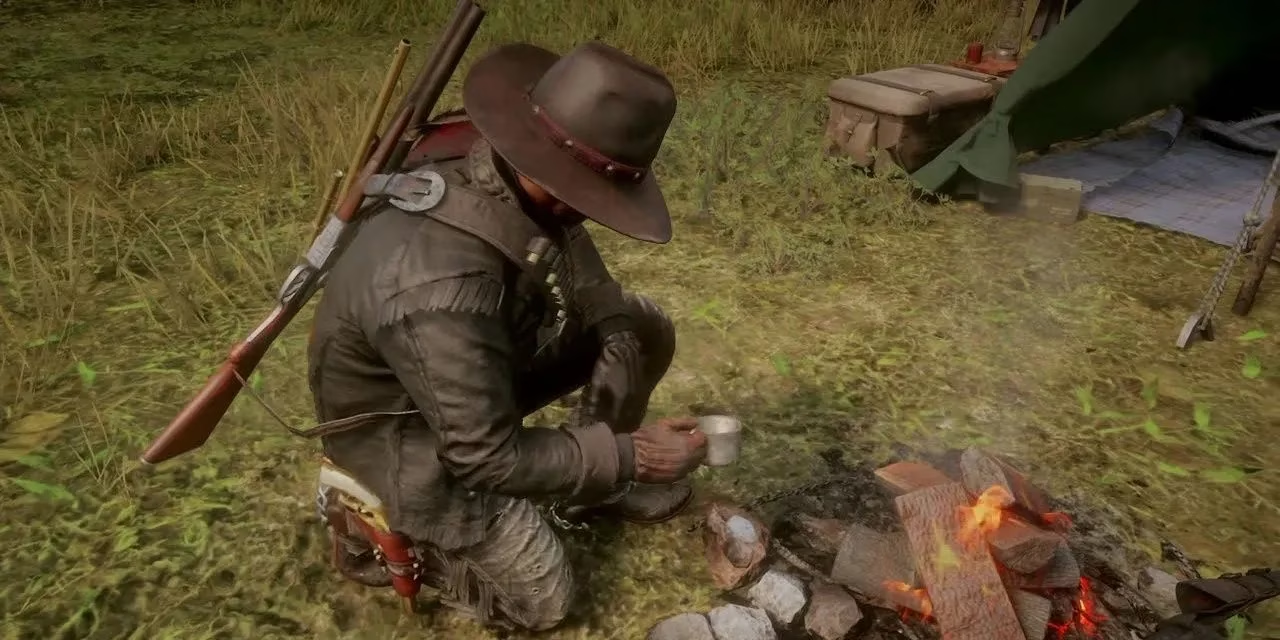
Sometimes it feels as though developers have forgotten what makes video games fun, insisting instead on unnecessary realism. Players do not need to make sure their characters are well fed and fit like in real life. That is tedious. Just give them the story and the fun stuff, like hunting animals. In the first game, hunting was manageable and achievable. One of the most memorable mini-games involved looking for legendary creatures, one of which was Khan the Jaguar. There were only four in total. The sequel, of course, went much bigger. Now loads of creatures exist and there are many, many activities to engage in. That abundance can leave players feeling anxious that they might be missing out. But many no longer have the time to ensure they can complete it all, which is what they did with the first game.
As much as the craftsmanship of Red Dead Redemption 2 deserves admiration, some parts of it are excruciating. The way Morgan walks unhurriedly is a test in patience. The way the story unfurls is slow and somewhat methodical, and because the first game is in fact a sequel in terms of timeline, players already know that everything is going to turn to shit. That knowledge makes them want to speed to the conclusion. All the incredible, fine-tuned, lovingly thought-out interlocking systems tease them with the impossibility of full completion. Many will never take the trouble to perfectly shoot some badgers or whatever to make those outfits.
The first game, meanwhile, was manageable. It did not outstay its welcome. It was epic enough. It still knew that it was a video game instead of some walking simulator crossed with an interactive movie. Marston could run everywhere and for longer, did not need to be fed, and was overall much pacier. If Rockstar introduces mechanics from the second game into the first in a remake, then it will create some chimera of a game that tarnishes it—a creature stitched from two different skins, belonging to neither pasture.
| Aspect | Red Dead Redemption (2010) | Red Dead Redemption 2 (2018) |
|---|---|---|
| Pace | Brisk and manageable | Deliberate, often glacial |
| Protagonist movement | John Marston can run freely | Arthur Morgan walks at a snail's pace |
| Survival systems | Minimal | Feeding, weight, horse care |
| Hunting | Four legendary creatures, including Khan the Jaguar | Vast ecosystem with many legendary animals |
| Completion scope | Achievable | Overwhelming and anxiety-inducing |
| Tone | Elegiac but game-like | Cinematic cowboy simulator |
Still, the thought of seeing Hennigan's Stead—with its golden sunlight shaded by broadleaf trees—or Tall Trees, with its thick atmosphere, in modern graphics remains a tantalising prospect. A faithful remaster could honor the original's pace while letting its landscapes bloom anew. A misguided remake could bury what made Marston's story sing beneath layers of survival meters and animation priority. In 2026, fans continue to hope that Rockstar, once GTA 6 has had its say, will choose the former: a love letter to the West that remembers why the first Red Dead Redemption was already legendary. 🤠🐎🌵