A decade and a half had slipped by since that high-school graduate first booted up Red Dead Redemption on a dusty Xbox 360. Back in 2010, the sweeping plains of New Austin didn’t just answer whether video games still belonged in his life—they shouted a resounding “Yes!” from every sun-baked rooftop. But it was the downloadable extra, Undead Nightmare, that truly sealed the deal. A zombie apocalypse in the Wild West? The idea felt like finding a gold nugget in a campfire stew. So when the same gamer dusted off his copy in 2026, expecting a nostalgic romp with old friends, the experience proved… complicated.
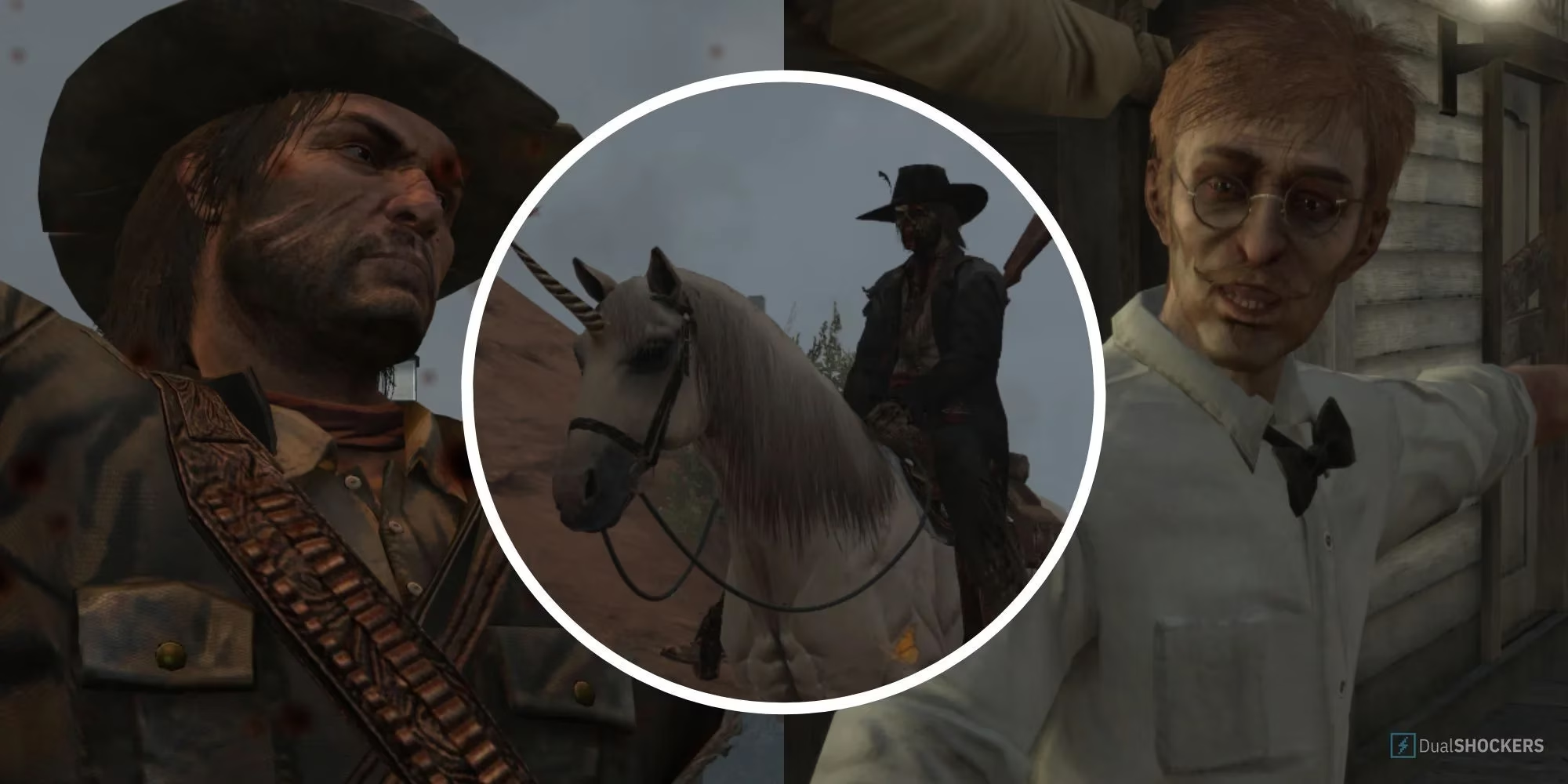
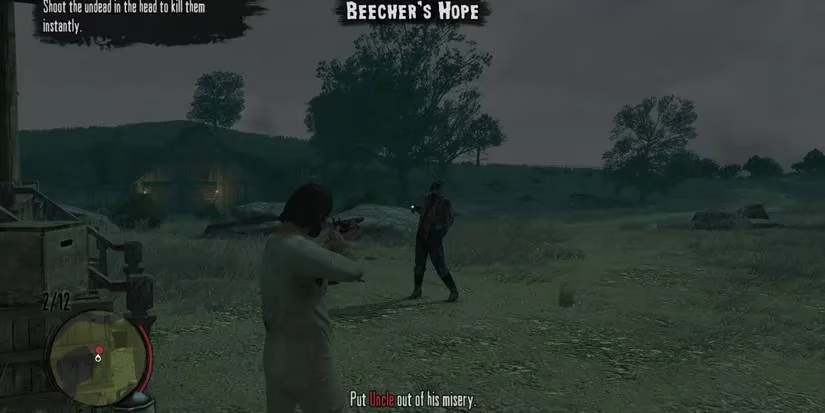
The very first thing Undead Nightmare asked of him now felt like the most bitter pill. There stood Uncle, crotchety and wheezing, barely a step from the armchair he’d worn thin. And the game, with a smirk almost visible through the screen, demanded a bullet right between his eyes. Back in the day, he’d barely blinked. Uncle was just comic relief—a grumpy old parasite who hissed about lumbago. But time had a funny way of reshaping perspectives. After living through Red Dead Redemption 2’s profound expansion of that character, after seeing Uncle’s last drunken stand to protect the family he loved, witnessing John Marston execute him as a “training dummy” felt less like dark comedy and more like a sucker punch. The DLC even doubled down: Marston spat anger over the corpse, and when the undead plague lifted, the family acted like Uncle never existed. “It’s just a joke,” the game seemed to whisper, nudging his ribs. But the grown-up gamer could only shake his head. Man, this didn’t age well.
The cynicism didn’t stop with Uncle. Professor MacDougal and Herbert Moon—two other figures players loved to hate—also got zombified for cheap laughs. It was a formula written in a frat boy’s playbook: take an annoyance, kill him “funny,” cue the canned laughter. But the gulf between that intent and the reality felt wider than Hennigan’s Stead. The whole apocalypse seemed populated by people who couldn’t be bothered to care. Marshall Johnson yawned over the corpses of his deputies. Landon Ricketts acted like the end of the world was merely a spot of bad weather. And Nigel West Dickens, that oily huckster, tried to sell a “zombie repellent” for 100 gold coins—a bizarre slip in a game where dollars ruled. The voice actor had to deliver that line with a straight face, and every time, it landed like a rock. If Rockstar aimed for the biting satire they perfected in Grand Theft Auto V, they drew a cartoon instead.
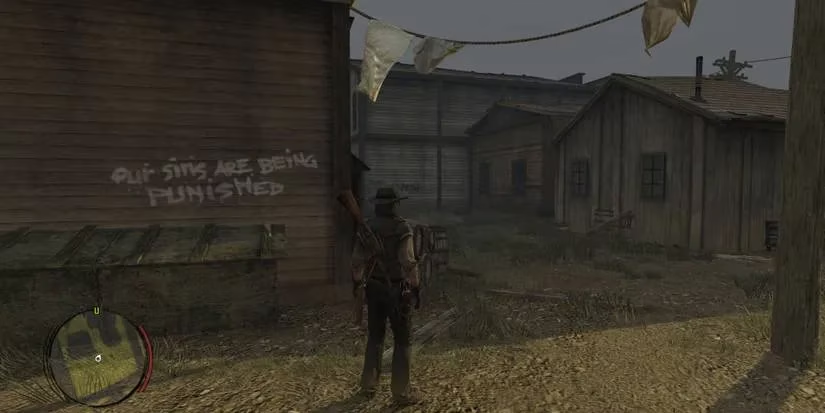
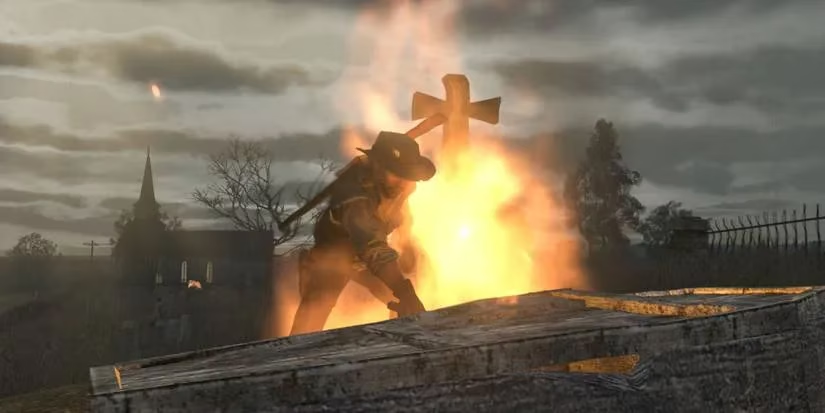
Yet, for all its fumble with the pen, Undead Nightmare still knew how to throw a punch. The gameplay, mercifully, held up like a trusty repeater. Two horde-mode systems gave the dusty apocalypse its heartbeat. First came the cemeteries—John would march into those unholy grounds clutching a torch, the night air thick with the stench of rot and smoke. He’d set coffins ablaze until the earth itself seemed to scream. Then, enough skulls crushed, the big boss would rise: a figure from the main game, sometimes a stranger, occasionally a nobody. But here lay another squandered opportunity. Why toss Captain De Santa in as a late-game twist when the halls of memory were lined with better ghosts? Imagine putting down a shambling Bill Williamson one last time, or staring into the hollow eyes of Dutch van der Linde before planting a slug in his decaying philosophy. “Let me put another bullet in Muller,” the gamer muttered under his breath, still sore about that card-game accusation from another life. Instead, the graveyard villains felt like they’d been picked from a hat with half the names missing.
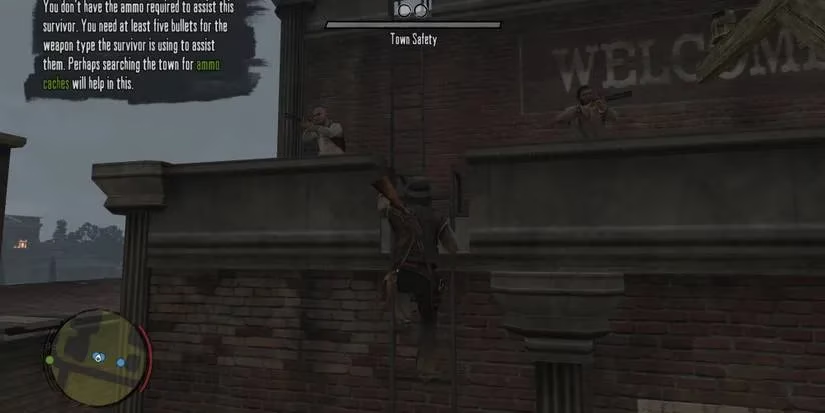
What truly sang, though, were the overrun towns. Each settlement became a stage for desperate improvisation. A bar on the screen filled with every dispatched zombie, and once it topped off, a dot was earned. Fill every dot, and the town was saved. Simple, but deliciously tense—especially when a survivor begged for specific ammunition. The world suddenly shrank to a series of frantic calculations: do I spare these precious repeater rounds to instantly claim a dot, or do I risk the horde pressing closer while I rely on my blade? Early on, ammo was as scarce as a polite word from a Skinner brother, so every decision cut deep. The torch itself turned into a melee weapon so absurdly powerful it practically laughed at game balance. Eventually, bullets overflowed and the torch could solo a crowd, but the mechanic remained a shining jewel. It was the thing to do after the credits rolled, a lonely endgame vigil that outlasted any online multiplayer shutdown. The gamer nodded slowly. At least that part got it right.
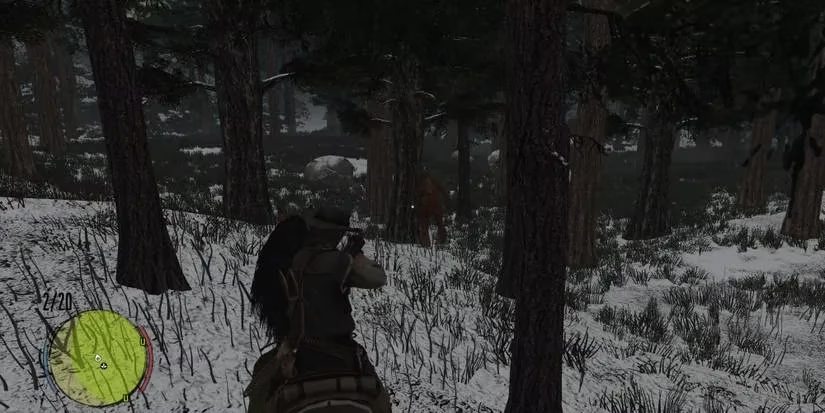
Then there were the creatures that prowled beyond the undead. Hunting the last of the Sasquatches still twisted the heart in 2026—a genocide painted as a grim chore, with each mournful cry of “Why?” landing like a hammer. On the flip side, taming the Four Horses of the Apocalypse felt like a gift from some twisted fable. Pestilence, War, Famine, Death—each gallop thundered with mythic weight. And for the completionist willing to chase the horizon until their eyes bled, the Unicorn waited, a shimmering prize that demanded every percentage point. The gamer remembered gasping when he first mounted it, a confession: “I actually sat there for five minutes just… staring.” But there was a catch, and it gnawed at the experience long after. There were no side missions. Every damn quest was mandatory. The freedom to tackle the apocalypse as Zombie John didn’t exist; the game held your hand from start to finish like an overbearing parent. Compared to DLC that dared to give players a new lens—the 23rd World Tournament in Kakarot, or expansions that dropped in a character you never expected to love—Undead Nightmare felt strangely confined.
Closing the journal on this latest replay, the gamer sat back. In 2010, this had been the pinnacle of bonus content. Now, it was a patchwork quilt: some squares warm and thrilling, others stitched with threads of juvenile spite. It missed as many shots as it hit. The overrun towns and graveyard battles were still worth the price of a dusty cartridge, but they no longer justified the pilgrimage. Even on Halloween night, with its spooky atmosphere trying its hardest, the wiser heart knew there were far better chills waiting elsewhere. Undead Nightmare had become exactly what its name warned: a beautiful, flawed dream best left tucked away in the memory, where the jokes still seemed funny and the gunshots rang with purpose.