I still remember the first time I truly cared about a villain. It wasn't because they were powerful or clever; it was because they changed. As I sit down in 2026 with a library of remasters, retro collections, and long-running series at my fingertips, I'm struck by how certain character arcs have stuck with me like old photographs — faded by time, but vivid in their emotional weight. Redemption arcs in video games aren't just narrative devices; they're mirrors that reflect our own capacity for change, often wrapped in pixelated quests and controller-driven decisions. This year, I found myself revisiting some of these stories, and they still hit just as hard.
When the Villain Was Always Fighting Within
Take Nabooru from The Legend of Zelda: Ocarina of Time. She wasn't a typical right-hand of evil — she was a secret rebel, a double agent inside Ganondorf's own ranks. I always thought her story was like a door that opens inward: you keep pushing the wrong way, until you realize you've been the key all along. She resisted from the shadows, then was brainwashed into becoming a miniboss, only to awaken as a Sage who helps seal Ganon. That pivot from brainwashed enemy to redeemed sage felt less like a plot twist and more like a long-delayed homecoming.
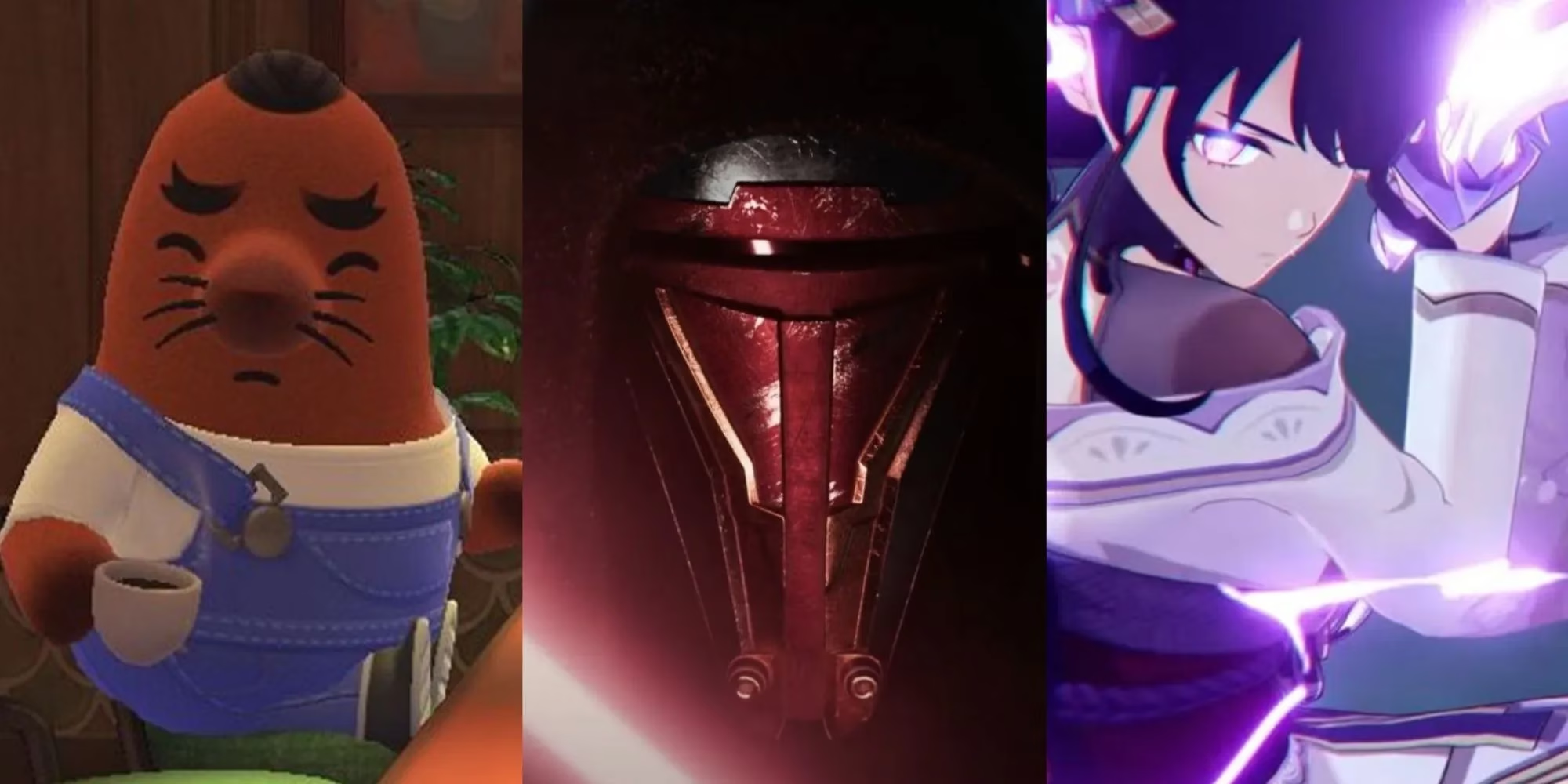
Then there's Beelzebul from Genshin Impact. When she first appeared, she was a storm-front of tyranny, stripping away visions and dreams alike. Her redemption didn't come through defeat, but through understanding. The Traveler didn't just beat her; they held up a mirror to show her the isolation she had built. Her evolution reminded me of a frozen river finally cracking under the persistent warmth of spring — slow, then all at once.
From Kidnapper to Mascot: The Ultimate Turnaround
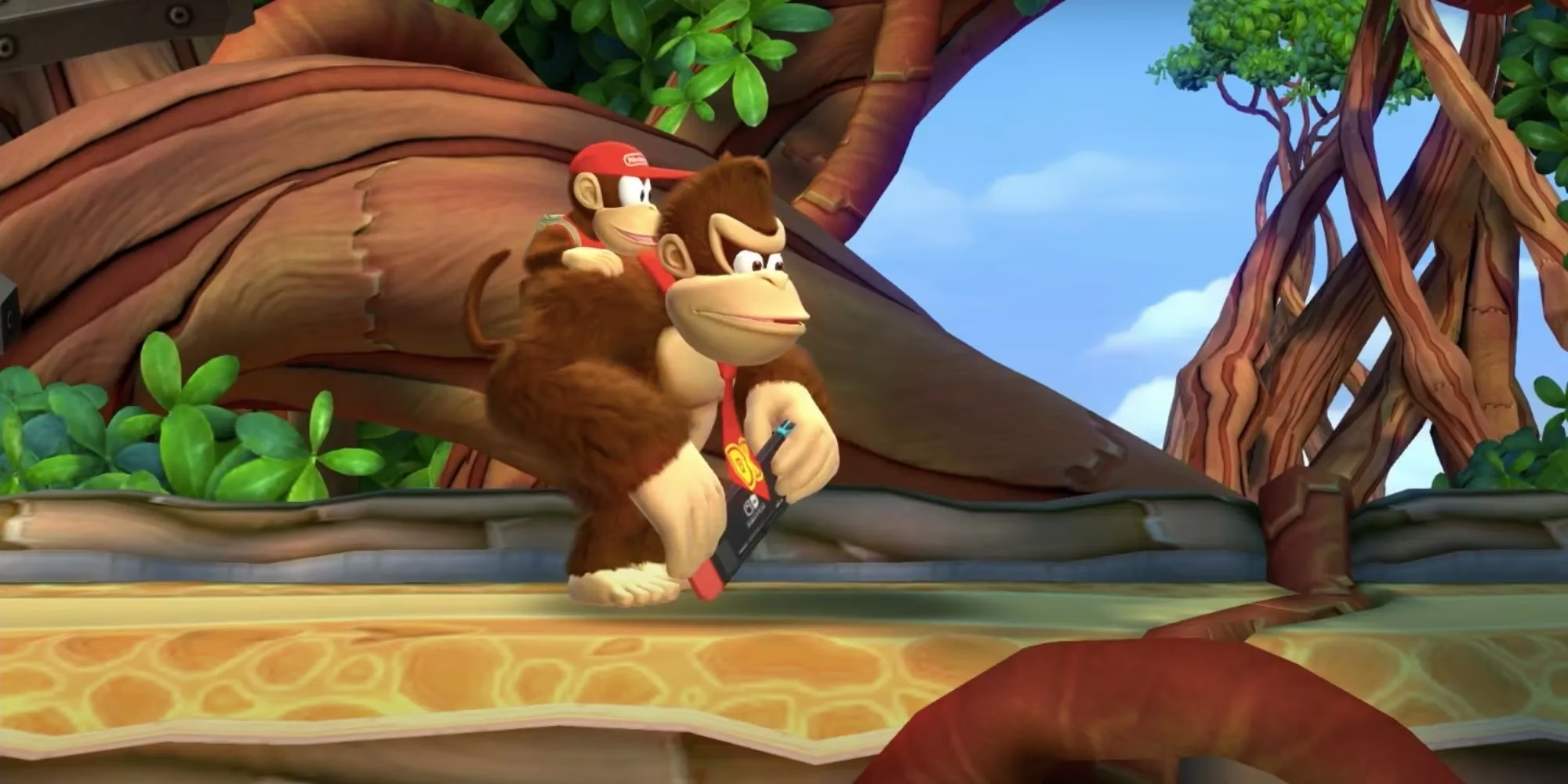
The story of Donkey Kong is perhaps the most literal corporate redemption arc ever coded. Back in the 1980s, he was the antagonist — a barrel-throwing ape who climbed construction sites with a kidnapped Pauline. Today, he's a grinning, tie-wearing icon who races go-karts and plays golf with Mario. This transformation feels like a cartographer redrawing a map after an earthquake; the terrain shifted so completely that the original villain is now indistinguishable from the hero. It's a testament to how a character can outgrow their sins when given enough decades and a pile of banana-themed spin-offs.
The Weight of a Reset Button
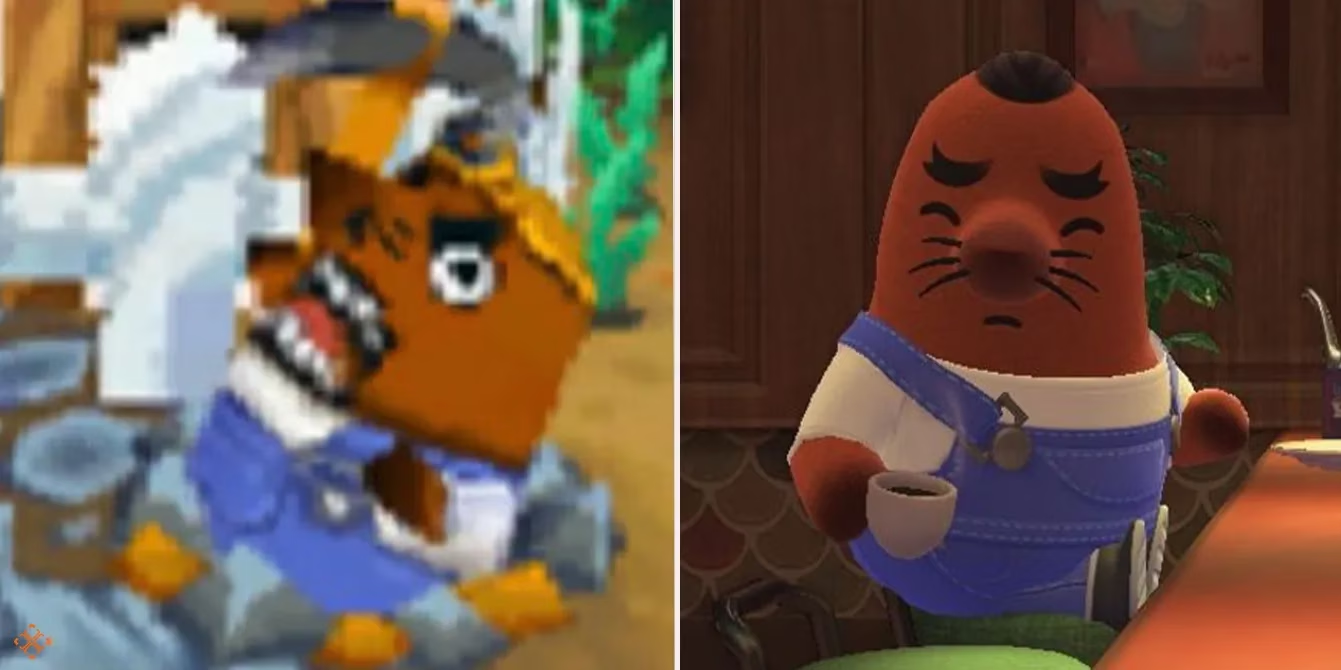
Not all redemptions require a sword or a spell. Sometimes it's just a change of perspective. Mr. Resetti, that angry mole from Animal Crossing, dedicated his life to yelling at players for not saving properly. He was a volcano of frustration — erupting at every minor tremor of a power outage. But when New Horizons' 2.0 update dropped, I found him in The Roost, sipping coffee and philosophizing about reset buttons. He finally admitted that maybe, just maybe, they weren't so bad. That quiet moment of self-acceptance was like a Vespa passing a supercar: less explosive, but infinitely more graceful. It's a personal redemption that doesn't need to save the world, just the mole himself.
The Pendulum Swings Both Ways
Revan from Star Wars: Knights of the Old Republic is a legend precisely because the pendulum of his morality never settled. A Jedi who became Darth Revan, then was mind-wiped and retrained as a Jedi again, his journey is a Möbius strip of light and dark. When he finally confronted his own Sith-created army, it wasn't a redemption arc so much as a karmic loop. Even in 2026, modding communities and remake rumors keep Revan alive, proving that fans love a hero who has already fallen and risen so many times that the very idea of "alignment" feels arbitrary.
In Kingdom Hearts, Riku's path is just as tangled. He started as a jealous friend consumed by darkness, then spent entire games clawing his way back to the light — but he didn't reject the darkness; he learned to live with it. That's the kind of maturity that turns a rival into a true ally. His story reminds me that sometimes the best redemption isn't erasing your past, but integrating it.
A Bomb-omb With a Heart
Perhaps the purest redemption I've ever witnessed came from a character with a short fuse — literally. Bobby, the amnesiac Bob-omb in Paper Mario: The Origami King, joins Mario with no memories and no purpose. But his friendship with Mario and Olivia forges a new identity, and his sacrifice hits like a ton of bricks. It's a redemption not from villainy, but from a life without meaning. For a Bob-omb, a creature designed to explode and be forgotten, Bobby found a reason to burn bright. That's a powerful reminder that even minor NPCs can carry the emotional core of a game.
The Rival Who Became a Brother
Knuckles the Echidna in Sonic the Hedgehog 3 was a classic manipulated rival. He guarded the Master Emerald and believed Sonic was the thief. For much of the game, he's an obstacle you just want to spin-dash past. But when Dr. Robotnik betrays him, Knuckles flips sides without hesitation. That pivot is so smooth it feels like a well-executed parkour roll — no hesitation, just a natural motion toward doing the right thing. Since then, he's been as loyal as Tails, proving that trust, once affirmed, can turn a one-time enemy into a cornerstone of friendship.
Why These Arcs Still Matter
Every character I've mentioned has something in common: their redemption isn't an erasure of their past, but a reclamation of their future. In 2026, as games continue to explore morally gray worlds and player choice systems, these classic arcs serve as blueprints. They remind developers that a good redemption isn't a switch flipped, but a tapestry woven with regret, struggle, and the quiet courage to be better. And for us players, they're proof that no one is beyond change — even if they're a pixelated ape or a coffee-sipping mole.