The dust of the Van der Linde gang's collapse settled over a decade ago, but one figure's shadow still stretches long across my memory. Charles Smith wasn't just another outlaw; he was the quiet conscience in a world of roaring chaos. While Arthur Morgan's redemption arc and John Marston's desperate struggle for a normal life captivated millions, it was Charles's steady presence, his unshakeable moral compass, that anchored the entire, sprawling tragedy of Red Dead Redemption 2. His departure, however, felt less like a conclusion and more like a chapter ripped from the book, leaving a void of unanswered questions that still gnaw at me today. In a story obsessed with endings—some bloody, some bittersweet—his was the one left frustratingly, beautifully open.
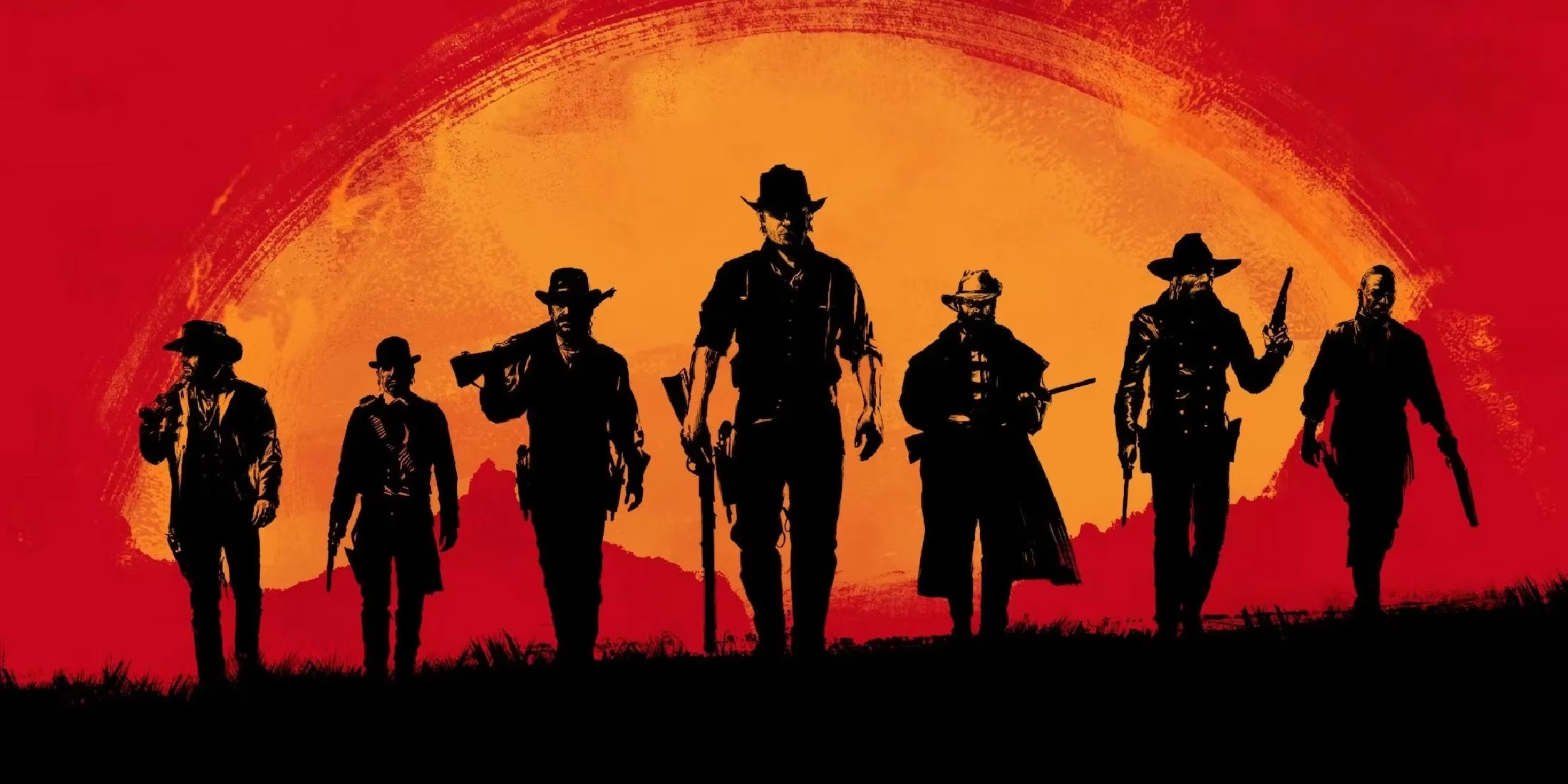
From the moment I first rode with him, Charles stood apart. In a camp full of schemers, braggarts, and desperate souls clinging to Dutch's crumbling dream, he possessed a clarity that was almost unnerving. He wasn't blinded by loyalty or greed. He saw the gang for what it was becoming, and his warnings, though often unheeded, carried the weight of hard truth. His skills were undeniable—a scout who could read the land like a book, a fighter whose strength was matched only by his restraint. But it was his heritage and his quiet dignity that truly defined him. In an era where the brutal displacement of Native Americans was a grim backdrop, Charles's connection to that experience wasn't a side note; it was a core part of his soul, a source of both profound pain and resilient strength. He was the gang's anchor to a reality they were all trying to escape.
My time with him, whether through Arthur's eyes in the main story or John's in the epilogue, was always marked by a sense of unspoken respect. He never sought the spotlight, yet his actions always shone the brightest. He was the one who fought not for glory, but for what was right. He was the one who, in the gang's darkest hour, performed its final act of grace: burying Arthur Morgan on a sun-drenched cliffside. That solitary, somber task, undertaken when so many others had fled or betrayed their brother, said more about Charles's character than any grandiose speech ever could. He honored the dead when the living had failed them.
And then, he helped build a future. Helping John construct his ranch at Beecher's Hope was a poignant transition—from destroying lives to literally building a home. Charles swung the hammer not as an outlaw, but as a friend, repaying a debt to a man striving for the peace they all once dreamed of. Yet, once the house was built and the fences were raised, his work was done. His goodbye was as understated as the man himself. He spoke of heading north to Canada, of finding a place to settle, to maybe start a family far from the ghosts of the American frontier. He rode away from the Marston family, and from us, into an uncertain horizon.
That uncertainty is the heart of the matter. Other characters had ambiguous ends, but theirs felt different. Sadie Adler rode off into a future of bounty hunting and adventure, her path forged in fire and clearly laid out. Charles's dream, however, feels fragile, haunted by the very history he carries. The turn of the 20th century was not a kind time for a Native man seeking land and peace, even in Canada. The worries linger:
-
Could he truly escape the prejudice and violence that followed his people?
-
Did he find the solitude he sought, or was he met with new forms of the same old struggles?
-
Did the quiet, family man he hoped to become ever get a chance to exist?
The game gives us hope but no guarantees. It's a masterful, yet agonizing, piece of storytelling.
Now, in 2026, with the gaming world abuzz about future projects (even as Grand Theft Auto VI dominates the conversation), the question of Red Dead Redemption 3 lingers. If it ever comes, and if it ventures into the years after 1907, it holds the perfect key to unlock Charles's final chapter. I don't necessarily need to ride alongside him again as a main character—though I wouldn't complain! What I crave is closure. A simple reference, a discovered letter, a story told by an old-timer in a remote trading post. Something that tells me whether the man who buried heroes and built homes found one for himself.
| Character | Known Fate | Why Charles's is Different |
|---|---|---|
| Arthur Morgan | Concluded with his death & redemption. | His story is complete, a finished symphony. |
| John Marston | Concluded in RDR1; a tragic, definitive end. | We saw his entire journey, from start to bitter finish. |
| Sadie Adler | Ambiguous, but leaning toward a prosperous future. | Her path, while open-ended, points clearly upward. |
| Charles Smith | Truly Unknown. Dreams stated, but feasibility questioned. | His fate is tied to unresolved historical struggles, leaving real doubt. |
Leaving some stories to the player's imagination is a powerful tool. But for Charles, it feels less like an artistic choice and more like an oversight. He was the moral center, the quiet force who deserved a definitive peace more than anyone. His journey from a respected gang scout to a man seeking his own promised land is a microcosm of the American West's dashed dreams and enduring spirit. To leave that journey forever unfinished does a disservice to one of the franchise's most profound creations. Rockstar painted a masterpiece with Red Dead Redemption 2, but the portrait of Charles Smith remains, in my mind, tantalizingly incomplete. I still look to the northern skies, wondering if he finally found his quiet place in the world.