In the ever-evolving landscape of open-world gaming, there's a noticeable and refreshing shift that's been gaining momentum through the 2020s. While the archetype of the young, plucky hero—wide-eyed and ready to discover the world alongside the player—once dominated the scene, developers are increasingly turning to a different breed of protagonist. Enter the seasoned veteran, the middle-aged character whose wisdom, scars, and complex history aren't just backstory; they are the very lens through which the game world is explored. This isn't just a cosmetic change; it's a fundamental shift in narrative design that offers players a more introspective, grounded, and often more emotionally resonant journey. These characters come with baggage, sure, but that baggage is filled with fascinating stories, hard-earned pragmatism, and a perspective that makes every discovery and confrontation feel earned. It's a trend that proves heroes aren't defined by their youth, but by their courage to face expansive worlds with eyes wide open, yet all too aware of what's at stake.
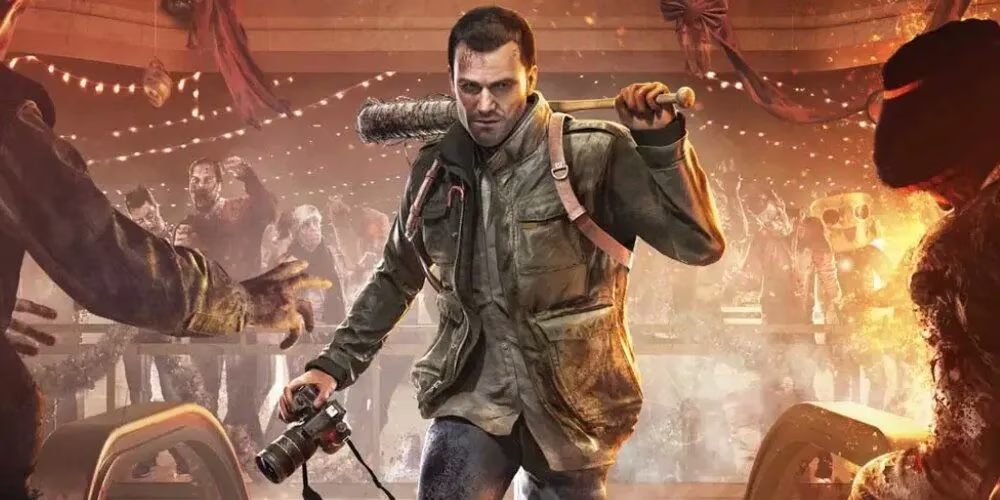
Take Frank West, for instance. The guy has seen some things. When players first met him in the original Dead Rising, he was all about that journalistic hustle, a fun-loving guy chasing the next big scoop. Fast forward to Dead Rising 4, and the man who survived a zombie-infested mall is a changed soul. He's still got that iconic charisma and a quip for every decapitated zombie—some things never change—but beneath the surface lies a hardened pragmatism and a near-obsessive drive to contain outbreaks. This older, more weathered Frank navigates the significantly larger open world of Dead Rising 4 not with naive wonder, but with the calculated efficiency of a survivor. The playground is bigger, packed with chaotic activities and an absurd arsenal of makeshift weapons, but Frank's approach is that of a professional cleaning up a mess he's all too familiar with. It's a classic case of "been there, done that, got the blood-stained t-shirt."
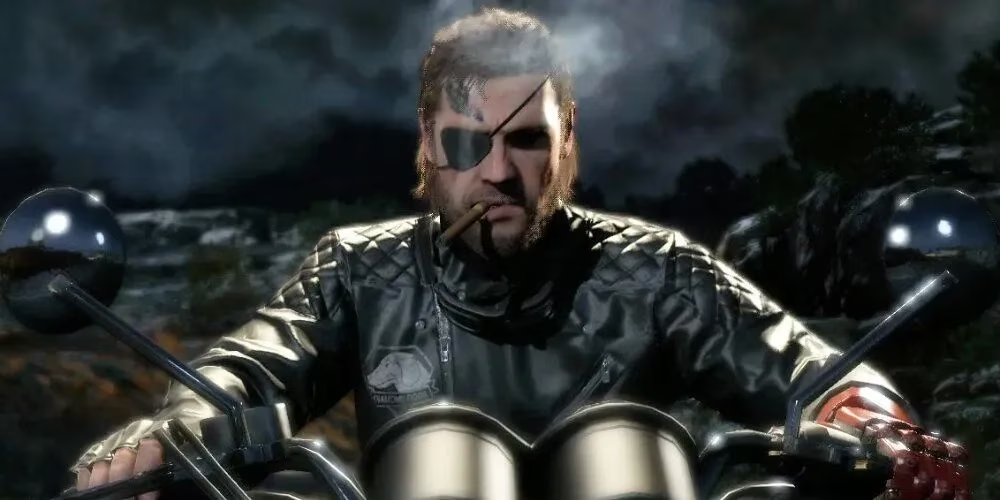
Then there's the legend himself, Big Boss, in Metal Gear Solid V: The Phantom Pain. By this point in the timeline, the man is a walking, talking monument to trauma and military history. After the emotional gut-punch of Operation Snake Eater and the geopolitical tightrope walk of Peace Walker, Boss is less a man and more a myth—a role model for soldiers worldwide. His final open-world outing in Afghanistan and Africa is a mission of grim necessity: build Mother Base and get payback. This isn't a young soldier's first deployment; it's a veteran's last stand. The gameplay loop of recruiting soldiers and scavenging resources directly feeds into his legacy-building, a meta-commentary on the burdens of command. The vast, varied environments and slick gunplay are fantastic, but they're framed by the weight of a man carrying the sins of his past. Even considering the game's infamous narrative twist, the player character embodies the essence of Big Boss—his skills, his tactics, his legend. It's a powerful exploration of identity through the lens of a war-weary protagonist.
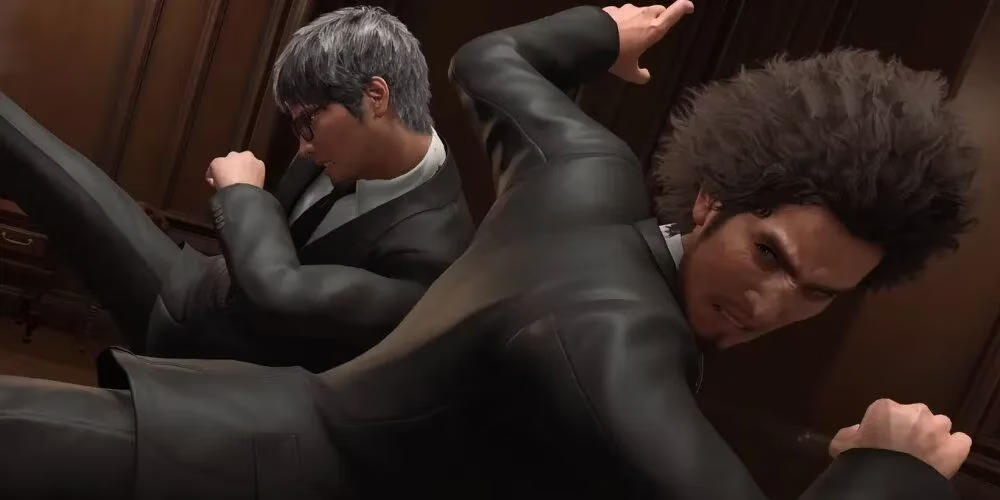
The Like a Dragon (formerly Yakuza) series has mastered this duality. Infinite Wealth (2024) presents a brilliant tag-team of experience and enthusiasm. Kazuma Kiryu, the Dragon of Dojima, is now an older, stoic man facing his own mortality. His decades of chaotic yakuza wars have sanded down his edges, leaving a deeply introspective and wise figure. Contrasting him is Ichiban Kasuga, who, while only slightly younger, possesses the boundless, excitable energy of a man who still sees the world as full of possibility. Together, they explore the massive open-world hubs of Yokohama and Honolulu. Kiryu's sections are tinged with melancholy and reflection, while Ichiban's are vibrant and adventurous. The game's plethora of absurd side activities—from running a resort to sujimon battling—are filtered through these two distinct, age-informed perspectives, making the world feel richer and more personal. It's a masterclass in how character age directly shapes player interaction with an open world.
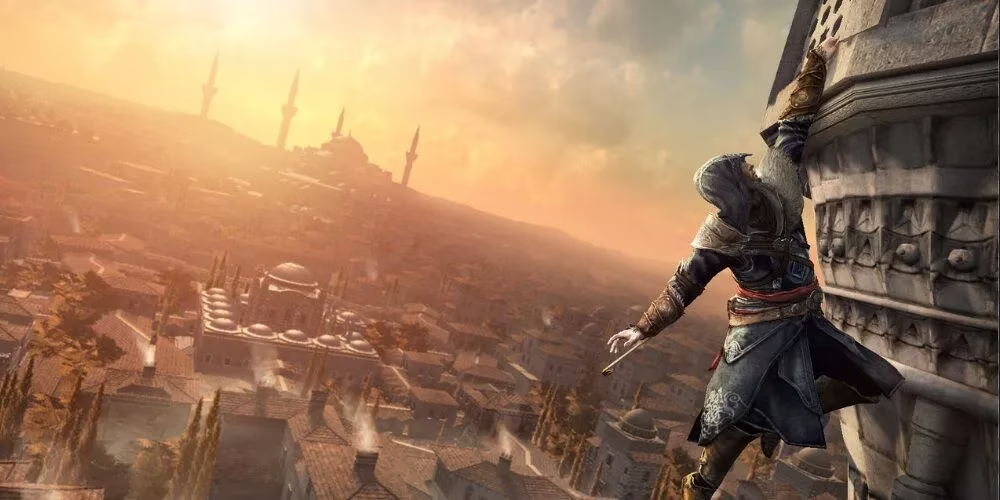
Few character arcs in gaming are as celebrated as Ezio Auditore's, and it's his evolution into an older assassin that cements his legacy. We meet him as a brash Florentine playboy in Assassin's Creed II, watch him mature into a leader in Brotherhood, and finally encounter him as a grizzled master in his 50s in Revelations. This isn't an older man past his prime; this is a predator at the peak of his efficiency. In Constantinople, the open world is larger and more vertical than ever, and the older Ezio navigates it with a lethal grace that feels earned. His mission is no longer about revenge, but about understanding—seeking wisdom in a hidden library. The beautiful, sprawling city isn't just a playground for parkour; it's the final chapter in a lifelong journey. His one-liners are still there, but they're delivered with the weariness of a man who has seen too much, making his story's conclusion profoundly impactful.
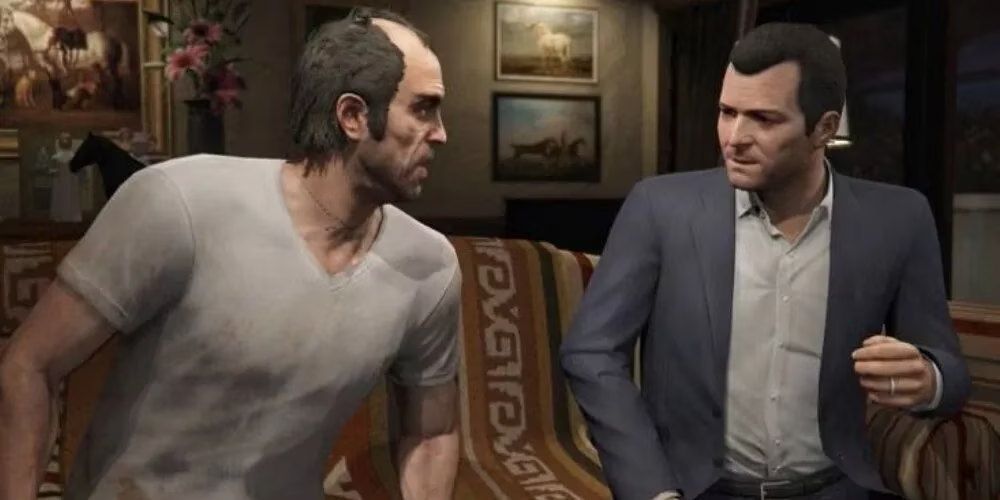
Rockstar's Grand Theft Auto V brilliantly uses generational conflict as a core gameplay and narrative device. Michael and Trevor are men staring down the barrel of middle age, haunted by the ghosts of their chaotic past. Their younger counterpart, Franklin, represents the ambition and naivety they once had. The dynamic creates hilarious and unexpectedly emotional moments. Michael, the retired bank robber stuck in a mid-life crisis, and Trevor, the unhinged force of nature clinging to a bygone era, constantly vacillate between warning Franklin off their path and dragging him headfirst into it. The sun-drenched, satirical open world of Los Santos is a perfect backdrop for their stories of dissatisfaction. Their hunger for "one last score" or a return to chaotic glory is a direct response to the emptiness of their current lives. Playing as these older characters adds a layer of tragic comedy to the mayhem; you're not just causing chaos, you're witnessing men desperately trying to recapture a feeling that's long gone.
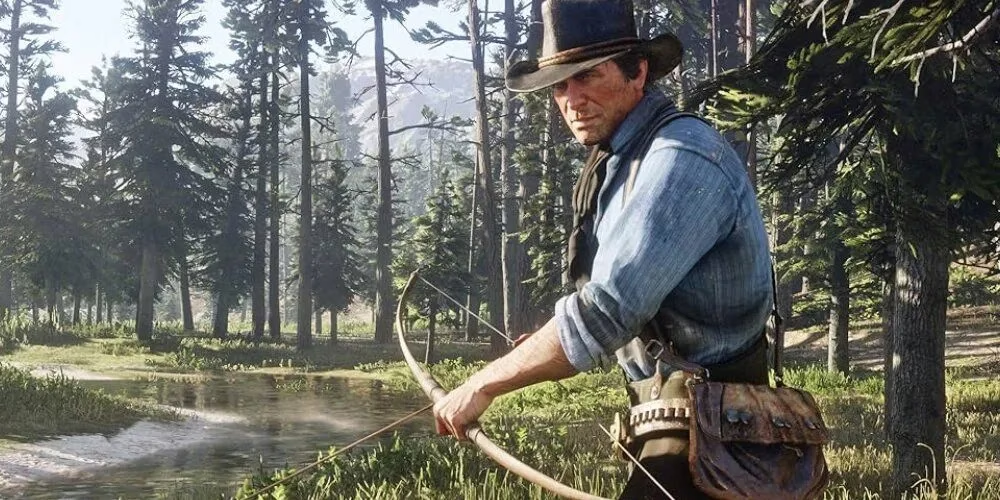
Perhaps the pinnacle of this trend is Arthur Morgan in Red Dead Redemption 2. Arthur is a man deep in the autumn of his life, both as an outlaw and, unknowingly, in terms of his health. His entire journey is a slow, painful, and beautiful reckoning with a life lived on the wrong side of the law. Loyal to a fault to his surrogate father, Dutch, Arthur begins to question the gang's morality and his own role within it. The vast, breathtaking open world of America's heartland becomes the stage for his redemption. As Arthur, players don't just hunt, fish, and explore; they help strangers, journal their thoughts, and slowly piece together the man Arthur could have been. His interactions reveal a tragic past—a lost son, a hated father—adding profound depth to the gruff exterior. The world reacts to this complexity; NPCs remember your kindness or cruelty, and side missions often reflect Arthur's internal struggle. His age and experience make the player's actions feel weightier. Robbing a train isn't just fun; it's another sin on Arthur's soul. Helping a stranger isn't just a side activity; it's a step toward absolution. Arthur's story demonstrates that the most compelling open-world narratives aren't about saving the world, but about saving one's soul, and that's a journey best told through the eyes of someone who has lived enough to have something to lose.
Why Older Protagonists Resonate in 2026
As we look at the gaming landscape in 2026, the appeal of the veteran protagonist is clearer than ever. Here's the breakdown:
| Trait | Impact on Gameplay & Narrative |
|---|---|
| Earned Wisdom | Decisions feel tactical, not reckless. Dialogue choices carry the weight of experience. |
| Complex Morality | Characters aren't clean slates; they have histories that justify morally gray actions. |
| Emotional Depth | Stories can explore themes of regret, legacy, mortality, and redemption more effectively. |
| World Reactivity | The game world often acknowledges the character's reputation or age, creating immersion. |
| Player Connection | Older players see reflections of their own lives; younger players gain a different perspective. |
This shift signifies a maturing medium. Games are increasingly embracing narratives that go beyond the "hero's journey" and delve into the "hero's reflection." It's no longer just about becoming someone; it's about who you've been and who you choose to be with the time you have left. These older protagonists remind us that adventure, growth, and meaning aren't exclusive to the young. Sometimes, the most fascinating stories come from those who have already lived a few. The open world is no longer just a frontier to be conquered; in the hands of these veterans, it becomes a mirror, a therapist's couch, and a final proving ground all at once. And that, for many players, is a journey worth taking time and time again.