You know, as a gamer in 2026, I've been thinking a lot about how video game sequels have evolved. With development costs skyrocketing and player expectations higher than ever, studios face immense pressure to deliver sequels that both honor their legacy and push boundaries. The most fascinating ones, I find, aren't always the direct continuations. Sometimes, the boldest moves involve completely recontextualizing the world we thought we knew. It's a high-risk, high-reward strategy that, when done right, creates something truly special—often even surpassing the original magic that started it all.
Let's talk about God of War. The original trilogy was pure, unadulterated rage. I remember controlling Kratos, a character defined almost entirely by his fury, as he tore through the Greek pantheon. It was cathartic, sure, but by the end, you had to wonder: what's left for this guy? The 2018 reboot, and its 2022 sequel, answered that question in a way I never expected. It didn't just continue the story; it fundamentally changed its heart.
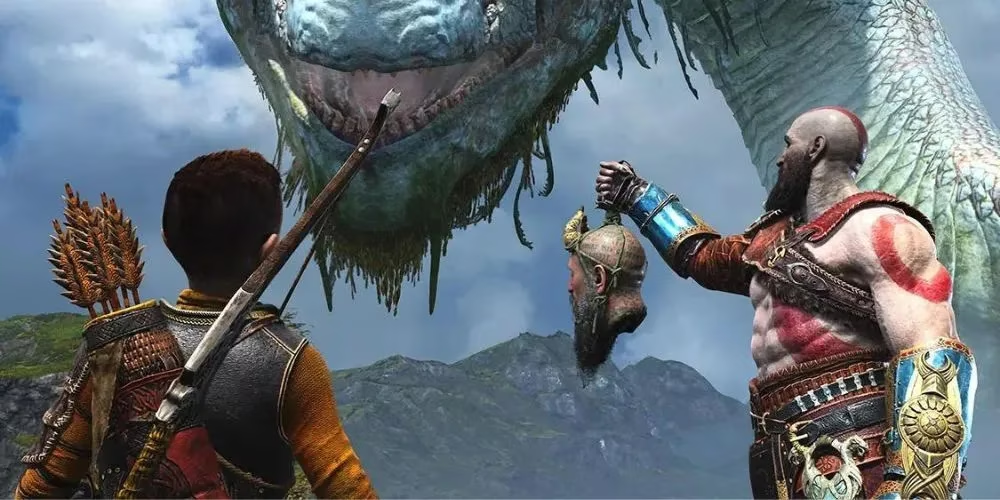
Suddenly, Kratos wasn't just an engine of vengeance. He was a father, struggling with a past he desperately wanted to leave behind. The game brilliantly removed most human enemies, focusing instead on monsters and beasts. This wasn't just a gameplay tweak; it was a narrative masterstroke. It allowed Kratos's violence to feel less like mindless slaughter and more like the protective, if brutal, actions of a parent. Watching him slowly, painfully learn to connect with Atreus was more compelling than any god-slaying spectacle from the old games. The sequel proved that the most powerful journey isn't about killing gods, but about building something—a family, a legacy—from the ashes of your past.
Then there's BioShock Infinite. Oh, Rapture. That underwater art-deco dystopia was a place of wonder and horror I thought could never be replicated. BioShock 2 tried, and while it was a solid game, it couldn't recapture that initial shock of discovery. Ken Levine and Irrational Games knew they couldn't just build another city under the sea. So, they looked up.
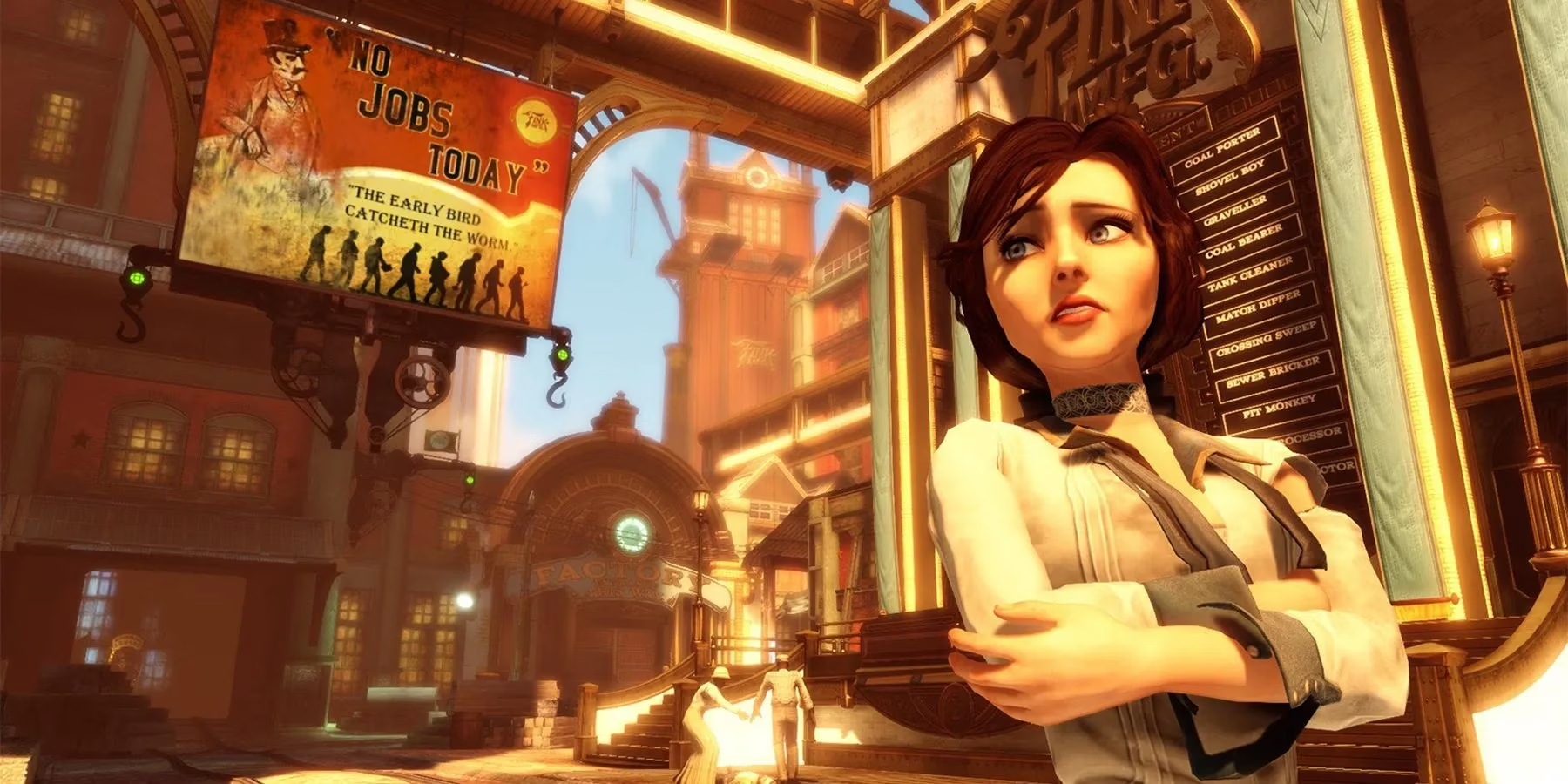
Columbia was the polar opposite of Rapture: a city in the clouds, bathed in sunlight and American exceptionalism. On the surface, it seemed completely disconnected. But the genius of Infinite was how it used the mind-bending concept of "constants and variables" and parallel dimensions to weave the two stories together. It recontextualized Jack's adventure in Rapture not as a standalone tragedy, but as one possible outcome in a vast, multiversal equation. That ending, where Booker and Elizabeth see the infinite lighthouses and doors... it didn't just conclude Infinite; it retroactively made the entire BioShock universe feel deeper, more connected, and infinitely more tragic. It was a narrative gamble of epic proportions, and it paid off with one of the most unforgettable conclusions in gaming history.
Mass Effect: Andromeda took a different kind of risk. The original trilogy built to this colossal, universe-ending threat with the Reapers. Shepard's story felt complete. So, where do you go from there? The answer was simple: you leave. The Andromeda Initiative was a brilliant narrative reset button.
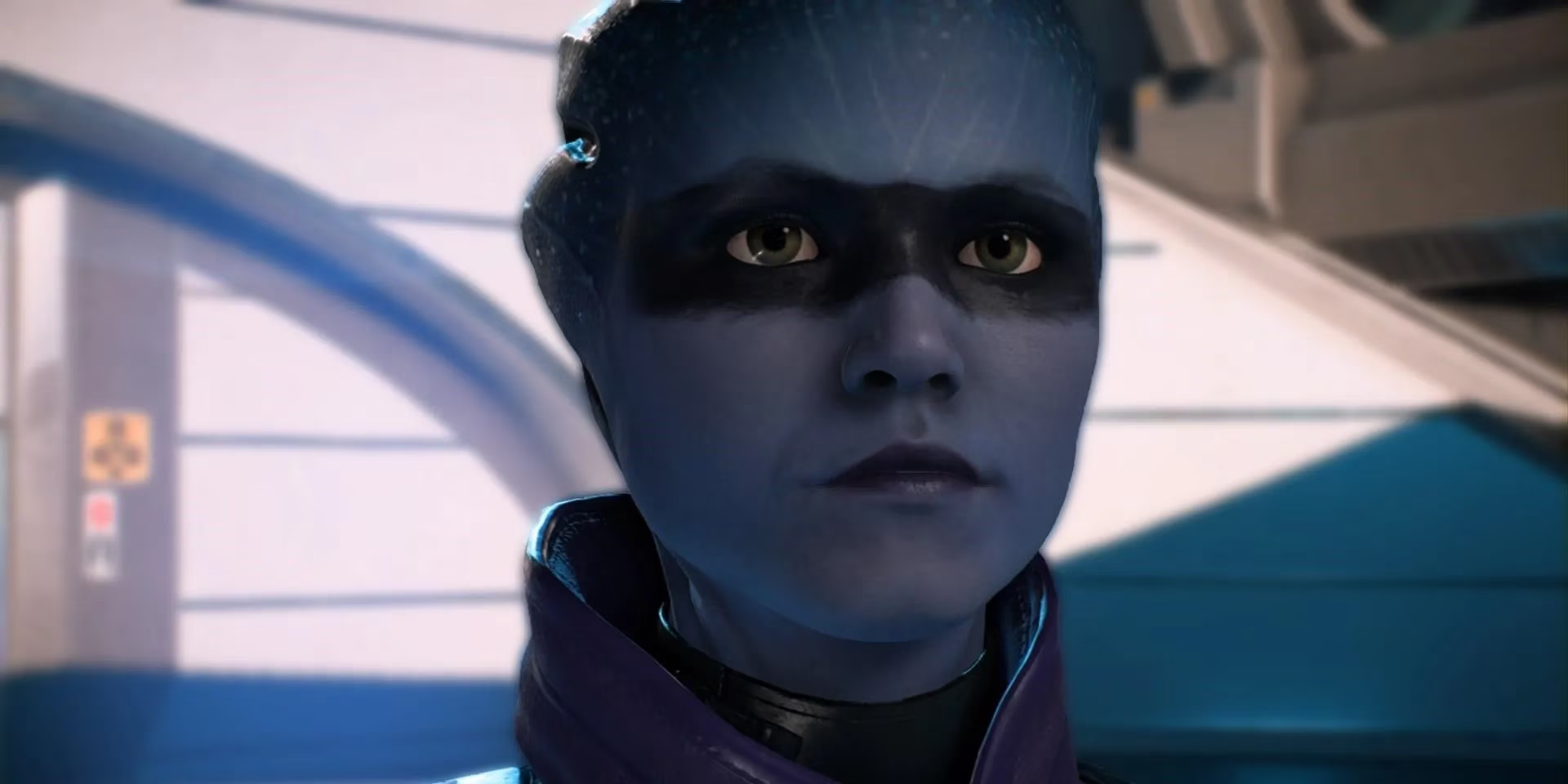
It recontextualized the Reaper War from the Milky Way as a hidden, driving force for a desperate colonization effort. The settlers of the Hyperion weren't heroes coming to save a galaxy; they were refugees and pioneers, fleeing a doom they couldn't comprehend, seeking a fresh start. Playing as Ryder, piecing together your father's secrets about the real reason for the journey, gave the exploration a poignant, fearful edge. The game had its flaws, sure, but its core premise—abandoning a beloved setting entirely to start anew—was one of the boldest sequel concepts I've ever seen. It traded the weight of galactic politics for the hope and peril of being a true pathfinder.
Perhaps no game has mastered the art of the prequel-sequel like Red Dead Redemption 2. We all knew how John Marston's story ended. Rockstar's challenge was making us care about the journey to that ending. By making us play as Arthur Morgan, a man doomed by the timeline, they created a masterpiece of dramatic irony.
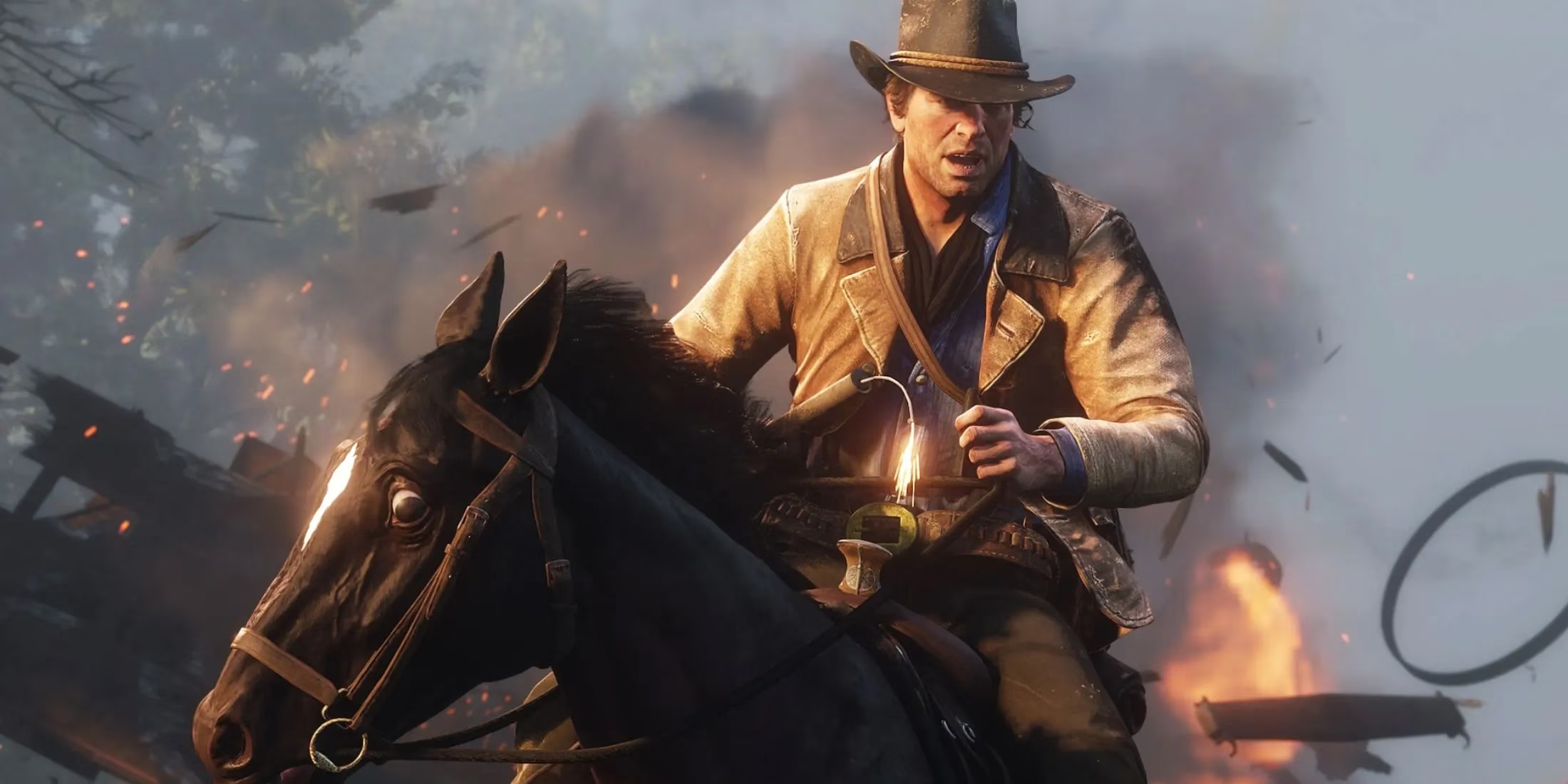
Every moment of camaraderie in Dutch's gang is shadowed by the knowledge of its inevitable collapse. Watching Dutch's descent into madness, feeling the poisonous influence of Micah, and battling a literal illness (tuberculosis) that you know will win... it's heartbreaking. Arthur's story recontextualizes every single moment of the first game. John's relentless pursuit of Micah isn't just justice; it's the final act of Arthur's legacy, an act that ironically seals John's own fate with the Pinkertons. The sequel made the original game's story richer, sadder, and more profound. It showed that a prequel isn't about surprising you with the destination, but about making the journey to that known destination utterly unforgettable.
We can't forget the classics, either. Half-Life 2 didn't just continue Gordon Freeman's story; it exploded its scale and stakes. The claustrophobic corridors of Black Mesa were gone, replaced by the dystopian urban sprawl of City 17 under Combine rule.
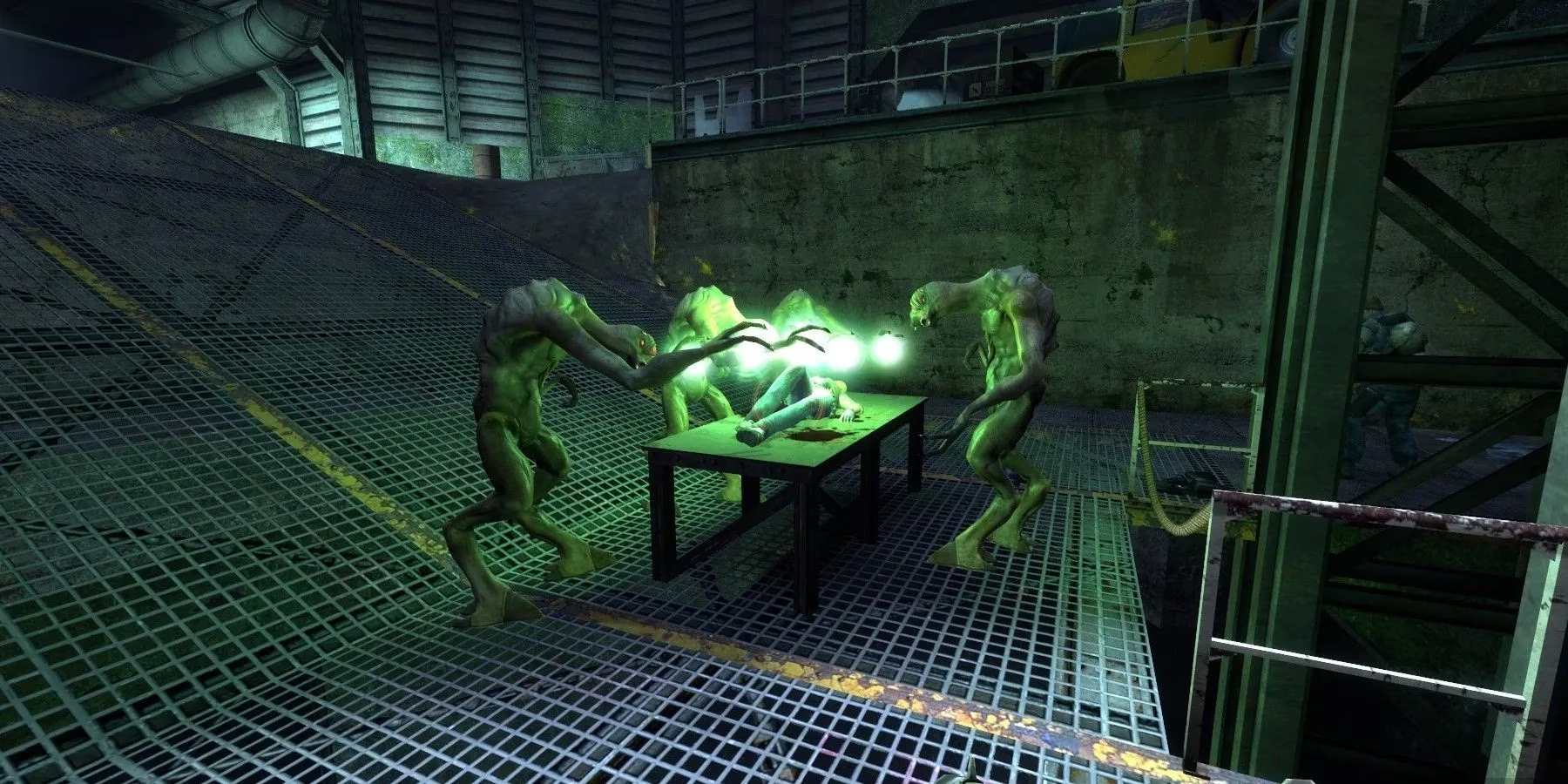
This shift brilliantly recontextualized the alien invasion from the first game. The creatures from Xen weren't just hostile invaders; they were refugees, displaced by the vastly more powerful and organized Combine. The Vortigaunts, once enemies, became uneasy allies. The sequel reframed the entire conflict, turning a story about a science experiment gone wrong into a saga of planetary occupation and resistance. It set a new benchmark for environmental storytelling and physics-based gameplay, proving that a sequel's job isn't to give you more of the same, but to use the foundation of the original to build something even grander and more immersive.
Looking back at these games from my perspective in 2026, the trend is clear. The most memorable sequels aren't afraid to break the mold. They understand that carrying forward the spirit of a franchise is more important than rigidly following its plot. Whether it's shifting a character's core identity (Kratos), leaping to a new narrative dimension (BioShock), fleeing to a new galaxy (Mass Effect), deepening a tragedy we already knew (Red Dead), or expanding a world's lore to cosmic scales (Half-Life), these games took huge risks. They trusted that players would embrace a new context, a new perspective. And in doing so, they didn't just make great sequels—they redefined what their franchises could be. That, to me, is the true mark of legendary game development.