As a dedicated player who has spent countless hours exploring the vast, living world of Red Dead Redemption 2, I often find myself reflecting on the roots of this incredible franchise. While Arthur Morgan and John Marston's stories are now legendary, the series' true origin story began not with an open world, but with a focused, arcade-style shooter that dared to define the video game Western. In 2025, with the legacy of the Red Dead series firmly cemented in gaming history, I believe it's more important than ever to look back at the title that started it all: 2004's Red Dead Revolver. For a mere $15 on PlayStation and Xbox stores, you can experience the raw, foundational DNA of Rockstar's Western masterpiece.
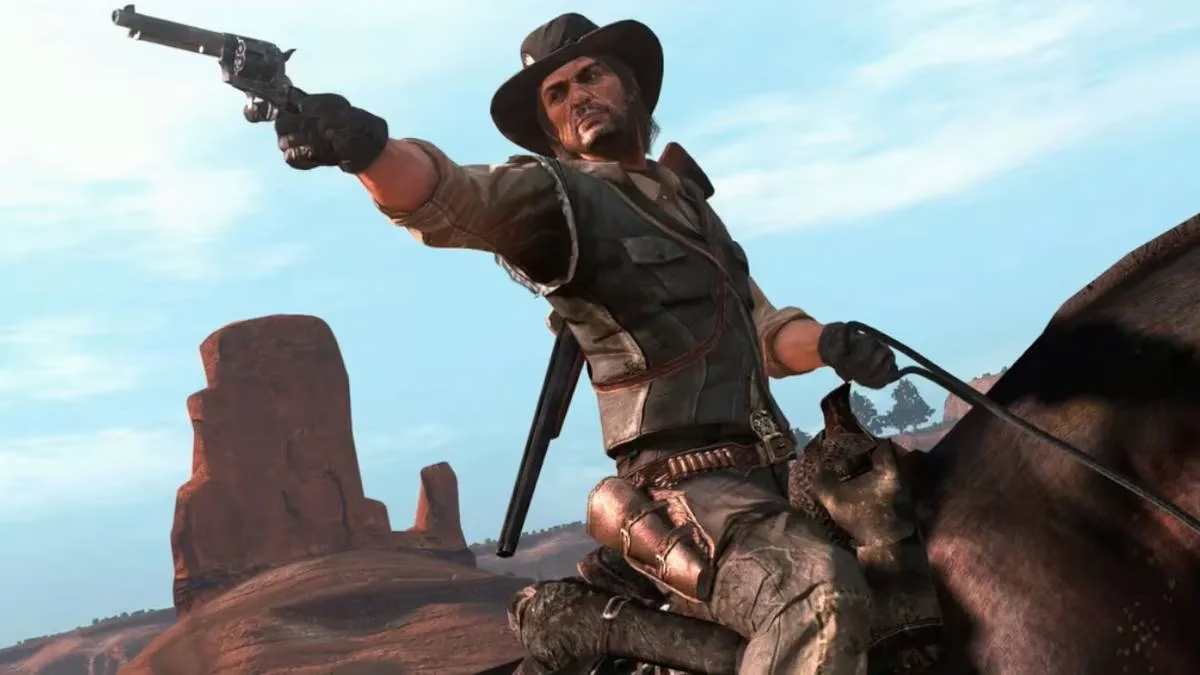
Let's be clear from the start: Red Dead Revolver is not Red Dead Redemption. If you're expecting to saddle up and ride across a sprawling, interactive frontier, you'll need to adjust your expectations. This 2004 title, originally released for PlayStation 2 and Xbox, is a mission-based, linear action game. You play through a series of structured levels, hunting bounties and pursuing the killer of your father, with only small hub areas to explore. The core gameplay loop is straightforward: enter a mission, shoot your way through waves of outlaws, and collect your reward. Yet, within this seemingly simple framework lies the brilliant spark that would ignite a genre-defining series. The game’s structure forces a pacing and intensity that is sometimes lost in vast open worlds, creating a pure, concentrated dose of Western action.
🎮 The Pioneering Spirit: Gameplay & Mechanics
What truly fascinates me, playing Revolver today, is seeing the embryonic forms of mechanics that would become iconic. The most significant of these is the Dead Eye system. Yes, the bullet-time targeting that feels so essential to RDR2’s combat was born right here! In Revolver, activating Dead Eye slows time and lets you paint targets on multiple enemies before unleashing a devastating volley. It’s less refined than its successor—more of a powerful special move than a tactical tool—but its inclusion is a landmark moment in game design. This wasn't just a cool feature; it was Rockstar's first successful attempt at translating the tension and precision of a cinematic gunfight into a video game mechanic.
Beyond Dead Eye, the game experimented with ideas that were ambitious for its time:
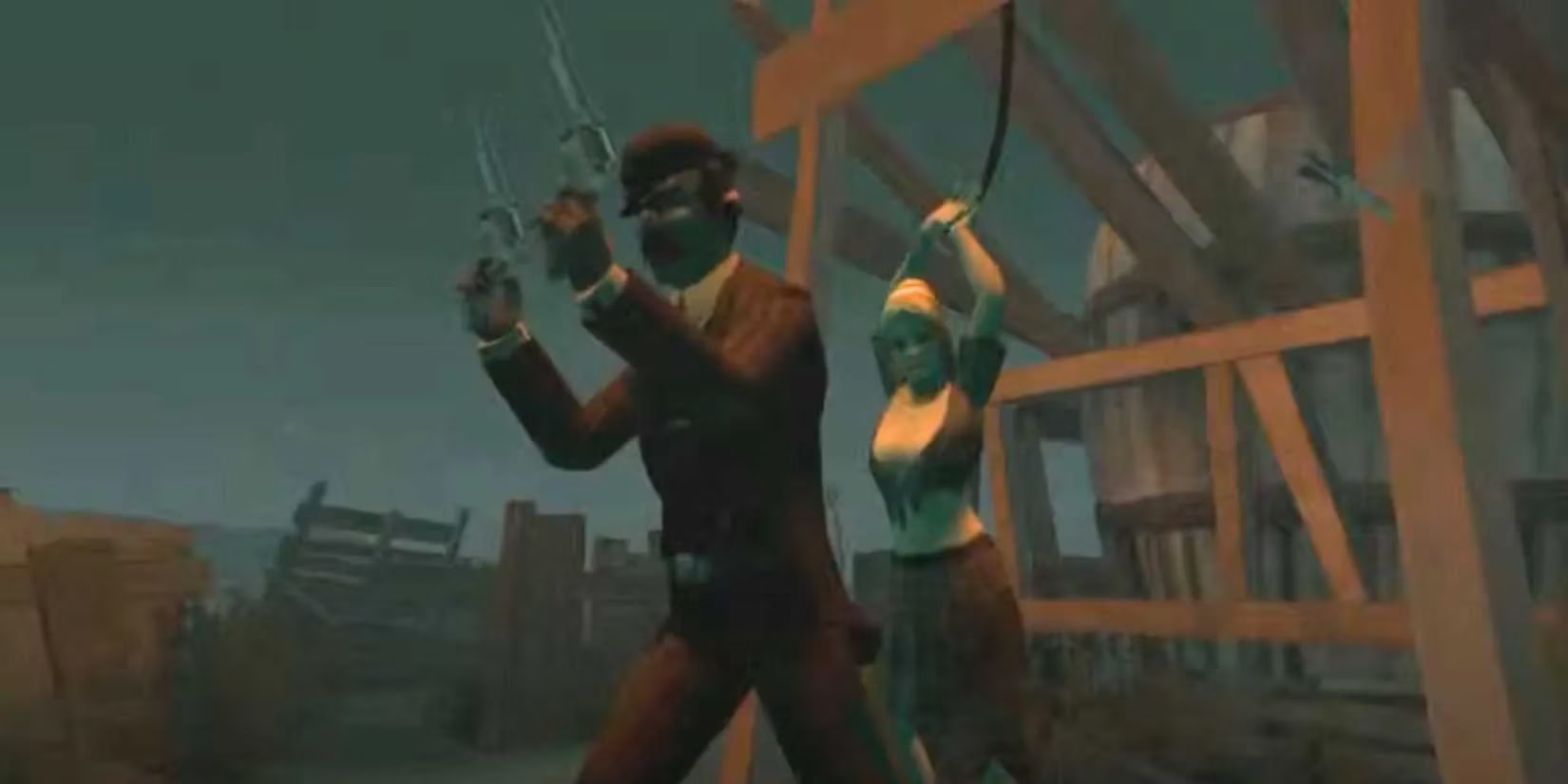
- Multiple Playable Characters: You don't just control the protagonist, Red Harlow. Throughout the story, you take control of other unique gunslingers like the quick-drawing duelist Jack Swift and the formidable bounty hunter Shadow Wolf. Each character has a distinct personality and signature weapon, adding welcome variety to the missions.
-
Local Multiplayer: Tucked away is a fantastic local versus mode where you and friends can battle it out in classic deathmatch style. It’s a chaotic, fun diversion that showcases the game's solid core shooting mechanics.
-
Environmental Secrets: True to Rockstar's later reputation, Revolver is sprinkled with hidden items and subtle details in its levels, rewarding players who take the time to look around.
📜 A Classic Tale of Revenge: The Story
The narrative of Red Dead Revolver is a quintessential, no-frills Western revenge plot. You are Red Harlow, a young man whose family is murdered by a gang of outlaws. His quest for vengeance is straightforward, but it's told with a confident, pulpy style that perfectly captures the tone of a Spaghetti Western. The story is evenly paced, constantly driving you from one shootout to the next. Playing it now, I can see how this experience was a crucial training ground for Rockstar's writers. Crafting a compelling Western narrative within the technical limits of the PS2 era required a sharp focus on character动机 and iconic moments—a skill they would later master and expand upon exponentially in Red Dead Redemption.
It's vital to address a common point of confusion: Red Dead Revolver is not a direct prequel. Rockstar has stated the games exist in separate universes. You won't visit Blackwater or meet a young Dutch van der Linde. However, the connective tissue is there in spirit. Red Harlow himself is occasionally referenced in RDR lore as a legendary, almost mythical figure—a ghost of the West that inspired the bounty hunters of a later era. This clever meta-reference creates a sense of shared mythology without forcing a rigid continuity.
🏆 Why It Still Matters in 2025
In an era of 100-hour open-world epics, why should a 20-year-old linear game command your attention and $15? For me, the answer is threefold:
-
Historical Appreciation: It’s a chance to play a pivotal piece of gaming history. You see a major studio finding its voice within a genre. The confidence in its style and the innovation of its mechanics are palpable.
-
A Different Kind of Western Experience: Sometimes, you don't want to manage your horse's stamina or hunt for perfect pelts. Sometimes, you just want to step into a saloon and have a high-noon duel. Revolver delivers that pure, arcade-style Western fantasy with zero filler.
-
The Joy of Discovery: For fans who know RDR2 inside and out, playing Revolver is like finding the director's early short films. You spot the themes, the stylistic choices, and the gameplay ideas in their raw, initial forms. It deepens your appreciation for the entire creative journey.
| Feature | Red Dead Revolver (2004) | Red Dead Redemption 2 (2018) |
|---|---|---|
| World Design | Linear Missions / Small Hubs | Vast, Seamless Open World |
| Core Gameplay | Arcade-Style Shooting & Bounties | Immersive Simulation & Narrative |
| Narrative Scope | Focused Revenge Plot | Epic, Multi-Character Saga |
| Legacy | The Innovative Blueprint | The Genre-Defining Masterpiece |
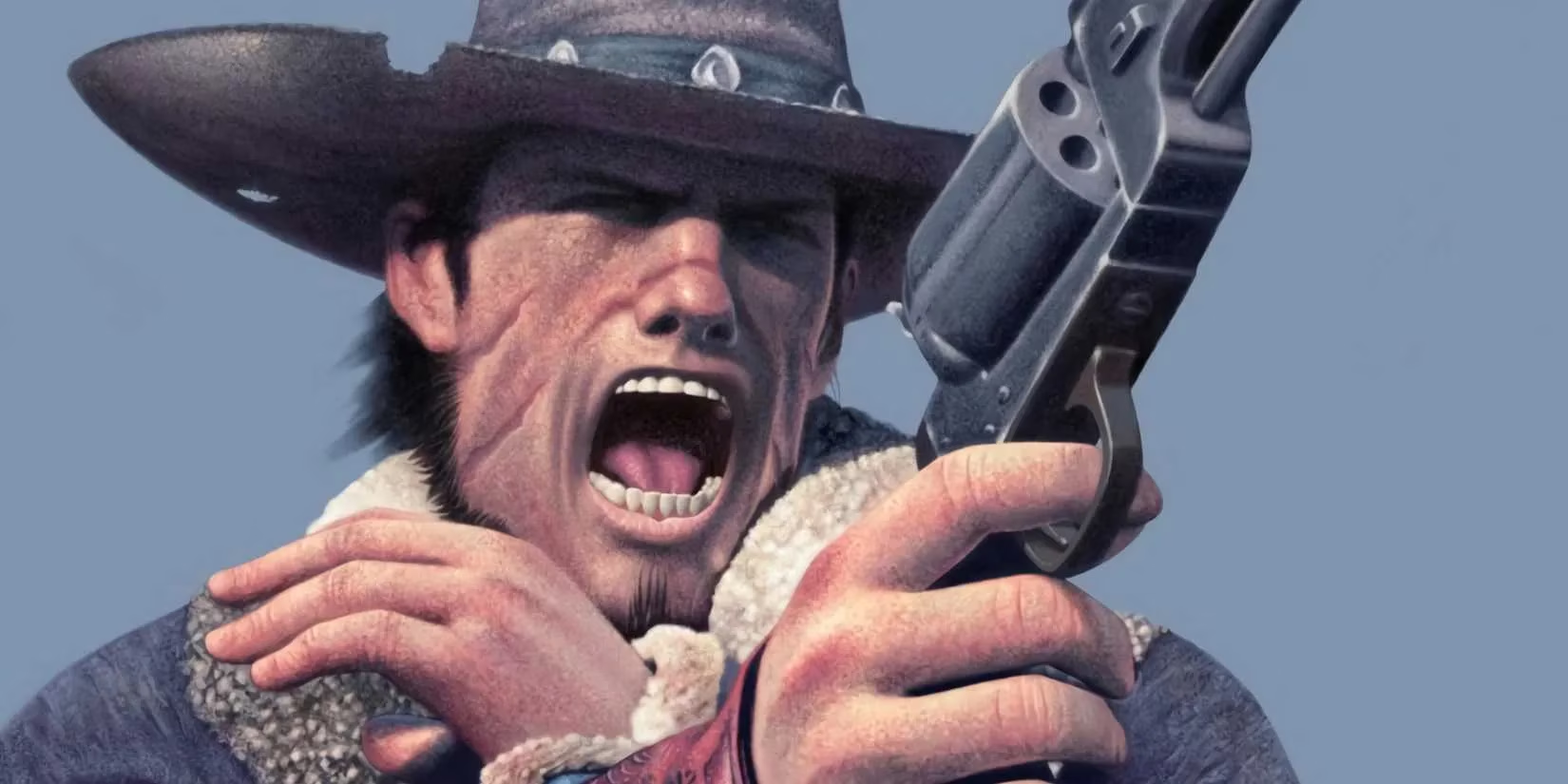
So, if you've conquered the five states, completed the story, and are looking for a new (old) Western fix, I wholeheartedly recommend giving Red Dead Revolver a shot. Approach it not as a lesser Redemption, but as its spirited, influential ancestor. It’s a time capsule of early-2000s game design and a testament to the fact that great ideas often start small. For the price of a couple of coffees, you can own a key chapter in the story of one of gaming's greatest franchises. Saddle up, partner—a different kind of ride awaits.