Hey, let's talk about sequels. I know, I know — the word often makes us groan. But every so often, a follow-up doesn't just match its predecessor; it buries it. In 2026, I still find myself replaying the same handful of games that prove this point. And the biggest one? Red Dead Redemption 2. It's widely regarded as one of the best sequels in gaming, far outdoing the original. Rockstar took eight long years after Red Dead Redemption launched in 2010, and the wait paid off. RDR2 introduced hyper-realistic looting mechanics, jaw-dropping visuals, and a brand new protagonist: Arthur Morgan. He replaced John Marston, which felt risky. Yet Rockstar crafted a compelling narrative around Arthur even though we already knew John's ultimate fate. You struggle alongside Arthur to adapt to a changing world. That theme hits hard. It's powerful and ever-present.
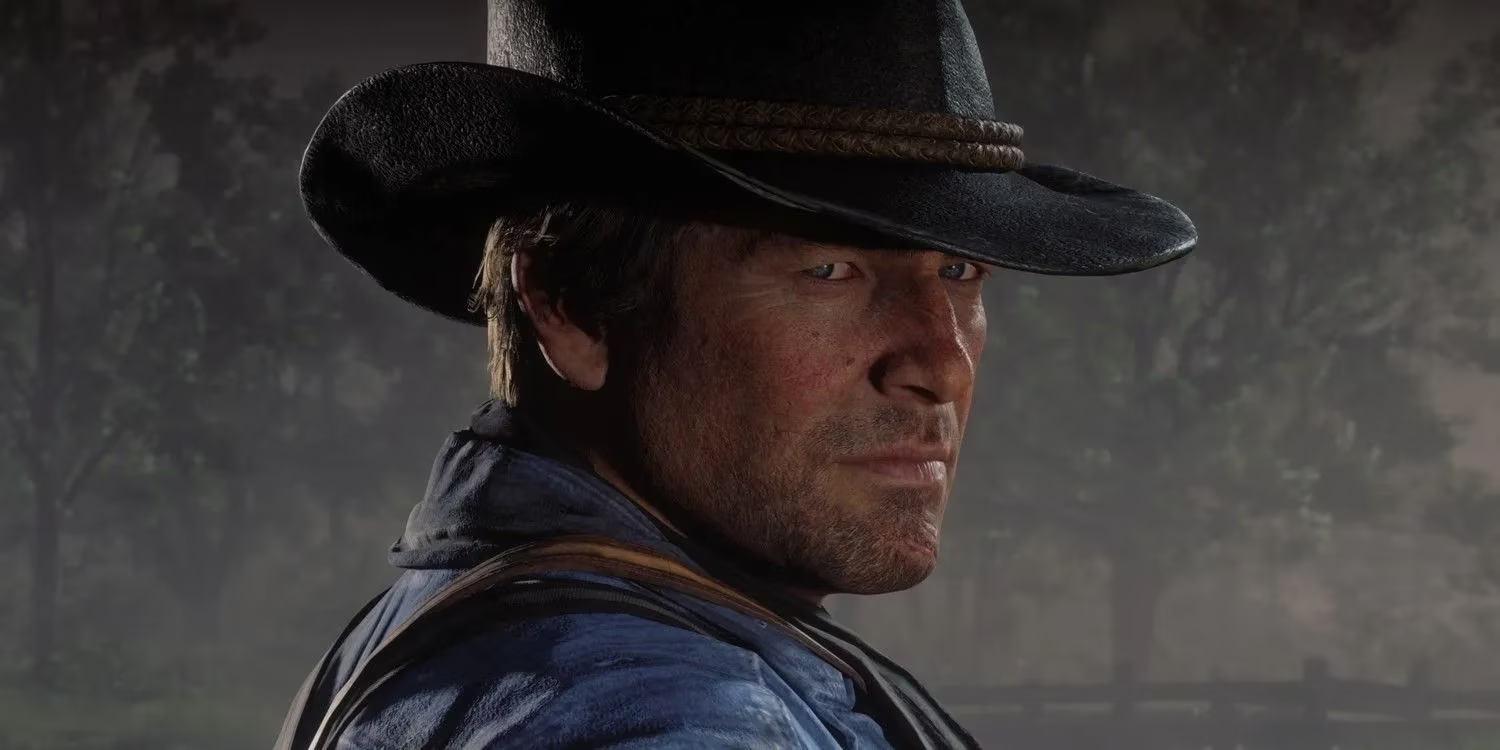
Not every sequel can pull a RDR2. Creating a follow-up to a beloved title is tough, especially when hype is sky-high. But some sequels are widely considered better than their originals. Here are the ones I keep coming back to.
Mass Effect 2 Makes Every Choice Feel Massive
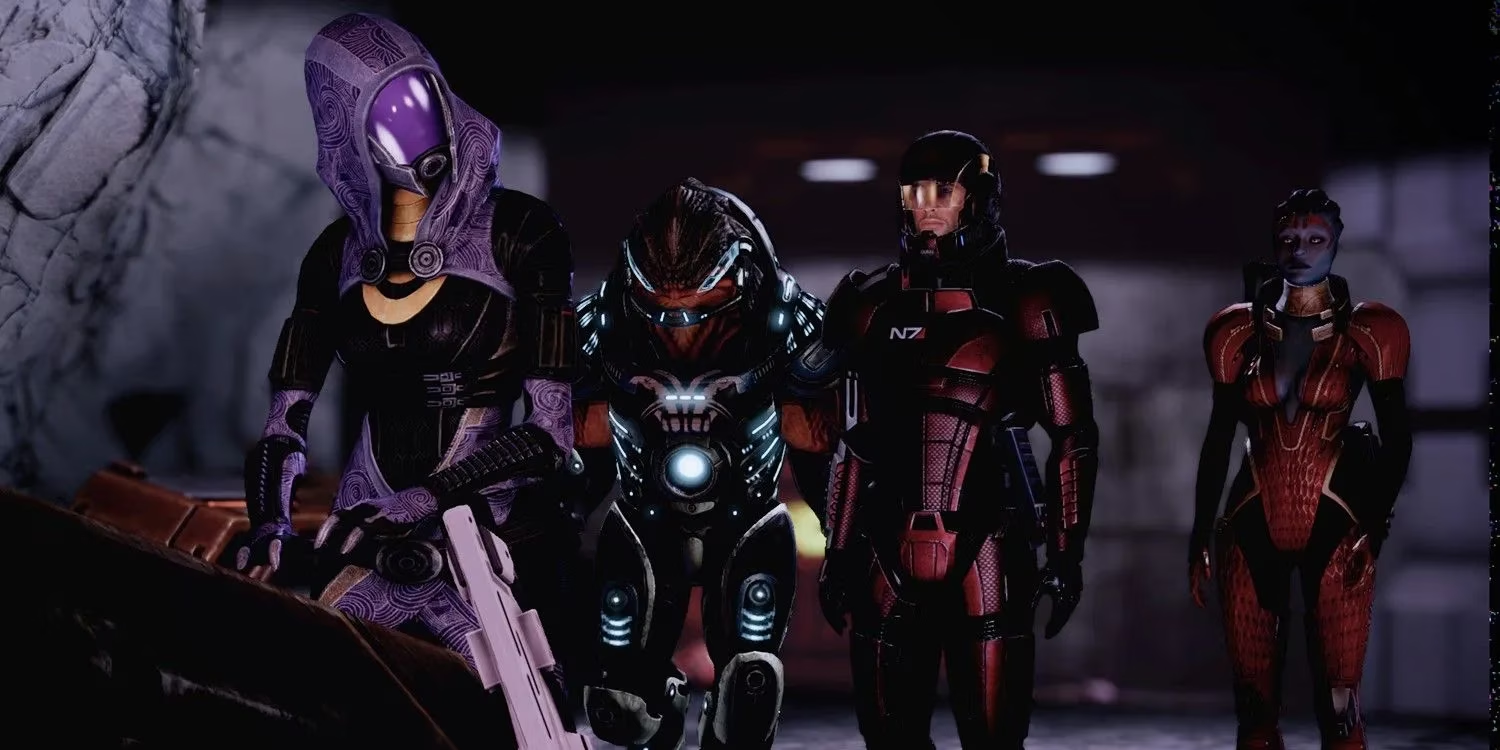
Mass Effect 2 is my favorite example. Released in 2010 to critical acclaim, it's widely considered the best of the Mass Effect trilogy. The story is more engaging, and the stakes are higher. The Normandy gets attacked by an unknown vessel and blown to pieces. Shepard dies. Then Cerberus, a human supremacist organization, recovers the body. The Illusive Man spends nearly two years resurrecting Shepard via the Lazarus Project. He recruits Shepard to investigate disappearing human colonies. The Collectors, a reclusive insectoid alien race, may be responsible. The mystery unfolds slowly. The Collectors live beyond the Omega-4 relay, a sector from which no ship has ever returned. They were once Protheans, twisted by genetic experimentation, mutation, and cybernetics at the hands of the Reapers. The Reapers are a synthetic-organic machine race that periodically cleanses the galaxy of advanced organic life. Most Reaper forces stay in deep space, far outside the Milky Way. The Collectors patrol on their behalf, trading exotic technology with colonies, often in exchange for live beings. Even though most missions revolve around recruiting squadmates and doing loyalty missions, gameplay never feels repetitive. Each character has distinct personalities, motivations, and obstacles. Paragon and Renegade dialogue interruptions gave me more control over the story. I could craft my own Shepard. The stakes are high, and BioWare makes you feel that throughout.
Halo 2 Expanded On What Made Combat Evolved Special
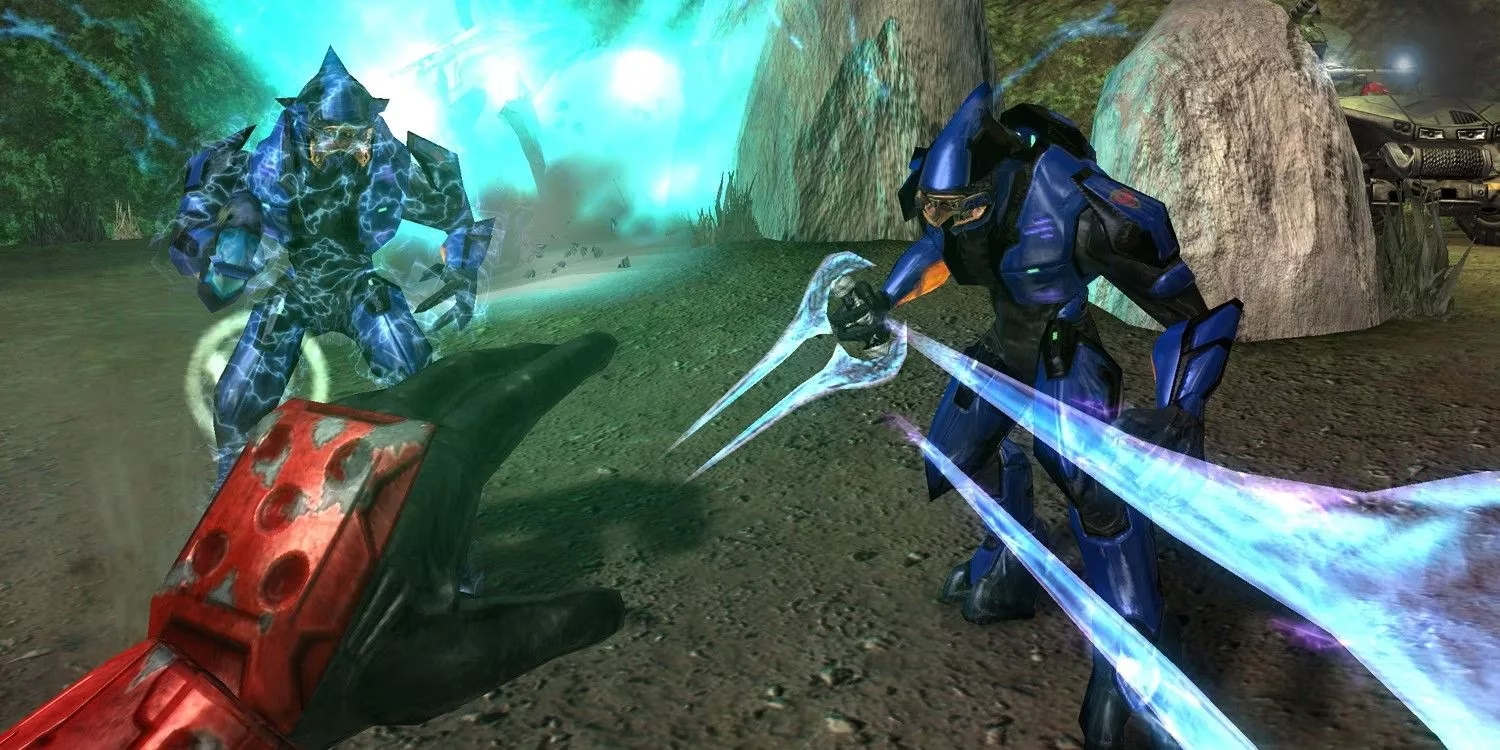
Halo 2 expanded on what made Halo: Combat Evolved feel special. Combat Evolved launched in 2001, and its impact on the FPS genre is still felt today. It had a gripping single-player and co-op campaign, plus a PVP experience unlike anything before. It introduced classic maps like Hang Em' High, Blood Gulch, and Battle Creek. Expectations for Halo 2 were massive. At the time, it was projected to have the single biggest retail launch in entertainment history. Bungie delivered. Halo 2 improved core gameplay, multiplayer during the formative years of Xbox Live, and single-player. The campaign uses the perspective of The Arbiter, a disgraced Covenant Elite given the moniker to atone for his failures. As the campaign opens, events of Combat Evolved are recounted from the Covenant view during a tribunal for the soon-to-be Arbiter. For the first time, players get an inside look at Covenant hierarchy. PVP took a large step forward. Stability improvements and new maps focused on long-range, mid-range, and close-quarters combat. Halo 2 introduced dual-wielding weapons, diversifying engagements. It still boasts a sizable player base within Halo: The Master Chief Collection remasters. But I'll always remember it for bringing people together during early Xbox Live.
Assassin's Creed II Laid The Groundwork
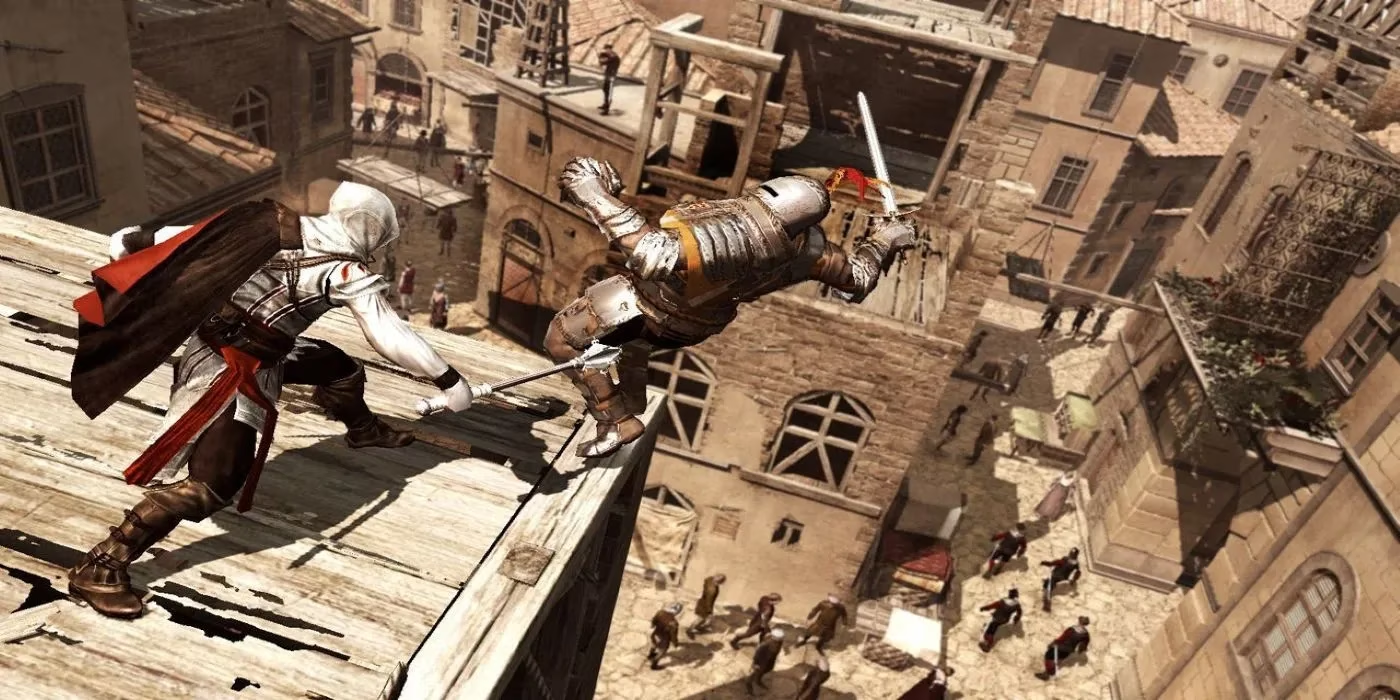
Assassin's Creed II laid the groundwork for the rest of the series. The sequel to 2007's groundbreaking Assassin's Creed arrived in 2009 to much anticipation. The original saw Desmond Miles use the Animus to relive memories of his ancestor Altair during the Third Crusade in the Holy Land. The sequel follows Miles into the mind of Ezio Auditore, a member of a wealthy Florentine family in the late 1400s. AC II's story is far more engaging. Miles is thrust into the Italian Renaissance. He learns of the Auditore family's role in the Assassin Brotherhood. He sees Ezio train to become an assassin and embark on a quest for revenge against those who wrongfully executed his father and brothers. Nearly every aspect of gameplay and the open world improved. Cities are larger and more intricate. There's more attention to detail. A far more diverse array of weaponry is available. Combat is much smoother. Tools and gadgets allow more creativity and freedom when attacking from stealth. The sequel was so well received that it spawned two more games to continue Ezio's storyline: Brotherhood and Revelations. Many innovative features from Assassin's Creed 2 remain core to the franchise today.
A Quick Comparison
| Game | Original | Why the sequel wins |
|---|---|---|
| Red Dead Redemption 2 | Red Dead Redemption (2010) | Arthur Morgan, hyper-realistic world, emotional story about change |
| Mass Effect 2 | Mass Effect (2007) | Higher stakes, loyalty missions, Paragon and Renegade interrupts |
| Halo 2 | Halo: Combat Evolved (2001) | Arbiter perspective, dual-wielding, Xbox Live multiplayer |
| Assassin's Creed II | Assassin's Creed (2007) | Ezio, Renaissance setting, smoother combat, bigger cities |
The Bar Keeps Rising
While these are some of the most widely regarded superior sequels, there are certainly others worthy of that distinction. Back when this conversation started, highly anticipated sequels like Breath of the Wild 2 — now Tears of the Kingdom — and S.T.A.L.K.E.R. 2: Heart of Chernobyl were on the horizon. Now, in 2026, both have launched and the future still looks bright for franchises that dare to improve. Rockstar's Old West epic Red Dead Redemption 2 raised the bar for what a sequel can achieve. Rightfully so. It's widely considered one of the greatest follow-ups to date. And honestly? I'm still waiting for Red Dead Redemption 3. If it ever comes, I hope it learns from Arthur's journey. Because that's what a great sequel does: it doesn't just continue a story. It deepens it. 🎮
Insights are sourced from Polygon, whose long-form gaming coverage often examines why certain sequels resonate more deeply than their predecessors, especially when stronger character writing, refined mechanics, and sharper thematic focus come together the way they do in games like Red Dead Redemption 2, Mass Effect 2, Halo 2, and Assassin's Creed II.