As a gamer who's spent more hours in the saddle than most real cowboys, I'm here to tell you that the pressure is on for Red Dead Redemption 3. We're in 2026, folks, and the ghost of Arthur Morgan's epic journey still haunts every open-world game that dares to step onto the prairie. The sequel isn't just expected to be good; it's expected to be a masterpiece of interactive balance, a world that breathes with the same intricate, chaotic life as its predecessor. Rockstar set the gold standard, and now they have to top it. It's like being the chef who invented the perfect steak, and now everyone expects you to invent fire all over again.
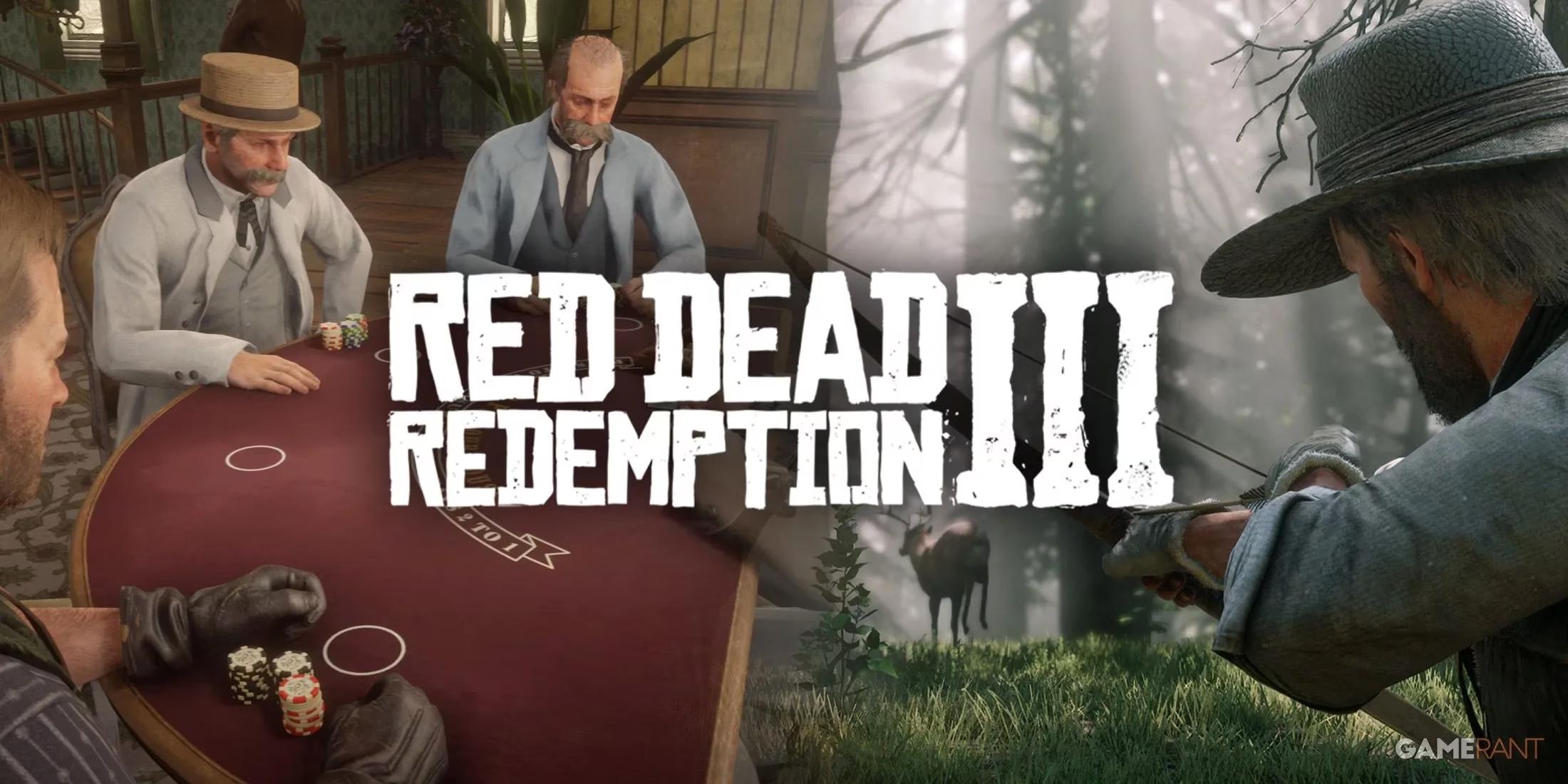
The incredible narrative of Red Dead Redemption 2 rightfully stole the show, but let's not forget the silent co-star: the world itself. Guiding Arthur through that sprawling, living map wasn't just a commute between plot points; it was an experience. The map was vast, yet it never felt like a desolate canvas waiting for my brushstrokes. It was already a finished painting, and I was just a lucky viewer allowed to wander inside it. The secret sauce? A world that understood the delicate dance between structured activity and organic discovery. It was never empty, only pregnant with possibility.
The Urban Oasis: More Than Just Boardwalks and Bullets
When I rode into Saint Denis or Valentine, it wasn't just a pit stop. These cities were bustling hubs of cowboy capitalism and catharsis. Sure, I could outfit Arthur with a new hat that made him look like a dapper ostrich, but the real magic was in the downtime.
My typical city itinerary looked something like this:
| Activity | Purpose | Vibe |
|---|---|---|
| Poker at the Saloon | Financial ruin & ego boost | Tense, smoky, glorious |
| Catching a Magic Lantern Show | Cultural enrichment (and a nap) | Wholesome & weird |
| Haunting the General Store | Spending hard-earned cash on beans | Materialistic bliss |
| Getting a Shave & a Haircut | Vanity, pure and simple | Refreshing, until someone insults you |
These weren't just menu options; they were vital breaths that made Arthur feel like a man living in a world, not a avatar completing a checklist. The city was a spider's web of social threads—you could get tangled in a bar fight, smoothly talk your way out of trouble, or just sit on a porch and watch the digital world go by. For Red Dead Redemption 3, this urban heartbeat can't skip a beat. Our new protagonist needs those same dense pockets of civilization, where the clink of poker chips is as important as the crack of a gunshot.
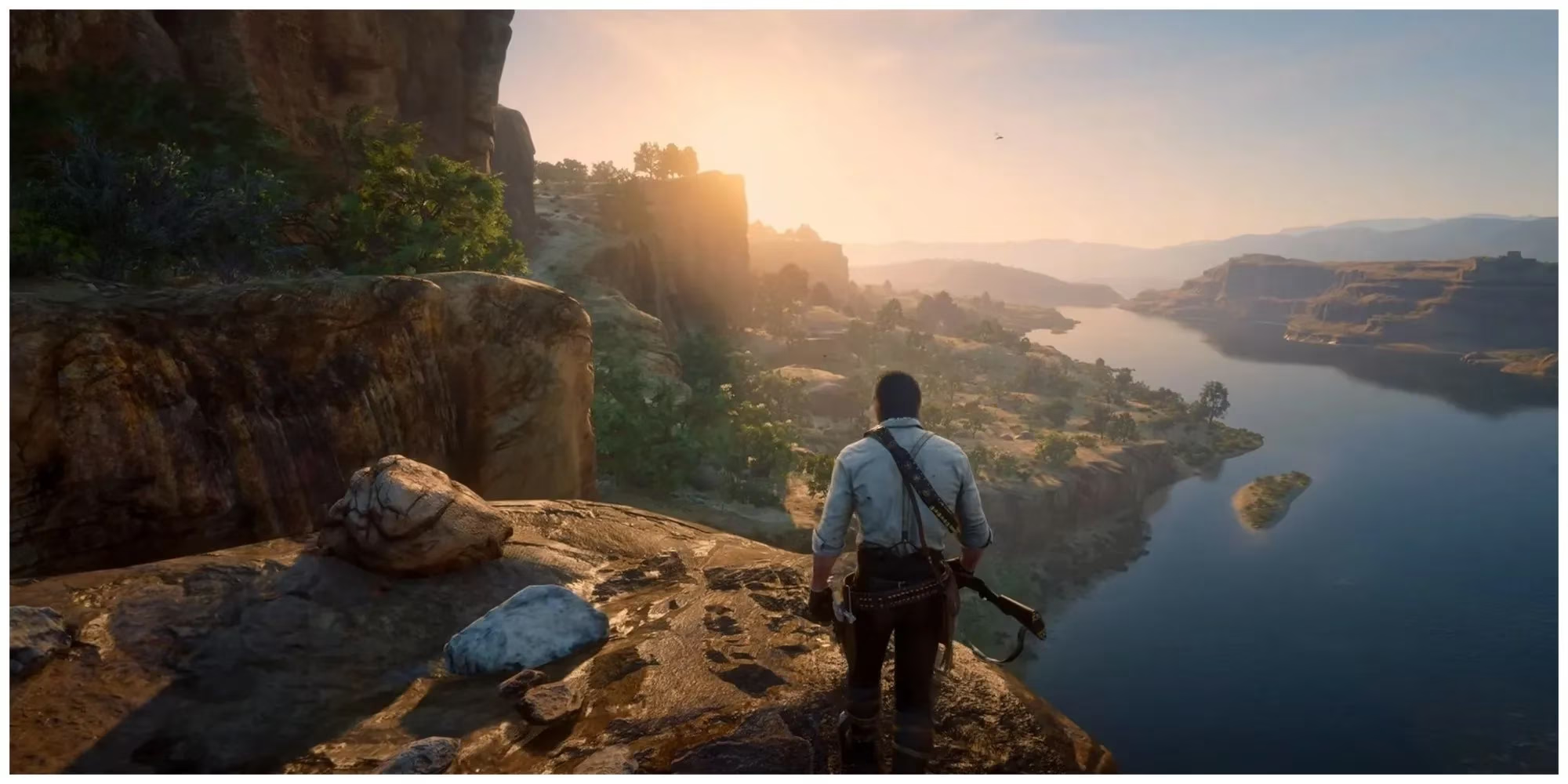
The Wild Symphony: Where the Real Adventure Lives
Ah, but the true soul of these games lies beyond the city limits. If the towns are the verses, the wilderness is the epic, instrumental chorus. Red Dead Redemption 2 understood that the journey between destinations is the destination. Hunting wasn't just a mini-game; it was a survival ritual and a crafting pipeline. Tracking a legendary buck through the misty Grizzlies felt as consequential as any story mission.
The wilderness was packed with secrets:
-
Strange Landmarks: Whispering trees, pagan ritual sites, and eerie ghost trains.
-
Dynamic Encounters: A woman needing a ride, a stranded prisoner, a rival gang laying an ambush. The world reacted to my presence.
-
Collectible Quests: Dinosaur bones, rock carvings, dreamcatchers. A reason to explore every nook.
This is where Red Dead Redemption 3 needs to truly evolve. The wilds can't just be a prettier backdrop. They need to be a self-sustaining ecosystem of fun, as deep and replayable as any city. We need more reasons to veer off the path. Imagine stumbling upon a hidden trapper's camp that runs an underground hunting competition. Or a nomadic tribe that challenges you to a series of spiritual trials. The open road should feel less like a corridor and more like a choose-your-own-adventure book written by the wind and weather.
The Delicate Balance: Why Both Sides of the Coin Must Shine
This is the crux of the whole operation. Red Dead Redemption 3's world must be a perfectly balanced ecosystem, not a lopsided diorama. Neglecting the cities for bigger forests would be like baking a cake with only frosting. Conversely, stuffing the towns with content while leaving the wilds barren would be like building a magnificent concert hall with no orchestra.
Here’s my manifesto for RDR3's world balance:
-
Symbiosis, Not Separation: Activities should flow between environments. A bounty poster picked up in town leads you on a multi-day trek through swamps and mountains. Legendary animal pelts hunted in the wild are needed by a prestigious tailor in the city for a unique outfit.
-
Depth Over Breadth (But a Little of Both): I don't just need more random events; I need smarter, more reactive ones. If I help a farmer fend off wolves, maybe later his stall in the market gives me a discount. The world should have a memory.
-
Embrace the Cowboy Fantasy: Every activity, urban or rural, must feed into the power fantasy. Gambling builds my legend (or infamy). Hunting makes me self-sufficient. Exploring uncovers the land's secrets. It all has to feel cohesive.
Rockstar has the pedigree. They turned the open world from a simple playground into a living, breathing character. For Red Dead Redemption 3, that character needs to be even more complex, more surprising, and more alive. It needs to be a place where I can get lost for hours, whether I'm in the deafening silence of a snow-covered peak or the chaotic murmur of a boomtown saloon. The balance isn't just a design goal; it's the entire game. Get it right, and we'll have a world that doesn't just feel played—it feels lived-in. Saddle up, partner. The next great adventure is waiting, and it needs to be everywhere at once. 🤠